If you’ve ever walked up to your plant and thought, “Something doesn’t look right,” you’re not alone. Maybe the leaves have strange spots or powdery patches or are suddenly turning yellow without any clear reason. It’s frustrating—especially when you’ve been watering and caring for your plant regularly.
Plant diseases are one of the most confusing parts of gardening, especially for beginners. Unlike watering mistakes or sunlight issues, diseases can feel unpredictable. But here’s the truth: most plant diseases follow patterns. Once you understand those patterns, they become much easier to identify—and fix.
In this guide, I’ll walk you through how to identify common plant diseases, what causes them, and the exact steps you can take to treat and prevent them. Whether you’re growing indoor plants or managing a balcony garden, this will help you stay one step ahead.
What Causes Plant Diseases?
Before jumping into identification, it’s important to understand why plant diseases happen in the first place.
Fungal Growth (Most Common Cause)
Fungi thrive in moist, humid environments. Overwatering, poor airflow, and wet leaves create the perfect conditions for fungal diseases.
This is why issues like powdery mildew or leaf spots are so common in indoor plants and crowded balcony setups.
Bacterial Infections
Bacterial diseases often enter through damaged plant tissue. Overwatering and contaminated tools can spread bacteria quickly.
These usually show up as soft, mushy spots or water-soaked patches on leaves.
Environmental Stress
Occasionally, what looks like a disease is actually stress. Poor lighting, inconsistent watering, or extreme temperatures weaken plants, making them more vulnerable.
If you’re unsure whether your issue is care-related, I recommend checking this guide on correcting watering habits for indoor plants—it can help rule out one of the biggest causes of plant problems.
Poor Hygiene and Neglect
Dirty pots, old soil, and unclean tools can introduce disease-causing organisms. Skipping regular plant checks also allows small problems to turn into big ones.
Common Plant Diseases and How to Identify Them
Let’s break down the most common diseases you’re likely to encounter.
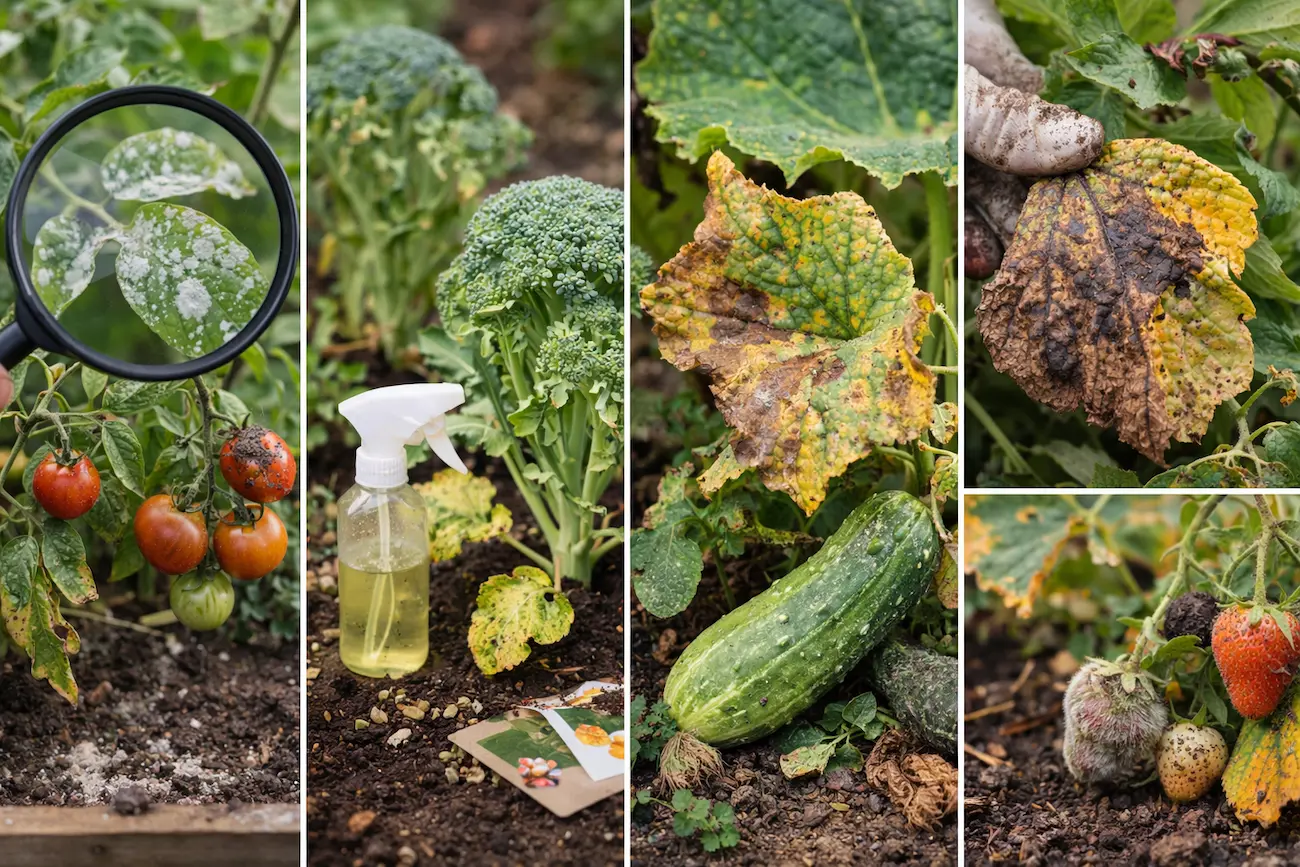
Powdery Mildew
Signs:
- White, powdery coating on leaves
- Leaves may curl or dry out over time
Why It Happens:
Powdery mildew thrives in warm, dry conditions with poor airflow.
Fix:
- Remove affected leaves
- Improve airflow
- Spray with a mild fungicide or neem oil
Leaf Spot Diseases
Signs:
- Brown, black, or yellow spots on leaves
- Spots may grow or merge over time
Why It Happens:
This condition is usually caused by fungi or bacteria, often due to wet leaves and overcrowding.
Fix:
- Remove infected leaves immediately
- Avoid watering from above
- Improve spacing between plants
Root Rot
Signs:
- Yellowing leaves
- Wilting despite wet soil
- Foul smell from soil
Why It Happens:
Overwatering leads to oxygen deprivation in roots, causing them to rot.
Fix:
- Remove a plant from the soil.
- Trim rotten roots
- Repot in fresh, well-draining soil
If you’re dealing with this, you can also check my guide on how I rescue overwatered indoor plants quickly for a step-by-step recovery approach.
Rust Disease
Signs:
- Orange, red, or brown spots (often on the underside of leaves)
- Leaves may drop prematurely
Why It Happens:
High humidity and poor air circulation.
Fix:
- Remove infected leaves
- Keep foliage dry
- Use fungicide if needed
Blight
Signs:
- Rapid browning or blackening of leaves and stems
- Sudden plant decline
Why It Happens:
Often spreads quickly through water, tools, or infected soil.
Fix:
- Remove affected areas immediately
- Isolate the plant
- Disinfect tools after use
How to Identify the Right Problem (Step-by-Step)
When you see something unusual, don’t panic. Follow this simple process:
1. Check the Leaves Closely
Look for patterns:
- Powdery = likely fungal
- Spots = fungal or bacterial
- Holes = pests (not disease)
If you’re unsure, you can also read my guide on identifying holes in plant leaves to rule out pest damage.
2. Inspect the Soil
- Smelly or soggy soil = root issues
- Dry, compact soil = stress
3. Look at Plant Environment
Ask yourself:
- Is airflow poor?
- Are leaves staying wet?
- Is the plant overcrowded?
4. Check the Speed of Spread
- Fast spread = serious infection
- Slow changes = environmental stress
Step-by-Step Treatment Plan
Once you’ve identified the issue, follow this practical recovery plan.
1. Isolate the Affected Plant
Move it away from other plants to prevent spreading.
2. Remove Damaged Parts
Cut off infected leaves or stems using clean scissors.
3. Improve Growing Conditions
- Increase airflow
- Adjust watering habits
- Provide proper light
4. Treat with Natural Solutions
- Neem oil spray
- Baking soda solution (for fungal issues)
- Mild fungicide if needed
5. Repot If Necessary
If the disease is soil-related:
- Replace old soil
- Clean the pot thoroughly
- Ensure good drainage
6. Monitor Weekly
Keep checking for new symptoms and act quickly if needed.
What I’ve Learned From Dealing With Plant Diseases
In my experience, plant diseases rarely occur spontaneously. There’s almost always a small mistake behind them.
One mistake I made early on was overwatering while keeping plants in a low-airflow room. This created the perfect environment for fungal growth. I kept treating the symptoms, but the problem kept coming back—until I fixed the airflow.
What worked for me was simple:
- Giving plants more space
- Watering only when needed
- Doing quick weekly checks
If you want a simple routine, I recommend reading my guide on how I keep indoor plants healthy with weekly checks—it can prevent most disease issues before they even start.
Common Mistakes to Avoid
- Overwatering plants “just to be safe”
- Ignoring early signs like small spots
- Watering leaves instead of soil
- Keeping plants too close together
- Reusing old soil without cleaning
- Not disinfecting tools after pruning
Pro Tips for Disease-Free Plants
- Always water at the base, not on leaves
- Use well-draining soil for all indoor plants
- Rotate plants regularly for even airflow
- Clean leaves occasionally to prevent buildup
- Quarantine new plants before adding them to your collection
A small habit like checking your plants once a week can save you from major problems later.
FAQs
How do I know if my plant has a disease or just needs better care?
If symptoms spread quickly or look like spots, powder, or rot, it’s likely a disease. Slow yellowing or drooping is often a care issue.
Can plant diseases spread to other plants?
Yes, especially fungal and bacterial diseases. That’s why isolating affected plants is crucial.
Should I remove all infected leaves?
Yes, removing infected leaves helps stop the spread and allows the plant to focus on healthy growth.
Are natural treatments effective?
For mild cases, yes. Neem oil and baking soda sprays work well, but severe infections may need stronger treatment.
Can a plant fully recover from disease?
In many cases, yes—if you act early and fix the root cause. Delayed action makes recovery harder.
Conclusion
Plant diseases can feel overwhelming at first, but once you understand what to look for, they become manageable—and often preventable.
Most problems come down to a few key factors: too much moisture, poor airflow, and missed early warning signs. Fix those, and you’ll eliminate the majority of disease risks.
The biggest shift you can make is this: stop reacting late and start observing early.
Check your plants regularly. Notice small changes. Act quickly.
Because in gardening, it’s not about being perfect—it’s about being attentive.
And once you build that habit, you’ll not only save your plants—you’ll actually start enjoying the process a whole lot more.