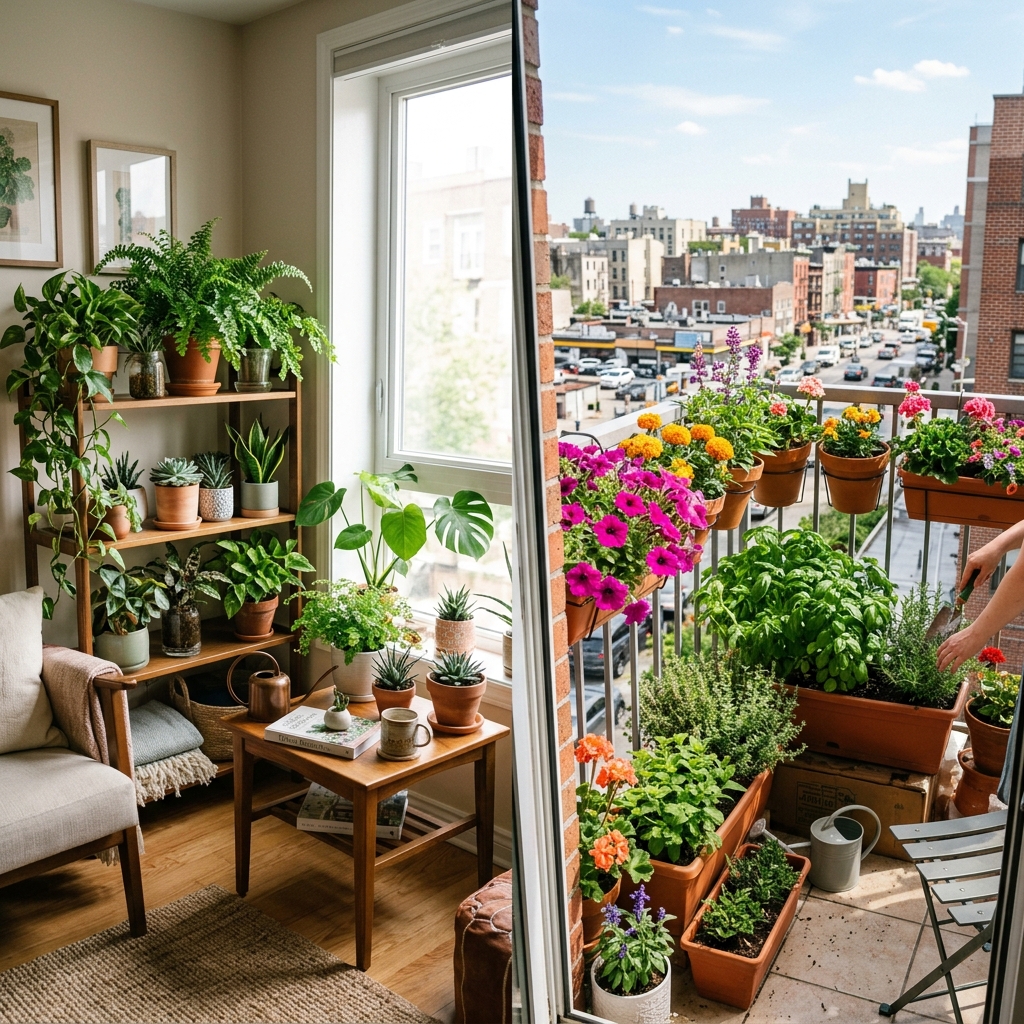
Urban environments often leave residents craving a connection to nature. Concrete surroundings and limited square footage do not have to mean abandoning the dream of cultivating lush greenery. City dwellers are increasingly turning to urban horticulture to bring life into their apartments and townhouses. Two distinct approaches dominate this movement. Growing plants entirely inside the home offers a completely controlled environment. Alternatively, utilising an attached outdoor space allows urbanites to harness natural weather patterns. Understanding the core mechanisms of both approaches is the first step toward building a thriving personal ecosystem.
Understanding Indoor Gardening
Cultivating plants inside a residence relies heavily on managing an artificial environment. Without direct access to unfiltered sunlight or natural rainfall, the gardener assumes complete responsibility for the ecosystem. You must carefully monitor ambient humidity, room temperature, and air circulation. Many enthusiasts utilise specialised equipment like full-spectrum grow lights and humidifiers to mimic natural conditions. This approach excels at sustaining tropical houseplants, delicate herbs, and shade-tolerant foliage. By keeping the greenery inside, you effectively shield your plants from harsh seasonal changes, pests, and sudden weather events.
Exploring Balcony Gardening
Stepping outside onto a terrace or patio shifts the dynamic entirely. A balcony garden subjects your plants to the rhythms of the local climate. You rely on natural sunlight, which dictates exactly what species will thrive in that specific orientation. South-facing spaces receive intense daily sun, perfect for fruiting vegetables and vibrant flowering varieties. Conversely, north-facing outdoor areas require shade-loving species. While you still provide water and nutrients, the environment does a significant portion of the work. You must remain vigilant about seasonal shifts, sudden frosts, and local insect populations that can easily reach your containers.
Key Differences and Considerations
The fundamental divide between these two methodsiso environmental control versus natural exposure. Inside your home, the temperature rarely fluctuates beyond a comfortable human range. This stability is excellent for sensitive tropicals but prevents the cultivation of plants that require a winter chill period to produce fruit. Outdoors, wind exposure can dry out container soil rapidly, demanding a more rigorous watering schedule. Space limitations also manifest differently. A living room might offer vertical wall space for climbing vines, while an outdoor railing can support heavy window boxes. You must evaluate your local climate, your apartment’s physical layout, and your willingness to battle potential outdoor pests.
Pros and Cons of Each Method
Keeping your plants inside guarantees year-round growing capabilities regardless of the season outside. You never have to worry about a sudden frost destroying your tomatoes or a heavy storm snapping delicate stems. However, this method frequently requires a higher financial investment in specialised lighting and climate control equipment to keep sun-loving plants healthy. Expanding outside significantly reduces equipment costs since the sun provides free, full-spectrum light. Outdoor container growing allows for much larger, robust crops like squashes and determinate tomatoes. The primary drawback of outdoor cultivation is its vulnerability to the elements. High winds can damage containers, unpredictable weather can stall growth, and urban pollution or pests can easily compromise an unprotected crop.
Choosing the Right Method for You
Selecting the appropriate horticultural path requires an honest assessment of your lifestyle and living situation. If you travel frequently or have a highly unpredictable schedule, a drought-tolerant indoor setup might be the safest choice. Those with a passion for growing their own edible produce will find far more success utilising the intense sunlight available on an open terrace. Consider the architectural reality of your building as well. A ground-floor apartment shadowed by skyscrapers will severely limit outdoor sun exposure, making indoor artificial lighting a better investment. Conversely, a high-rise with a spacious, sun-drenched patio practically demands outdoor planters.
Maximizing Your Urban Garden
Regardless of the physical location you choose, maximising limited square footage is essential for urban growing success. Vertical integration allows you to multiply your growing area without sacrificing valuable floor space. Hanging baskets, wall-mounted planters, and tiered shelving units work exceptionally well both inside a living room and outside on a railing. Selecting the right container size directly impacts root health and soil moisture retention. Large, deep pots reduce the frequency of watering required on a windy terrace. Self-watering containers offer a fantastic solution for busy individuals managing a large indoor collection.
Cultivating Your Perfect Green Space
Bringing nature into an urban setting profoundly impacts daily well-being. Whether you choose to line your windowsills with tropical foliage or transform your outdoor terrace into a productive vegetable patch, the act of tending to living things provides immense satisfaction. Evaluate your available light, commit to a manageable watering routine, and start with resilient plant varieties. Your ideal urban oasis is entirely within reach.
Frequently Asked Questions
1. What are the easiest plants to grow in a dark apartment?
Snake plants, ZZ plants, and pothos are incredibly resilient and thrive in environments with minimal natural light. They require infrequent watering and tolerate the dry air typical of indoor heating systems.
2. Can I grow vegetables entirely indoors?
Yes, but you must invest in high-quality, full-spectrum LED grow lights. Leafy greens like lettuce and spinach thrive indoors, while fruiting vegetables like tomatoes need intense light and manual pollination to succeed without natural insects.
3. How do I protect my balcony garden from high winds?
Choose heavy, low-profile containers made of ceramic or concrete to prevent tipping. Grouping pots together creates a microclimate that buffers harsh gusts, and installing a temporary windbreak screen along the railing can significantly reduce wind damage to delicate stems.
4. Do outdoor container plants need different soil than indoor plants?
Outdoor containers dry out much faster due to wind and sun exposure. You should use a moisture-retentive potting mix enriched with compost for outdoor planters, while indoor pots often require a lighter, well-draining mix containing perlite to prevent root rot.
5. How often should I water my urban garden?
Watering frequency depends entirely on the environment and plant species. Outdoor containers in full summer sun may require daily soaking, whereas indoor tropicals in a cool room might only need water every two weeks. Always check the top two inches of soil for dryness before adding water.