
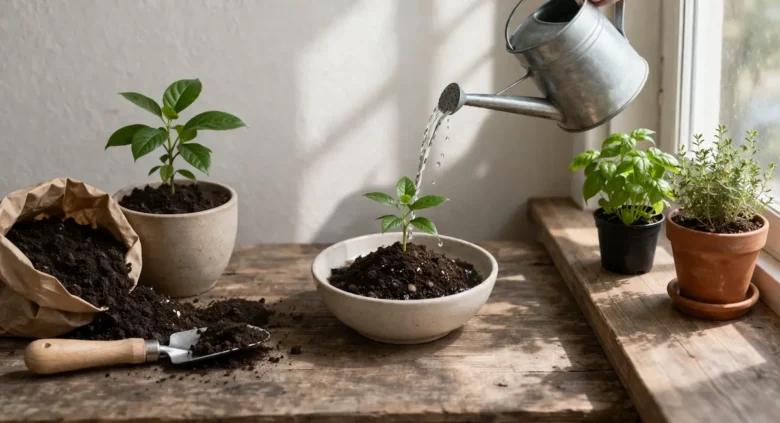
When I first started keeping plants at home, I thought success depended on buying the “right” plant. I’d bring one home, water it regularly, provide it some sunlight… and still watch it slowly decline.
It took me a while to realize the truth: healthy plants aren’t about luck—they’re about understanding three basics properly—soil, watering, and light.
Once you get these right, everything else becomes easier. This guide will walk you through these essentials in a simple, beginner-friendly way so you can stop guessing and start growing healthier plants with confidence.
Why Soil, Watering & Light Matter So Much
Plants Depend Entirely on These Three Factors
Every plant, whether indoors or on a balcony, relies on:
- Soil for nutrients and root support
- Water for hydration and nutrient transport
- Light for energy (photosynthesis)
If even one of these is off, your plant will struggle.
Most plant problems start here.
Yellow leaves, slow growth, and root rot—almost all common plant issues trace back to these basics.
In fact, many beginners unknowingly repeat these mistakes. If that sounds familiar, you can relate to what went wrong in my first gardening attempt and how I fixed it.
Understanding Soil (The Foundation of Plant Health)
Why Soil Is More Than Just Dirt
Good soil isn’t just something to hold the plant in place. It:
- Stores nutrients
- Retains moisture
- Allows roots to breathe
Bad soil does the opposite—it suffocates roots and holds too much water.
What Makes Good Soil?
A healthy soil mix should be
- Light and airy
- Well-draining
- Nutrient-rich
For most plants, a mix of potting soil, compost, and a draining material (like sand or coco peat) works well.
If you want a step-by-step method, you can follow this practical guide on how to prepare garden soil at home without expensive tools.
Signs Your Soil Needs Improvement
- Water sits on top instead of soaking in
- Soil smells bad
- Roots look weak or black
If your soil smells unpleasant, it may be a deeper issue—you can learn more in this guide on why plant soil smells awful and how to fix it.
Watering: Getting It Just Right
Why Watering Is So Confusing
Watering seems simple, but it’s where most people go wrong.
Too much water:
- Causes root rot
- Leads to yellow leaves
Too little water:
- Dries out roots
- Causes drooping
The Right Way to Water
Forget strict schedules. Instead:
- Check soil moisture with your finger
- Water only when the top 1–2 inches are dry
This simple habit can save most plants.
What Happens When You Overwater
Overwatering is especially dangerous because it suffocates roots.
If you’ve already made this mistake, don’t worry—you can recover your plant using this method I use to rescue overwatered indoor plants quickly (https://primehubio.com/how-i-rescue-overwatered-indoor-plants-quickly/).
Light: The Plant’s Energy Source
Why Light Is Often Misunderstood
Many beginners either
- Give too little light (plants stop growing)
- Or too much direct sun (leaves burn)
Types of Light You Should Know
- Direct light → strong sunlight hitting leaves
- Indirect bright light → bright room without direct sun
- Low light → shaded areas
Most indoor plants prefer bright, indirect light.
Signs Your Plant Needs More Light
- Long, stretched stems
- Pale or small leaves
- Slow or no growth
This phenomenon is one of the main reasons plants struggle indoors. If you’re facing this issue, you’ll find helpful insights in this guide on why indoor plants stop growing and how to fix it (https://primehubio.com/why-indoor-plants-stop-growing-5-real-causes-proven-fixes/).
Step-by-Step Setup for Beginners
If you’re starting fresh, follow this simple process:
1. Choose the Right Soil Mix
Use a light, well-draining mix.
2. Pick a Pot With Drainage
Always use pots with holes at the bottom.
3. Place Your Plant Correctly
Match plant needs with your light conditions.
4. Water Based on Need
Examine soil; don’t follow a fixed schedule.
5. Observe and Adjust
Watch how your plant responds over time.
What Changed My Plant Care Completely
I used to think plant care meant doing more—more water, more sunlight, more attention.
But in my experience, plants thrive when you do less but more accurately.
One mistake I made was watering all my plants on the same day. Some needed it, others didn’t—and I ended up damaging the roots.
What worked for me:
- Checking soil instead of guessing
- Adjusting light gradually
- Paying attention to small changes
That shift from routine-based care to observation-based care made all the difference.
Common Mistakes to Avoid
- Using heavy garden soil in pots
- Watering on a fixed schedule
- Ignoring drainage holes
- Placing all plants in the same light
- Overwatering “just in case”
- Not checking soil before watering
Pro Tips That Make a Big Difference
- Use your finger as a moisture meter—simple but effective
- Rotate plants weekly for even growth
- Start with low-maintenance plants if you’re new
- Avoid sudden changes in light or watering
- Observe daily—small signs prevent big problems
FAQs
How do I know if my plant needs water?
Check the soil with your finger. If the top layer is dry, it is time to water the plants. This method is more reliable than following a schedule.
What type of soil is best for indoor plants?
A light, well-draining mix works best. Avoid heavy garden soil, as it can retain too much water and suffocate roots.
How much sunlight do indoor plants need?
Most indoor plants prefer bright, indirect light. Direct sunlight can be too harsh, while low light may slow growth.
Why is my plant not growing?
The issue is usually due to low light, poor soil, or improper watering. Fixing these basics often solves the problem.
Can I fix overwatered plants?
Yes, if caught early. Improve drainage, let the soil dry out, and remove damaged roots if necessary.
Conclusion
If you feel confused about plant care, you’re not alone—most beginners struggle at the start.
But here’s the good news: you don’t need to master everything.
You just need to understand three things really well:
- Soil
- Water
- Light
Once you get these right, everything else becomes easier.
Plants aren’t complicated—they’re just responsive. They show you what they need, as long as you pay attention.
So don’t aim for perfection. Start small, observe closely, and adjust as you learn.
Because once you understand these basics, plant care stops feeling frustrating… and starts feeling natural.
And that’s the moment when your plants don’t just survive—they actually thrive.
