
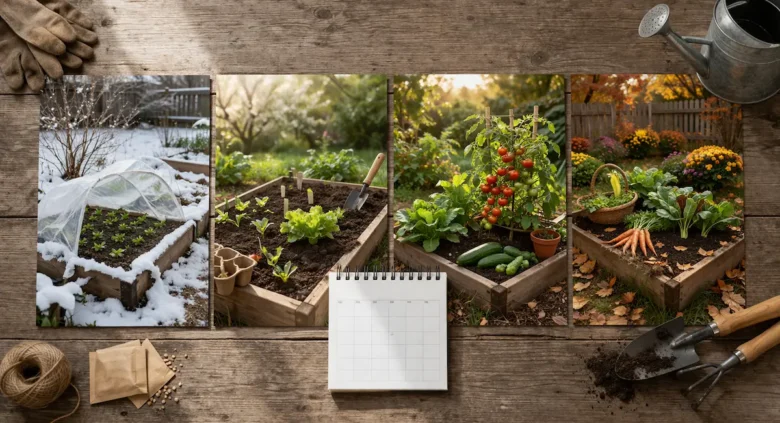
If you’ve ever felt confused about what to do in your garden and when, you’re not alone. One month your plants are thriving, and the next, everything seems to slow down or struggle—and you’re left wondering what went wrong.
I’ve been there too. Early on, I used to treat gardening like a fixed routine: same watering, same care, same expectations all year. But plants don’t work like that. They respond to seasons, temperature, and daylight changes more than anything else.
Once I started following a simple seasonal gardening calendar, everything changed. Plants grew better, problems reduced, and I stopped making random mistakes.
This guide will walk you through a practical, beginner-friendly month-by-month gardening calendar—perfect for balcony gardens, indoor plants, and small spaces.
Why Seasonal Gardening Matters
Before we jump into the calendar, it’s important to understand why timing matters so much.
Plants Follow Natural Cycles
Plants naturally grow faster in warm, bright months and slow down in cooler, darker periods. If you try to force growth at the wrong time, you’ll end up frustrated.
Care Needs Change Throughout the Year
Watering, fertilizing, and sunlight needs are not constant. For example:
- Summer = more watering, protection from heat
- Winter = less watering, protection from cold
If you’re unsure about basics like watering and light, you can also read my complete indoor plant care guide to build a strong foundation.
Preventing Problems Before They Start
Most plant issues—yellow leaves, root rot, slow growth—happen because care doesn’t match the season. A simple calendar helps you stay ahead.
Month-by-Month Gardening Calendar
This calendar is designed for general climates and works well for balcony gardening and indoor plants. You can adjust slightly based on your local weather.
January—Rest and Observation
What to Do:
- Reduce watering (plants grow slowly)
- Avoid fertilizing
- Check for pests and diseases
- Clean leaves and remove dead parts
This is a quiet month. Plants are mostly in survival mode.
In my experience, overwatering in January is one of the biggest mistakes beginners make.
February – Preparation Begins
What to Do:
- Start planning your garden
- Prepare pots and soil
- Begin indoor seed starting (for some plants)
If you’re preparing soil at home, you might find this guide on making garden soil without expensive tools really helpful.
March—Early Growth Starts
What to Do:
- Increase watering slightly
- Start fertilizing lightly
- Repot plants if needed
- Introduce more sunlight gradually
Plants start waking up this month. You’ll notice new growth.
April—Active Growth Phase
What to Do:
- Regular watering
- Fertilize every 2–3 weeks
- Start planting more varieties
- Watch for early pests
This is one of the best months for planting leafy greens and herbs.
If you’re interested, you can also check my guide on growing salad greens in balcony pots for beginner-friendly ideas.
May – Rapid Growth and Expansion
What to Do:
- Water more frequently
- Ensure proper drainage
- Provide support for growing plants
- Start harvesting early crops
Plants grow fast now—but so do problems if you’re not careful.
June – Heat Management Begins
What to Do:
- Water deeply and regularly
- Provide shade during peak sun
- Mulch soil to retain moisture
- Monitor for heat stress
This is where many gardeners struggle.
One mistake I made was assuming more sunlight is always better. In reality, too much direct heat can damage plants quickly.
July—Peak Summer Care
What to Do:
- Water early morning or evening
- Protect plants from extreme heat
- Avoid fertilizing heavily
- Watch for dry soil and wilting
If heat is intense in your area, I highly recommend reading my guide on protecting balcony plants during heatwaves—it can save your plants during extreme conditions.
August—Maintain and Monitor
What to Do:
- Continue summer care routines
- Prune damaged leaves
- Watch for pests and fungal issues
- Prepare for seasonal transition
This is more about maintenance than growth.
September—Recovery and New Growth
What to Do:
- Resume moderate fertilizing
- Plant cool-season crops
- Improve soil quality
- Reduce heat protection gradually
Plants often bounce back beautifully this month.
October – Transition to Cooler Weather
What to Do:
- Reduce watering frequency
- Move sensitive plants indoors if needed
- Clean and prune plants
- Prepare for winter
This is a great time to reorganize your plant setup.
November—Slow Down Again
What to Do:
- Water less frequently
- Stop fertilizing
- Focus on plant health checks
- Protect from cold drafts
Indoor plants especially need stable conditions now.
December—Rest and Protection
What to Do:
- Minimal watering
- No fertilizing
- Keep plants away from cold air
- Maintain basic care
Think of this as a “maintenance mode” month.
How to Adjust Your Routine (Step-by-Step)
If this information feels like a lot, here’s a simple way to apply it:
1. Observe Your Plants Weekly
Don’t just follow a calendar blindly—watch your plants.
2. Adjust Watering Based on Season
- Summer: more frequent
- Winter: less frequent
If you struggle with this, you can also read my guide on correcting watering schedules for indoor plants.
3. Match Fertilizing to Growth
- Growing months: feed plants
- Dormant months: skip fertilizer
4. Prepare Before Each Season Change
Don’t wait for problems—anticipate them.
What Changed When I Started Following a Gardening Calendar
I used to react to problems after they happened. Yellow leaves? I’d panic. Slow growth? I’d over-fertilize.
But once I started following a seasonal rhythm, things became predictable.
What worked for me:
- Watering less in winter (this alone saved multiple plants)
- Providing shade in peak summer
- Planning ahead instead of reacting
One mistake I made was treating all months the same. Plants don’t like that—they need change just like seasons do.
Common Mistakes to Avoid
- Watering the same amount all year
- Fertilizing during winter dormancy
- Ignoring heat stress in summer
- Not adjusting light exposure
- Skipping seasonal preparation
- Reacting too late to problems
Pro Tips for Year-Round Success
- Keep a simple plant journal (even notes on your phone help)
- Rotate plants for even sunlight exposure
- Use well-draining soil in all seasons
- Check plants weekly for early signs of stress
- Group plants with similar needs together
A little consistency goes a long way in gardening.
FAQs
Is it necessary for me to adhere to this calendar precisely?
No, it’s a flexible guide. Adjust based on your local climate and how your plants respond.
Why do plants grow more slowly in winter?
Less sunlight and cooler temperatures reduce photosynthesis, so plants naturally slow down.
Can I fertilize plants all year round?
It’s best to fertilize only during active growth months. Feeding during dormancy can harm plants.
How do I know if I’m watering too much?
If the soil stays wet for too long or the leaves turn yellow, you may be overwatering.
What’s the most important season for plant care?
Summer and winter are the most critical because extreme conditions can stress plants quickly.
Conclusion
Gardening becomes much easier—and more enjoyable—when you stop guessing and start working with the seasons instead of against them.
A seasonal gardening calendar isn’t about strict rules. It’s about awareness. It helps you understand what your plants need right now, not what they needed last month.
If you take one thing from this guide, let it be this:
Plants don’t fail randomly—care just needs to match the season.
Start small. Observe your plants. Adjust your routine month by month.
Over time, you’ll notice something powerful:
You’re no longer reacting to problems—you’re preventing them.
And that’s when gardening truly starts to feel easy, natural, and deeply rewarding.
