
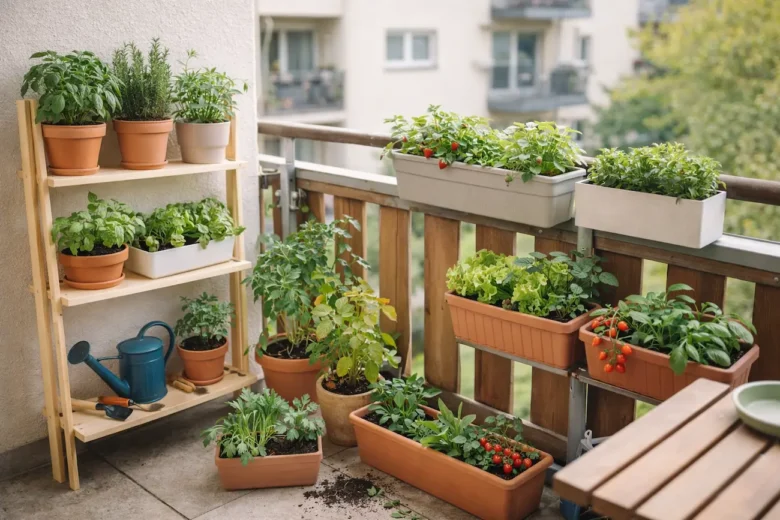
If you’ve ever stood on your balcony, holding a small plant pot and wondering, “Can I really grow a proper garden here?”—you’re not alone. I had the same thought when I started. My balcony was tiny, exposed to harsh sun, and honestly… not very inspiring.
But here’s the thing: balcony gardening isn’t about having the perfect space—it’s about using what you have smartly.
This guide will walk you through everything you need to know to start a successful balcony garden, even if you’re a complete beginner. No complicated setups, no expensive tools—just practical, real-world advice that actually works.
Understanding Balcony Gardening Basics
Before you buy plants or pots, it’s important to understand why balcony gardening works differently from traditional gardening.
Limited Space Means Smart Planning
Unlike a backyard, a balcony gives you limited room. This means every inch matters. You need to think vertically, choose compact plants, and avoid overcrowding.
A cluttered balcony doesn’t just look messy—it also blocks sunlight and airflow, which can harm your plants.
Sunlight Varies More Than You Think
Balconies can have very different light conditions depending on direction:
- South-facing: strong, direct sunlight
- North-facing: mostly shade
- East/West: partial sunlight
Understanding your light is the first step. Many beginners skip this and end up with struggling plants.
Containers Replace Natural Soil Systems
In a garden, soil naturally regulates moisture and nutrients. In pots, everything depends on you:
- Watering
- Soil quality
- Drainage
If your soil isn’t right, your plants won’t thrive. If you need help with that, I recommend reading my guide on how to prepare garden soil at home without expensive tools—it’s a simple but powerful foundation.
Choosing the Right Plants for Your Balcony
Start With Beginner-Friendly Plants
Don’t go for exotic or high-maintenance plants at the start. Choose:
- Herbs (mint, basil, coriander)
- Leafy greens
- Snake plant, pothos (for partial shade)
You can also explore some low-effort plants for beginners that survive even if you forget them sometimes, especially if you’re just getting started.
Match Plants to Your Environment
This is where many people go wrong. A plant that thrives on one balcony might fail on another.
Ask yourself:
- Is my balcony windy?
- Does it get intense afternoon sun?
- Is it humid or dry?
Your plant choice should match these conditions—not just what looks good online.
Setting Up Your Balcony Garden (Step-by-Step)
Now let’s get practical. Here’s a simple setup process that works even on a tight budget.
1. Choose the Right Containers
You don’t need fancy pots. You can use:
- Plastic containers
- Old buckets
- Recycled bottles
Just make sure:
- There are drainage holes
- The size matches the plant
For small spaces, railing planters or vertical setups are a game changer.
2. Use the Right Soil Mix
Avoid using plain garden soil. It gets compacted and suffocates roots.
A good mix should be
- Light
- Well-draining
- Nutrient-rich
Basic mix:
- 40% soil
- 30% compost
- 30% sand or coco peat
3. Ensure Proper Drainage
Poor drainage is one of the fastest ways to kill plants.
Add:
- Small stones at the bottom
- Proper holes in containers
If you’re dealing with water leakage issues, you can also check out simple ways to prevent water leakage from balcony pots.
4. Position Plants Smartly
Place plants based on their needs:
- Sun-loving plants → front or railing
- Shade plants → corners or behind others
Rotate pots occasionally so all sides get light.
Watering the Right Way
Why Watering Is Tricky on Balconies
Balcony plants dry out faster because:
- Pots heat up quickly
- Wind increases evaporation
Overwatering and underwatering are both common mistakes.
Simple Watering Rule
- Stick your finger 1–2 inches into the soil
- If dry → water
- If moist → wait
Also, early morning watering works best.
If you’re unsure about your routine, you can read my guide on creating the correct watering schedule for indoor plants—many principles apply to balcony gardening too.
Dealing With Heat, Wind, and Weather
Balcony plants face more extreme conditions than ground plants.
Heat Stress
During hot days:
- Leaves may droop
- Soil dries too fast
Solution:
- Move pots to partial shade
- Water early morning
- Mulch the soil surface
Wind Damage
Strong winds can:
- Break stems
- Dry out plants quickly
Fixes:
- Use heavier pots
- Group plants together
- Add simple wind barriers
If your plants are already damaged, you can explore how to fix wind damage on balcony plants for recovery tips.
A Few Lessons From My Own Balcony Garden
When I started, I made almost every mistake possible.
I overwatered my plants because I thought “more care = better growth.” Instead, I ended up with soggy soil and weak roots.
One mistake I made was placing all plants in direct sunlight. Within days, some leaves started burning.
In my experience, the biggest shift happened when I started observing instead of guessing. I paid attention to:
- How fast soil dries
- How plants react to sunlight
- Small changes in leaf color
What worked for me was keeping things simple:
- Fewer plants
- Better care
- Consistent routine
And honestly, that’s when my balcony started looking like a real garden.
Common Mistakes to Avoid
- Using heavy garden soil in pots
- Overcrowding too many plants in a small space
- Ignoring drainage holes
- Watering on a fixed schedule without checking soil
- Placing all plants in the same sunlight conditions
- Choosing high-maintenance plants as a beginner
Pro Tips That Make a Big Difference
- Use mulch (dry leaves or coco chips) to retain moisture
- Group plants together to create a mini microclimate
- Reuse kitchen waste (like vegetable peels) for compost
- Start small—it’s better to grow 3 healthy plants than 10 struggling ones
- Observe daily—plants show signs before problems get serious
FAQs
How much sunlight do balcony plants need?
Most plants need at least 4–6 hours of sunlight. However, some plants thrive in partial shade, so always match plant type with your balcony’s light conditions.
Can I grow vegetables on a small balcony?
Yes, absolutely. Leafy greens, herbs, and even small vegetables grow well in containers if they get enough sunlight and proper care.
How often should I water balcony plants?
It depends on the weather and pot size. Check soil moisture instead of following a fixed schedule—this prevents overwatering.
What is the easiest plant for beginners?
Herbs like mint and basil are great starters. They grow fast, require simple care, and adapt well to containers.
Do I need fertilizers for balcony plants?
Yes, but in small amounts. Natural compost works well. Avoid over-fertilizing, as it can damage roots.
Conclusion
Starting a balcony garden might feel overwhelming at first—limited space, changing weather, and so many choices. But once you understand the basics, it becomes surprisingly simple.
You don’t need a big garden, expensive tools, or expert-level knowledge. You just need:
- The right plants
- A little consistency
- And the willingness to learn from small mistakes
Your first few plants might not be perfect—and that’s completely okay. Every gardener learns this way.
What matters is that you start.
Because once you do, that small balcony can turn into a peaceful green space — one plant at a time