
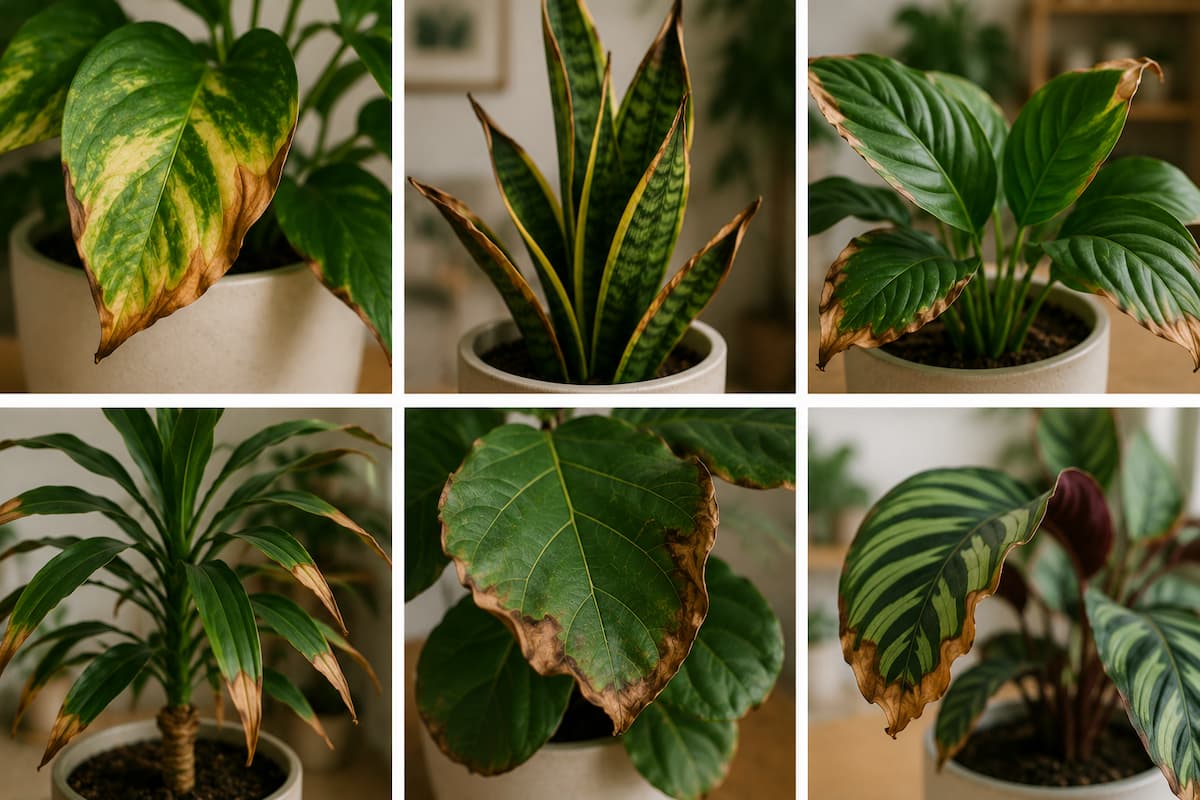
Healthy houseplants can bring life and freshness into a room, but even well-cared-for plants sometimes show signs that something is not quite right. One of the most common concerns among indoor gardeners is the appearance of brown leaf edges. These dry, discolored margins can affect many different plants, from peace lilies to spider plants and pothos.
Although brown leaf edges may seem alarming at first, they are often a plant’s way of signaling that its environment or care routine needs adjustment. Understanding the possible reasons behind this issue can help prevent further damage and keep indoor plants healthy.
Brown leaf edges do not always mean a plant is dying. Often, simple changes to watering habits, humidity levels, or fertilizer use can stop the problem from spreading.
Low Humidity Is a Common Cause
Many popular houseplants originate from tropical regions where humidity levels are naturally high. Indoor environments, especially during winter months or in air-conditioned homes, can become much drier than these plants prefer.
When humidity drops too low, moisture evaporates from the leaves faster than the roots can replace it. As a result, the edges of the leaves may dry out and turn brown.
Plants that frequently show this issue include:
- Peace lilies
- Calatheas
- Boston ferns
- Prayer plants
- Areca palms
Grouping plants together or using a humidifier can help create a more favorable environment for humidity-loving species.
Improper Watering Can Lead to Brown Tips
Watering problems are among the most frequent reasons for leaf edge discoloration. Both underwatering and overwatering can stress a plant.
When soil remains dry for extended periods, roots struggle to absorb enough moisture. This lack of water often appears first along the leaf margins.
On the other hand, constantly wet soil may damage roots and reduce their ability to supply water to the leaves. In both situations, brown edges can develop.
| Watering Problem | Common Symptoms |
|---|---|
| Underwatering | Dry soil, crispy leaves, drooping |
| Overwatering | Yellow leaves, soft stems, soggy soil |
Mineral Buildup From Tap Water
Tap water often contains minerals such as calcium, chlorine, fluoride, and salts. Over time, these substances can accumulate in the soil and affect sensitive plants.
Spider plants and dracaenas are particularly known for reacting to fluoride and salt buildup. The first sign is often browning around the leaf tips and edges.
Flushing the soil occasionally with clean water can help remove excess minerals. Some gardeners also prefer using rainwater, distilled water, or filtered water for sensitive species.
If white crusty deposits appear on the soil surface or around the pot, mineral accumulation may be contributing to brown leaf edges.
Excess Fertilizer Can Burn Leaf Margins
Fertilizers provide nutrients that plants need, but too much can create problems. Overfertilization causes salts to accumulate in the soil, which may damage roots and lead to leaf burn.
The outer edges of leaves often become dry and brown when fertilizer levels are excessive.
Applying fertilizer according to product instructions and avoiding unnecessary feeding can reduce the risk of nutrient burn.
Temperature Stress May Affect Leaf Health
Houseplants generally prefer stable temperatures. Sudden exposure to heat, cold drafts, or direct airflow from air conditioners and heaters can stress plants.
Cold windows during winter and heating vents during colder months are common sources of temperature fluctuations. These environmental stresses may eventually show up as brown edges on leaves.
Keeping plants away from extreme conditions helps maintain healthier foliage.
Natural Aging of Leaves
Not every brown edge signals a serious problem. Older leaves naturally age and decline over time. As nutrients are redirected to newer growth, the oldest leaves may gradually turn yellow or develop brown sections.
If only one or two older leaves are affected while the rest of the plant looks healthy, natural aging is likely the cause.
Root Problems Can Restrict Moisture Uptake
Roots play an important role in supplying water and nutrients. Plants that have become root-bound may struggle to absorb moisture effectively, even when watered regularly.
Signs that a plant may need repotting include:
- Roots growing through drainage holes.
- Water draining too quickly.
- Slow growth.
- Leaves developing brown tips despite proper care.
Repotting into a slightly larger container with fresh soil often improves plant health.
Brown edges usually indicate stress rather than disease. Looking at the plant’s overall condition can provide clues about the underlying cause.
Common Houseplants and Their Typical Causes
| Plant | Likely Cause of Brown Edges |
|---|---|
| Peace Lily | Low humidity or inconsistent watering |
| Spider Plant | Mineral buildup from tap water |
| Calathea | Dry air and low humidity |
| Dracaena | Fluoride sensitivity |
| Pothos | Watering imbalance |
Should Brown Edges Be Trimmed?
Brown sections do not turn green again. Many gardeners choose to trim away damaged areas to improve the plant’s appearance. Using clean scissors and following the natural shape of the leaf can make cuts less noticeable.
However, trimming alone does not solve the underlying issue. Identifying the cause remains the most important step.
Final Thoughts
Brown leaf edges are among the most common issues seen in indoor plants, and they usually point to environmental stress rather than severe disease. Factors such as dry air, watering practices, mineral buildup, temperature changes, and excessive fertilizer are all possible contributors.
By observing the plant carefully and making gradual adjustments, most houseplants can recover and continue producing healthy new growth. Patience and consistency often make the biggest difference in maintaining thriving indoor plants.
FAQs
1. Can brown leaf edges turn green again?
No. Once leaf tissue becomes brown, it does not recover. New healthy growth is a better indicator of improvement.
2. Is tap water harmful to houseplants?
Most plants tolerate tap water, but some sensitive species may develop brown tips because of fluoride or mineral buildup.
3. Should I remove leaves with brown edges?
Minor browning can simply be trimmed for appearance. Severely damaged leaves may be removed entirely.
4. Can too much sunlight cause brown edges?
Yes. Excessive direct sunlight may scorch leaves and produce dry brown areas, especially on shade-loving plants.
Author’s Note: This article was written to provide clear and practical information for indoor plant enthusiasts. The goal is to help readers understand common plant care issues through reliable, easy-to-follow explanations.
Sources and References
- University of Minnesota Extension – Houseplant Care.
- Clemson Cooperative Extension – Indoor Plant Problems.
- Missouri Botanical Garden – Houseplant Maintenance Guides.
- Royal Horticultural Society (RHS) – Indoor Plant Care Advice.
- Penn State Extension – Watering and Fertilizing Houseplants.
- North Carolina State Extension – Common Houseplant Disorders.