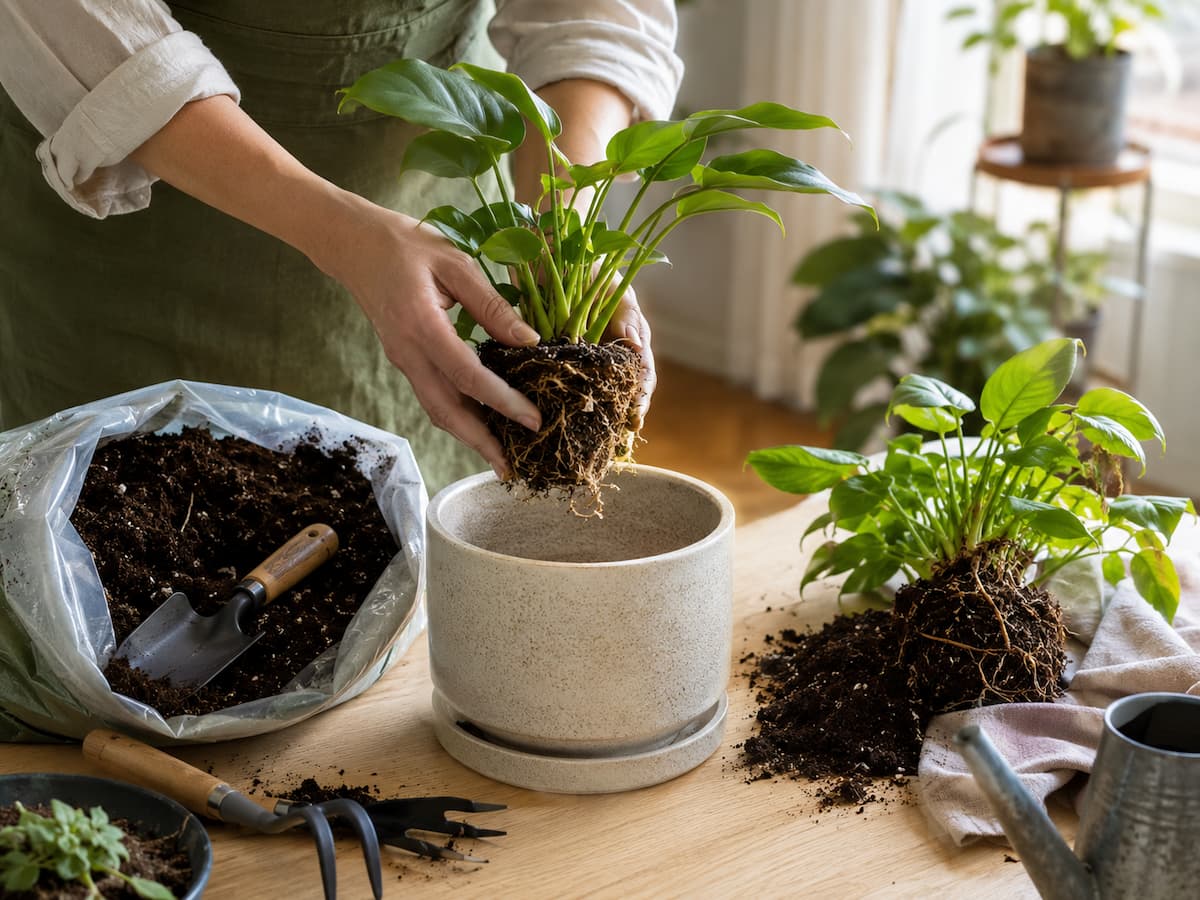
The changing soil environment may respond differently, which stresses plants. Fresh potting mix may hold more or less water than old soil. Root airflow, drainage, and nutrient availability can be altered. Beginners often assume that a larger pot indicates a happier plant. While greater room is desirable, a rapid soil volume rise can cause issues. More dirt around the roots stays wet longer, aggravating root issues.
Tip: After repotting, the goal is not to make the plant grow immediately. The goal is to create stable conditions where the plant can safely recover.
Different plants respond differently to repotting. Some fast-growing plants recover within days, while slower-growing varieties may need several weeks before they look normal again. Understanding this natural adjustment period helps prevent unnecessary changes.
Repotting Stress Compared With Other Plant Problems
| Problem | Common Cause | Typical Sign |
|---|---|---|
| Repotting stress | Root disturbance and environmental change | Drooping leaves, slow growth, temporary leaf loss |
| Overwatering | Too much moisture around roots | Yellow leaves, soft stems, wet soil |
| Underwatering | Not enough available moisture | Dry soil, crispy leaves, wilting |
| Light stress | Sudden change in sunlight exposure | Leaf burns or weak growth |
The important difference is that normal repotting stress usually improves with stable care. Many plant owners accidentally make the situation worse by changing watering schedules repeatedly, moving the plant between locations, or adding extra fertilizer too soon.
How Root Disturbance Affects Plant Recovery
Despite being concealed, roots govern much above ground. Removal from its original container disrupts a plant’s root system. Some fine roots may break, while others need time to adapt to the new soil.
Fine roots are crucial because they absorb most of the plant’s water and nutrients. After repotting, the plant may have less active roots. Even with healthy soil, leaves might look worn. A common mistake is vigorously cleaning or chopping roots during every repotting. Dead or damaged roots can be removed, but healthy roots should be handled delicately. The plant must withstand stress from excessive root cutting.
When Root Disturbance Is Normal
Some root disturbance is expected during repotting. Roots that are tightly circling the inside of the old pot may need gentle separation so they can grow outward again. Plants that have been in the same container for years often benefit from this process. However, healthy roots usually have a purpose. A small amount of disturbance is manageable, but breaking apart the entire root system can delay recovery.
| Root Condition | Recommended Action |
|---|---|
| White or light-colored firm roots | Keep them intact and avoid unnecessary cutting |
| Dark, mushy roots with bad smell | Remove damaged sections carefully |
| Tightly circling roots | Loosen gently before placing in new soil |
| Dry, brittle roots | Handle carefully and provide proper moisture afterward |
Warning: Avoid repotting a plant and performing heavy pruning at the same time unless there is a serious problem. Both actions create stress and can slow recovery.
Common Signs Your Plant Is Struggling After Repotting
Seeing changes after repotting can be alarming, but not every change means the plant is dying. Learning the difference between normal adjustment and serious problems is one of the most useful skills for plant care beginners.
The most common sign of repotting stress is drooping leaves. The plant may look weak because the roots are temporarily unable to supply water efficiently. This can happen even when the soil is moist. Another common reaction is slower growth. Many plants naturally reduce new growth while they focus energy on rebuilding their root system. During this period, the plant is prioritizing survival instead of producing new leaves or flowers.
Watering Problems After Repotting
Watering is one ofmost significantggest challenges after repotting because the plant’s relationship with moisture changes. The same watering routine that worked before repotting may no longer be suitable. Fresh potting soil often absorbs water differently from older soil. Some mixes drain quickly, while others hold moisture for a long time. A larger container can also create a situation where the upper soil looks dry while the lower area remains wet. Many plant owners respond to drooping leaves by adding more water, but such actions can create a cycle of problems. A stressed plant may droop because its roots are adjusting, not because it needs more water.
How to Check Moisture Correctly After Repotting
Instead of following a strict watering schedule, check the actual condition of the soil. The best approach depends on the plant type, pot material, soil mixture, and environment. A plant sitting near a sunny window may dry much faster than the same plant placed in a cooler room. A simple finger test can help beginners. Insert a finger a few centimeters into the soil and feel whether it is still moist. For deeper containers, a wooden stick can also be useful. If soil sticks to the stick and feels wet, watering is usually not needed.
| Soil Condition | What To Do |
|---|---|
| The top layer dry but deeper soil moist | Wait and check again later |
| The entire soil feels dry | Water slowly until moisture reaches the root area |
| Soil remains wet for many days | Improve drainage and reduce watering frequency |
| Water runs through immediately | Check if soil is too dry or compacted |
Expert Tip: After repotting, consistent care is usually better than frequent adjustments. Plants recover faster when their environment stays stable.
Choosing the Right Soil After a Plant Move
The new soil plays a major role in how quickly a plant recovers after repotting. Many beginners focus only on choosing a beautiful pot but forget that the growing medium is where the roots must live and function. Good potting soil should provide three important things: moisture control, airflow, and support. Roots need water, but they also need oxygen. Soil that stays constantly wet can limit airflow around roots and create unhealthy conditions. Different plants need different soil characteristics. A tropical houseplant may prefer a mix that holds some moisture, while succulents and many drought-tolerant plants need faster drainage.
Common Soil Mistakes After Repotting
- Using heavy garden soil inside containers
- Choosing a soil mix that does not match the plant’s needs
- Compressing soil too tightly around roots
- Ignoring drainage holes at the bottom of the pot
When filling a new container, avoid pressing the soil down too firmly. Roots need small spaces where air can move. Overly compact soil can make it harder for roots to expand and absorb resources.
| Plant Type | Helpful Soil Characteristics |
|---|---|
| Leafy houseplants | Balanced moisture retention with good airflow |
| Succulents | Fast drainage and less moisture retention |
| Herbs | Nutrient-rich but well-draining soil |
| Flowering plants | Structure that supports roots and steady growth |
Why Pot Size Matters More Than Many Gardeners Think
A common belief among beginners is that moving a plant into the largest possible pot will help it grow faster. While extra space sounds beneficial, a pot that is too large can actually create challenges. When a container is much bigger than the previous one, there is more soil around the roots. That extra soil can hold moisture for a longer time because the plant’s root system cannot absorb it quickly enough. This can increase the chance of root problems. A slightly larger pot is often enough for most repotting situations. The new container should give roots room to expand without creating a large area of unused wet soil.
Signs Your New Pot May Be Too Large
- Soil stays wet much longer than before
- The plant looks unhealthy despite regular care
- Growth becomes slower instead of faster
- The container feels heavy for many days after watering
Choosing the correct pot size is about balance. The goal is not maximum space but a healthy environment where roots can gradually grow.
Managing Light and Location During Recovery
After repotting, many plants benefit from a calm recovery period. Moving a plant to an entirely different location at the same time as changing its pot can create additional stress. Light affects how much energy a plant produces and how quickly it uses water. A plant that is already adjusting to new roots may struggle if you suddenly place it in intense sunlight or a very dark area. For many indoor plants, keeping them in their usual location after repotting is a sensible approach unless there is a clear problem with the environment. Stability gives the plant time to adjust.
Light Changes To Avoid
| Change | Why It Can Cause Problems |
|---|---|
| Moving from shade to direct sunlight | Leaves may burn before the plant adapts |
| Moving from bright light to a dark corner | Growth may slow due to reduced energy production |
| Placing near heating or cooling vents | Temperature changes can increase stress |
Tip: During recovery, avoid creating several changes at once. A stable location, suitable watering, and patience are often the best support.
Common Repotting Mistakes and How to Avoid Them
Many repotting problems are not caused by repotting itself but by what happens afterward. Good intentions can sometimes create extra stress when plant owners try to help too quickly.
Adding Fertilizer Immediately
Fresh potting soil often already contains nutrients, and recently disturbed roots may not be ready for strong feeding. Fertilizing too soon can put unnecessary pressure on the plant. Allow the plant time to settle before introducing additional nutrients.
Watering Too Frequently
A drooping plant does not always need more water. Root adjustment can temporarily affect water movement inside the plant. Checking soil moisture first prevents accidental overwatering.
Repotting at the Wrong Time
Many plants handle repotting best during periods of active growth. Moving a plant during extreme heat, cold, or dormancy may make recovery slower because the plant is already operating at a reduced pace.
Using Decorative Pots Without Drainage
A beautiful container without proper drainage can trap excess water around roots. Healthy roots need both moisture and airflow, so drainage should always be considered before appearance.
| Mistake | Better Approach |
|---|---|
| Changing soil, location, and watering all at once | Keep conditions stable after repotting |
| Checking the plant constantly | Observe regularly but avoid unnecessary disturbance |
| Removing many leaves immediately | Allow the plant to naturally adjust first |
| Using a much bigger pot | Choose a size appropriate for root growth |
Step-by-Step Guide to Help a Plant Recover After Repotting
Helping a struggling plant recover is mainly about providing the right environment and avoiding additional stress. Plants are living systems that need time to adjust, so patience is an important part of successful plant care.
Step 1: Place the Plant in a Stable Location
Keep the plant somewhere with suitable light and temperature. Avoid moving it repeatedly while it is adjusting.
Step 2: Check Water Needs Carefully
Do not follow the same watering routine automatically. Monitor soil moisture and adjust based on the plant’s actual condition.
Step 3: Remove Only Clearly Damaged Growth
Dead or completely damaged leaves can be removed, but avoid heavy pruning. Leaves still help the plant collect energy while it rebuilds its root system.
Step 4: Wait Before Feeding
Allow the plant time to settle before adding fertilizer. Healthy roots are better prepared to use nutrients effectively.
Step 5: Monitor Gradual Improvement
Recovery is usually shown through small changes: firmer leaves, stable appearance, and eventually new growth. Avoid judging the plant only by how it looks immediately after repotting.
How to Prevent Repotting Problems in the Future
The best way to reduce repotting stress is to prepare before moving the plant. Successful repotting is not only about what happens during the process. The condition of the plant before repotting, the timing, the new container, and the aftercare routine all influence recovery. A healthy plant usually handles repotting better than a weak or already stressed plant. Before repotting, assess whether the plant truly needs a new container. Some plants prefer being slightly root-bound and do not require frequent moves.
Signs That Repotting May Be Needed
- Roots growing through drainage holes
- Water flowing through the pot too quickly because roots occupy most of the space
- The plant becoming unstable in its container
- Growth slowing during the active growing season
- The soil breaking down and draining poorly
Troubleshooting: Why Your Plant Is Not Recovering
Most plants recover after repotting when given stable conditions, but sometimes symptoms continue. When recovery is slow, it helps to investigate the possible cause instead of making random changes.
| Problem | Possible Cause | Solution |
|---|---|---|
| Leaves keep turning yellow | Overwatering, damaged roots, or natural leaf loss | Check soil moisture and inspect overall plant condition |
| Plant remains wilted | Root stress or incorrect watering | Maintain stable care and avoid frequent changes |
| No new growth | Normal recovery period or unsuitable conditions | Provide proper light and patience |
| Soil stays wet too long | Large pot or poor drainage | Reduce watering and improve soil conditions |
| Leaves develop brown edges | Water stress, dry air, or environmental changes | Review humidity and watering habits |
Warning: Avoid removing the plant from its new pot repeatedly to inspect the roots. Frequent disturbance can delay recovery even further.
Understanding the Recovery Timeline After Repotting
One of the biggest sources of worry for plant owners is not knowing how long recovery should take. There is no single timeline because every plant species, growing environment, and repotting situation is different. Some plants may begin looking better within a few days, while others may need several weeks before showing clear improvement. Older plants, plants with damaged roots, or plants moved during stressful weather conditions may require more time.
| Time Period | What May Happen |
|---|---|
| First few days | The plant may droop or look less healthy |
| First few weeks | The plant focuses energy on root adjustment |
| Several weeks later | New growth may begin if conditions are suitable |
| Long-term | The plant returns to normal growth patterns |
The most important thing during recovery is avoiding panic. Many healthy plants temporarily look worse before they improve. Stable care gives them the best chance to adjust naturally.
FAQs
1. Why is my plant drooping after repotting?
Drooping after repotting is often caused by temporary root stress. When roots are disturbed, they may not absorb water as efficiently as before, even if the soil contains enough moisture. The plant may need time to rebuild root function. Avoid immediately adding extra water unless the soil is actually dry. Keeping the plant in stable conditions with suitable light and careful watering usually supports recovery.
2. How long does plant shock last after repotting?
The recovery period depends on the plant type, root condition, environment, and how much disturbance occurred during repotting. Some plants recover within days, while others may take several weeks. Slow growth during this period is normal because the plant is using energy to adjust rather than produce new leaves. Consistent care is more helpful than trying many alternatives.
3. Should I fertilize my plant immediately after repotting?
In most cases, it is better to wait before fertilizing a recently repotted plant. Fresh potting soil often contains nutrients, and stressed roots may not be ready to handle additional fertilizer. Feeding too soon can create extra stress. Once the plant shows signs of stable recovery and active growth, normal fertilizing routines can usually be restarted.
4. Should I cut off damaged leaves after repotting?
Only remove leaves that are completely dead or severely damaged. Slightly drooping or discolored leaves may still help the plant produce energy while it recovers. Removing too much healthy growth immediately after repotting can reduce the plant’s ability to rebuild strength.
5. Can repotting kill a plant?
Repotting itself does not usually harm a healthy plant when done correctly. Problems often happen because of poor aftercare, such as overwatering, using unsuitable soil, choosing an oversized pot, or causing unnecessary root damage. Careful handling and stable conditions greatly improve the chances of successful recovery.
Conclusion
Plants often struggle after repotting because moving to a new container creates several changes at the same time. Roots may need time to recover, soil conditions may be different, and the plant must adjust to a new environment. These reactions are common and do not always mean something has gone wrong.
The most effective approach is simple: provide stability, avoid unnecessary changes, check moisture carefully, and give the plant time. Many repotting problems happen because plant owners try to fix normal adjustments too quickly. By understanding how plants respond after repotting, beginners can make better decisions and avoid common mistakes. Careful preparation before repotting and gentle maintenance afterward can help plants settle into their new homes and continue growing successfully.