
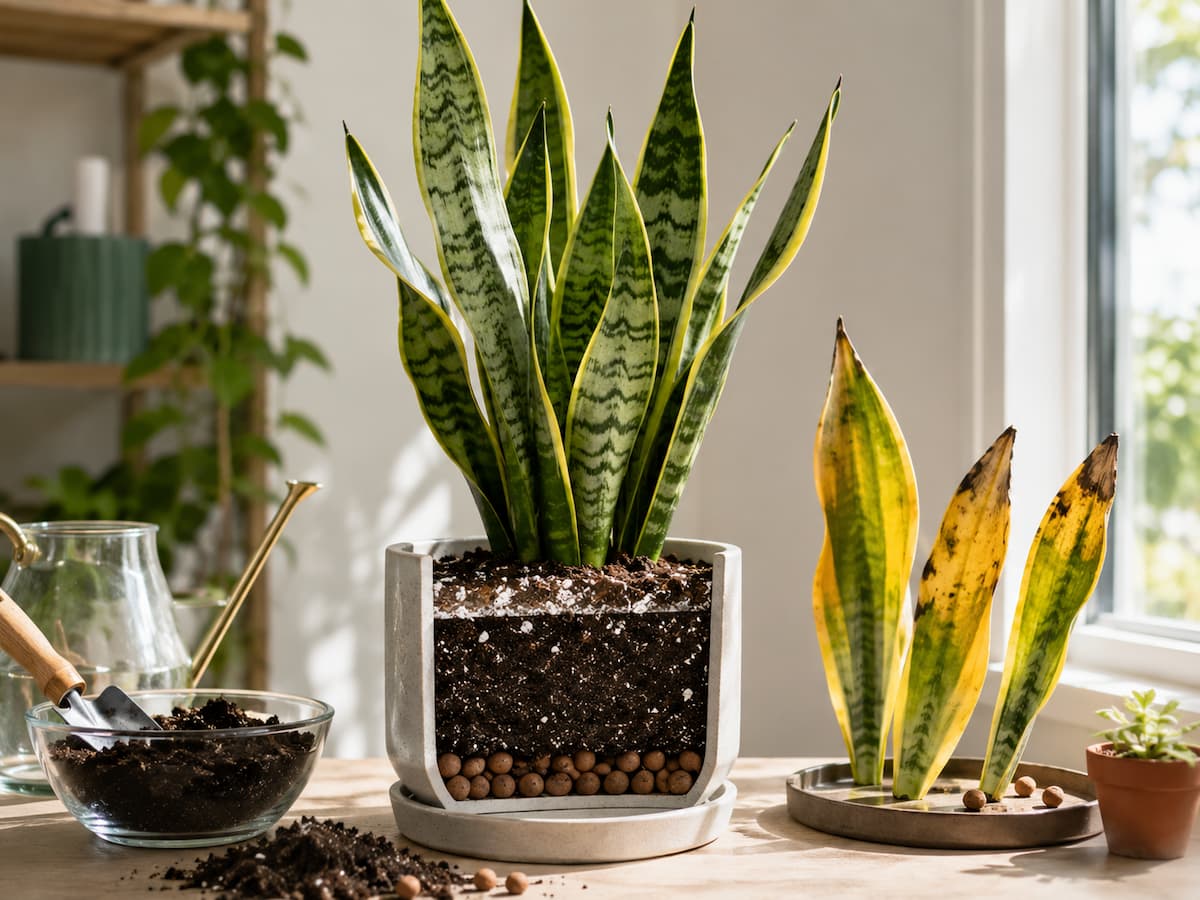
When snake plant leaves turn yellow, it does not always mean the plant is dying. Yellowing can happen because of too much water, poor drainage, incorrect lighting, temperature stress, or natural aging of older leaves. The important step is identifying the actual cause before making changes. This guide explains why snake plant leaves turn yellow and provides practical solutions to help your plant recover. Whether you are a beginner plant owner or have been caring for houseplants for years, these simple tips can help you maintain healthier and stronger snake plants.
Understanding Why Snake Plant Leaves Turn Yellow
Yellow leaves are a way for plants to show that something has changed in their environment. Snake plants store water inside their thick leaves, which allows them to survive dry conditions. However, this same ability means they can suffer when they receive too much water. The first step is observing the type of yellowing. A leaf that becomes soft and yellow is usually connected to moisture problems, while a slowly fading older leaf may simply be part of the plant’s natural growth cycle.
| Yellow Leaf Appearance | Possible Cause |
|---|---|
| Soft, yellow, and mushy leaves | Overwatering or root problems |
| Dry yellow patches | Sun stress or environmental issues |
| Lower, older leaves turning yellow | Natural aging |
| Pale yellow leaves with slow growth | Light or nutrient problems |
Carefully examining the plant before making changes prevents unnecessary adjustments that could create more problems.
Overwatering: The Most Common Cause
Overwatering is the leading reason snake plant leaves turn yellow. Many beginners assume that regular watering helps plants grow faster, but snake plants are naturally adapted to dry environments. When the soil remains wet for too long, the roots cannot receive enough oxygen. Over time, this can weaken the roots and prevent the plant from absorbing water and nutrients properly.
Signs of overwatering
- Yellow leaves
- Soft or bending leaves
- Wet soil for many days
- Unpleasant smell from soil
- Slow growth
Tip: Snake plants usually prefer being slightly underwatered rather than constantly sitting in wet soil.
Poor Drainage and Root Problems
Even if you are careful with watering, poor drainage can create similar problems. A pot without drainage holes can trap excess moisture around the roots. Healthy roots need a balance of water and air. When roots stay wet for extended periods, they may become damaged, making it difficult for the plant to support healthy leaves.
| Problem | Solution |
|---|---|
| No drainage hole | Use a pot with proper drainage |
| Heavy soil | Use a well-draining soil mix |
| Root damage | Remove unhealthy roots and repot |
Choosing the right soil
Snake plants grow best in loose soil that allows excess water to escape. A cactus or succulent-style soil mix is often suitable because it provides better drainage.
Incorrect Lighting Conditions
Lighting plays an important role in snake plant health. Although snake plants tolerate low light, they still need enough indirect light to maintain healthy growth.
Too much direct sunlight
Strong direct sunlight, especially through a hot window, can damage leaves. Such conditions may create yellow or brown patches because the leaves become stressed.
Too little light
Very low light conditions can slow growth and weaken the plant. Leaves may become pale and lose their healthy appearance.
| Light Condition | Effect |
|---|---|
| Bright indirect light | Ideal growth conditions |
| Low light | Slower growth |
| Strong direct sun | Possible leaf damage |
Temperature and Environmental Stress
Snake plants prefer stable indoor temperatures. Sudden changes can stress the plant and contribute to yellow leaves. Cold drafts, heating vents, air conditioners, and sudden movement between different environments can affect plant health.
Common environmental stress factors
- Cold temperatures
- Hot air from heaters
- Frequent location changes
- Sudden humidity changes
Keeping your snake plant in a stable location can help prevent unnecessary stress.
Natural Aging of Snake Plant Leaves
Not every yellow leaf indicates a problem. Like all plants, snake plants naturally replace older leaves. If only one or two older leaves near the base turn yellow while the rest of the plant looks healthy, it may simply be part of normal growth. Removing old damaged leaves helps the plant maintain a cleaner appearance and allows energy to focus on healthy growth.
Tip: Look at the overall condition of the plant instead of reacting to a single yellow leaf.
How to Fix Yellow Snake Plant Leaves
The correct solution depends on the cause. Avoid making multiple changes at the same time because it becomes difficult to understand what helped.
Step 1: Check the soil moisture
Insert your finger into the soil before watering. If the soil is still wet several centimeters below the surface, wait before adding more water.
Step 2: Improve drainage
If the soil stays wet for too long, consider repotting the plant into a container with drainage holes and suitable soil.
Step 3: Adjust lighting
Move the plant to a location with bright indirect light if it receives too much sun or very little light.
Step 4: Remove damaged leaves
Yellow leaves usually do not return to green. Removing severely damaged leaves allows the plant to focus resources on healthier growth.
Creating the Right Snake Plant Care Routine
A simple routine is better than complicated plant care schedules. Snake plants are naturally low-maintenance, so consistent basic care is usually enough.
| Care Area | Recommended Approach |
|---|---|
| Watering | Allow soil to dry between waterings. |
| Light | Provide indirect sunlight |
| Soil | Use well-draining soil |
| Cleaning | Remove dust from leaves |
Checking your plant regularly helps you notice small changes before they become larger problems.
Common Snake Plant Care Mistakes
Many snake plant problems happen because of well-meaning intentions. Owners often provide too much care instead of allowing the plant’s natural habits to guide them.
- Watering on a fixed schedule without checking soil
- Keeping the plant in complete darkness
- Using pots without drainage holes
- Ignoring signs of root problems
- Moving the plant frequently
Understanding what your snake plant needs is more important than providing constant attention.
FAQs
1. Can yellow snake plant leaves turn green again?
Usually, yellow leaves do not return to their original green color. The best approach is fixing the cause of the yellowing and removing severely damaged leaves if necessary.
2. How often should I water a snake plant?
Watering depends on factors such as light, temperature, pot size, and soil type. The safest method is checking that the soil has dried before watering again.
3. Is low light harmful for snake plants?
Snake plants can tolerate low light better than many houseplants, but extremely dark locations can slow growth and affect overall health.
4. Should I cut yellow leaves from my snake plant?
Yes, damaged yellow leaves can be removed. Use clean scissors and cut close to the soil level if the entire leaf is affected.
5. Why are my snake plant leaves soft and yellow?
Soft yellow leaves are often related to excess moisture and possible root problems. Examine the soil and drainage conditions before watering again.
Conclusion
Yellow snake plant leaves are usually a sign that the plant is experiencing stress, but the problem is often straightforward to correct. Overwatering, poor drainage, lighting problems, and environmental changes are the most common causes. The best way to keep a snake plant healthy is to provide balanced care: allow the soil to dry between watering, provide suitable light, use proper drainage, and avoid unnecessary changes. With the right routine and careful observation, even beginner plant owners can maintain strong, healthy snake plants for many years.
References
- University Extension Gardening Resources – Indoor Plant Care Guidelines
- Royal Horticultural Society – Houseplant Care Information
- Missouri Botanical Garden – Sansevieria Plant Information
- United States Department of Agriculture – Plant Care Resources