
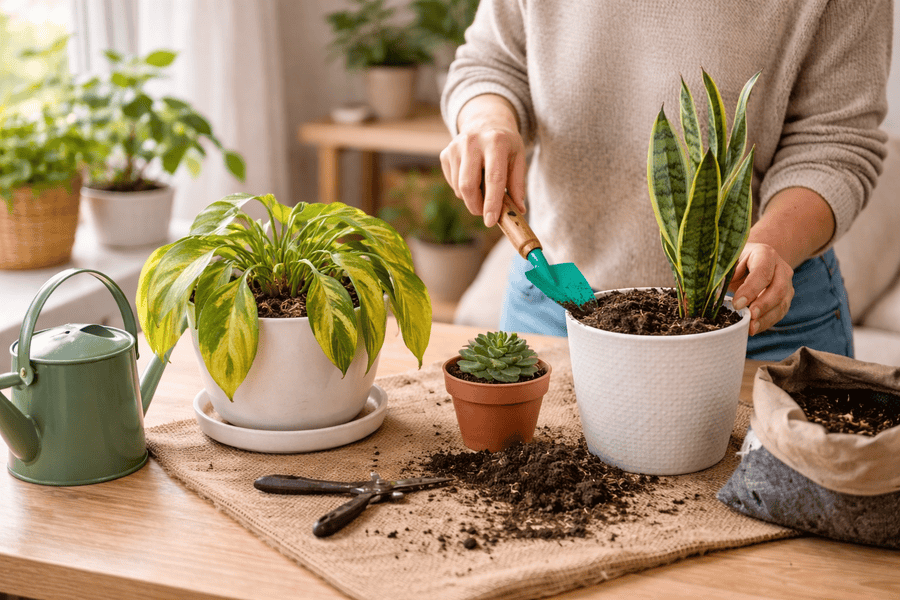
Adding a touch of nature to your home will enliven your living spaces and enhance the air quality in general. A lot of well-meaning plant owners bring home stunning foliage, only to have it progressively fade away in a matter of weeks. The key to keeping these green buddies alive and well is to avoid the blunders that even veteran gardeners sometimes make. When caring for indoor plants, you must see them as living things with specific environmental needs, not just decorations. You can absolutely grow your own thriving indoor jungle, too, if you know what makes plants fail and take proactive steps to change your care routine. When you’re a successful plant parent, it’s not about guessing; it’s about paying close attention and adjusting your surroundings to fit new green additions.
Knowing What Your Plant Needs
Every plant variety has a natural habitat it’s from, and that will influence the specific care it needs while it’s in your home. A fern that occurs naturally on the cool, shady forest floor will need an entirely different approach than a succulent from a hot, dry desert. The biggest reason indoor plants don’t survive the journey from the nursery to your living room is that people lack research and understanding of these essential distinctions. You need to seek out the precise needs for humidity, temperature and light for each new plant you get. You can’t provide all your houseplants the same maintenance routine and expect the more delicate ones to survive. By replicating their natural surroundings as nearly as possible, you are giving your plants the biological foundation for developing strong roots and healthy new growth.
Common Watering Errors
Overwatering is still the most devastating plant owner error, often destroying plants more quickly than underwatering ever could. Roots that remain constantly immersed in wet soil suffocate for lack of oxygen and soon develop root rot, a fungal disease that kills the plant from the bottom up. If you let the soil entirely dry up for extended periods, however, the roots will shrivel and die, and the plant won’t be able to absorb moisture when you do finally water it. Always test the moisture below the surface before you lift the watering can. Stick your finger into the soil a few inches deep and feel it. Drainage is almost as important, so always choose pots with drainage holes and empty the saucer bottom so your plants never remain in stagnant water.
The Dangers of Bad Lighting
If you give a plant the wrong type of light, it can’t photosynthesise properly. This prevents the plant from growing and causes it to slowly degenerate. Put a sun-loving plant in a dark corner, and it will go lanky, stretching furiously towards the nearest light source, and will eventually remove its leaves to conserve energy. If you place a shade-tolerant plant in direct, roasting sun, its leaves will get burnt quite badly, leaving permanent brown, crispy patches all over the leaves. It’s wise to assess the natural light in your house, noting whether windows face north, south, east or west, and position your plants accordingly. If your home doesn’t get enough natural light, it’s worth investing in full-spectrum LED grow lights, which can easily make up the deficit and keep your thirsty plants bright and healthy all year round.
Nutrient and Soil Issues
All of your plants are in generic, heavy potting soil which blocks airflow to roots and traps excess moisture, which will lead to health issues down the road. Epiphytes such as orchids and monsteras thrive in chunky, well-draining soil mixes containing bark and perlite, whereas moisture-loving plants prefer thicker organic matter that retains water for extended periods. Besides the soil structure, plants in pots will ultimately run out of nutrients and depend solely on you to give them extra food. Too much fertiliser burns the delicate root system, and no fertiliser stunts the plant and makes it vulnerable to disease. Feed solely with a weak liquid fertiliser during the busy growing season of spring and summer and stop all feeding during the dormant winter months so that hazardous mineral building does not occur in the soil.
Pest Control and Prevention
If you don’t catch the initial indicators of a pest infestation, damaging insects can proliferate swiftly and spread to every other plant in your house. Spider mites, fungus gnats, mealybugs and aphids are experts at hiding under leaves and in the cracks of stems, sucking the critical sap from your plants and causing significant harm. Every time you water your plants, regularly check the undersides of foliage and the top layer of soil for any strange movement, webbing or sticky residue. When you bring home a fresh plant from the store, keep it in a separate area for at least two weeks to be certain it isn’t harbouring any sneaky hitchhikers. Regularly wiping down the leaves with a damp cloth eliminates dust for photosynthesis but also physically kills early-stage pests before they can develop a colony.
Creating the Perfect Environment
Indoor conditions tend to be extreme, with air conditioning vents blowing plants in summer and radiators blasting dry heat in winter. Most houseplants come from tropical climes and flourish in situations where temperatures are quite constant and ambient humidity is relatively high. This scenario is not often the case in modern, climate-controlled houses. An unexpected cold snap or a cold blast from draughty windows will startle your plants into panic, and they will abruptly shed their leaves. To boost the humidity in the immediate area of your tropical plants, cluster them close together, place them on pebble trays with water in them, or run a dedicated humidifier nearby. Keeping your plants out of direct heat sources and draughty doors gives them the stable, comfortable atmosphere they need to focus their energy on developing lush, colourful foliage.
Nurturing Your Green Companions
Creating a beautiful indoor garden is a process of continuous learning that rewards patience, observation and readiness to change course when things go wrong. Every plant we lose is a wonderful lesson that strengthens your knowledge of what various species require to fully thrive within your home. If you make the effort to learn each plant’s specific needs, control your watering habits, and set up proper lighting and soil, you will greatly minimise the chance of frequent care errors. Your home becomes a blooming green heaven that will bring you everyday joy and a feeling of accomplishment. Listen to the subtle signals your plants offer you, and you will enjoy a lively, healthy indoor jungle for many years to come.