
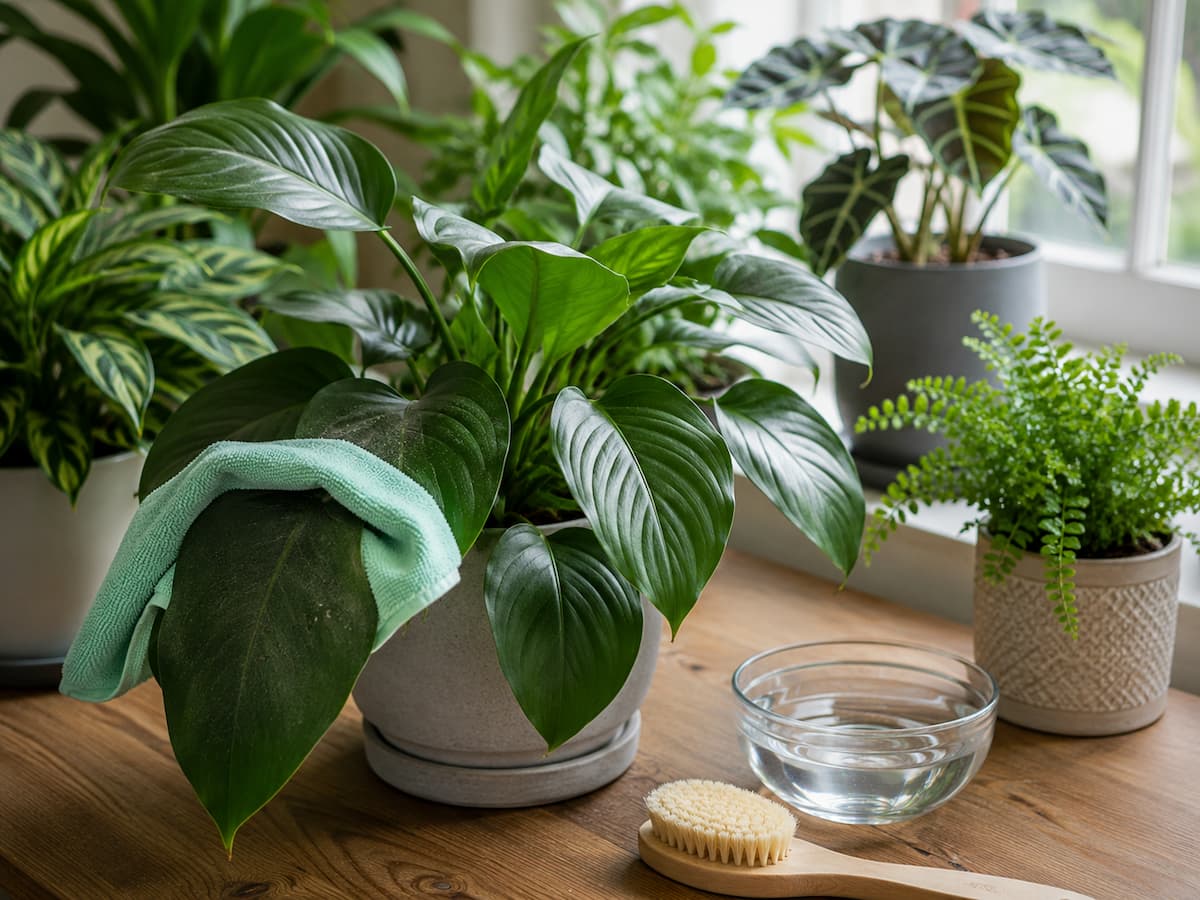
This guide shows how to clean houseplant leaves without straining them. You will learn which tools work best, when to use water, how to handle delicate leaves, cleaning mistakes to avoid, and how to tell if a dirty plant has a pest or environmental problem.
Why Cleaning Houseplant Leaves Matters
Leaves naturally collect indoor dust. This accumulation can be caused by cooking, heating, open windows, dogs, fabric fibers, and household activity. On plants with big leaves, the layer may become visible over time. Cleaning eliminates surface debris, brightening and making foliage easier to inspect. Clean leaves also help spot plant changes. Dust can hide small insects, webbing, sticky residue, discoloration, and strange markings on vegetation. Therefore, inspecting your plants regularly can become part of ordinary plant maintenance rather than a cosmetic effort.
The importance of leaf cleaning should not be overstated. Wiping leaves does not replace light, watering, humidity, soil, or pest control. A plant with yellow leaves or weak growth may not recover after cleaning. Consider leaf-cleaning maintenance. It makes foliage presentable and simpler to inspect, but it does not replace plant growth circumstances.
What to Check Before Cleaning
Before using a cloth or spray bottle, inspect the plant. Check for smooth, fuzzy, waxy, highly textured, thin, or fragile leaves. A procedure that works on a rubber plant may be too abrasive for a soft, hairy plant. Check the foliage too. Aggressive cleaning may worsen ripped, damaged, wilted, or suspiciously spotted leaves. It’s best to identify the underlying issue first. Examine the leaf undersides. Many typical houseplant pests live there. Pests may appear as small insects, thin webbing, scale-like lumps, or odd sticky deposits.
| Leaf Type | Good Starting Method | What to Watch For |
|---|---|---|
| Smooth, broad leaves | Soft damp cloth | Do not scrub hard. |
| Small, sturdy leaves | Gentle rinse if suitable | Avoid excessive water sitting in foliage. |
| Fuzzy or hairy leaves | Soft dry brush | Water can remain trapped among hairs. |
| Thin or delicate leaves | Very gentle dusting | Cloths can tear fragile foliage. |
| Waxy leaves | Soft damp cloth | Do not remove the natural surface coating. |
Tools You Can Use Safely
You do not need expensive plant-cleaning products to remove ordinary dust. In many homes, the safest equipment is already available. A clean, soft microfiber cloth can work well on larger smooth leaves because it can lift dust without requiring much pressure. A soft paintbrush or another clean, gentle brush can be useful for smaller or textured areas where a cloth cannot easily reach.
A container of clean water can be useful when a damp cloth is appropriate. If you are cleaning several plants, change the water when it becomes visibly dirty rather than continuing to spread the same material across the foliage. Whatever tool you choose, cleanliness matters. A cloth used previously for household chemicals, furniture polish, or other cleaning products should not be used on plant leaves. Residue left in the fabric can transfer to the foliage.
A basic plant-cleaning kit
- Clean, soft microfiber cloths
- Clean soft-bristled brush for delicate or textured foliage
- Room-temperature water
- Clean towel for catching drips when necessary
- Small basin for plants that can be moved safely
The simpler the equipment, the easier it is to control what comes into contact with the leaves. For routine dust removal, plain water and gentle handling are often enough.
How to Wipe Smooth Leaves
Clean upper and lower surfaces as needed. The bottom collects dust and can reveal vermin. Do not squeeze the leaves with fingers and a towel. Normal dust can be touched gently. Before going to another plant, rinse or replace filthy cloth. This is especially crucial when cleaning a collection of houseplants to avoid spreading trash or bugs. Test your cleaning approach on one or two leaves before cleaning a plant. Observe before cleaning the entire plant.
When Gentle Showers Work Better
Rinsing robust houseplants gently may be easier than wiping each leaf. A shower or light sprinkle will dislodge dust from foliage, especially small-leafed plants. This procedure is not suitable for all houseplants. Before rinsing a plant, check its leaf for water tolerance and container drainage. Don’t push water on leaves to bend, tear, or damage them. A moderate trickle beats a strong spray.
Drain excess water after rinsing. Avoid leaving a plant in drained water. Too much wet growth media can cause root moisture issues. Also, avoid direct sunlight on a freshly cleaned plant. Unexpected weather and wet foliage might cause tension. Return the plant to normal growth slowly.
When not to use the shower method
Skip the shower approach for plants with very delicate foliage, fuzzy leaves that trap moisture, plants that are already suffering from excess moisture, or containers that are difficult to drain safely. In these cases, targeted dust removal is usually easier to control.
How to Clean Delicate or Fuzzy Leaves
Fuzzy leaves require special care because their surface hairs can trap moisture. Plants such as African violets have foliage that is noticeably different from the smooth leaves of many common houseplants. Rubbing them with a wet cloth can disturb the hairs or leave moisture sitting on the leaf surface. For this type of foliage, a clean, soft brush can be a better starting point. Use very light movements to lift dust rather than trying to polish the leaf. A small artist’s brush with soft bristles can provide enough control for individual leaves.
Do not use adhesive rollers, rough towels, stiff brushes, or abrasive materials. The goal is to remove loose particles, not to make the leaf perfectly spotless. Thin leaves also deserve a gentle approach. If a leaf bends easily while you are cleaning it, reduce pressure immediately. A slightly dusty leaf is preferable to a damaged leaf.
Remember: Some plants naturally have textured, hairy, waxy, or matte foliage. Do not try to make every leaf look glossy. Natural leaf surfaces are part of the plant.
Cleaning Large or Hard-to-Move Plants
Large houseplants create a different challenge because moving them to a sink or shower may damage stems, branches, pots, or furniture. In these situations, clean the plant where it normally sits if the location is safe to work in. Place a towel underneath or around the pot if you expect a few drops of water. Work from the upper leaves downward so dust does not fall onto foliage you have already cleaned. For very large leaves, clean one section at a time rather than trying to handle the entire surface in one movement.
Large plants can also be easier to maintain when you clean them regularly in small sessions. Instead of waiting until every leaf is heavily coated with dust, clean a few leaves whenever you notice buildup. This reduces the amount of handling required at one time.
If the plant is positioned on a high shelf or another difficult location, do not stretch or balance unsafely just to clean it. Move the plant only if you can do so securely, or use a stable surface that allows you to work without putting yourself or the plant at risk.
Choosing and Using Water
For routine cleaning, plain water is usually the simplest option. Water should be reasonably clean and not extremely hot or cold. Room-temperature water is a practical choice because it avoids exposing the foliage to a sudden temperature difference. Some homes have hard water, which contains dissolved minerals. When droplets repeatedly dry on leaves, they can leave visible spots or deposits. If this is a problem, you can test a small area with another suitable water source and see whether the residue is reduced.
However, avoid turning leaf cleaning into a complicated chemical process. You generally do not need to add household soaps, detergents, disinfectants, or fragrance products simply to remove ordinary dust. Water should also be applied with control. A damp cloth is very different from soaking a plant’s entire foliage. More water does not automatically mean cleaner leaves. The safest approach depends on the plant’s structure and tolerance.
| Situation | Practical Approach |
|---|---|
| Light dust | A dry soft brush or gentle dry cloth |
| Heavier dust on smooth leaves | Slightly damp soft cloth |
| Many sturdy small leaves | Gentle rinse if the plant and pot allow it. |
| Fuzzy leaves | Soft dry brush |
| Mineral spots | Use an appropriate water source and test carefully. |
Cleaning Products and Methods to Avoid
One of the biggest misconceptions is thinking bright leaves are healthier. Products like household oils, furniture polish, and detergents can leave residues on leaves and alter their natural surface. A healthy plant need not be polished. Dish soap may not be a safe plant-specific therapy. Too much soap or detergent can damage plant tissue, especially on fragile leaves. Instead of using a concentrated home cleaner to treat insects, use a pest-specific remedy. Avoid rough sponges and abrasives. Scratches can damage leaf surfaces. Dust removal from home items usually requires gentle handling.
- Do not use furniture polish on plant leaves.
- Do not use household disinfectants as routine leaf cleaners.
- Do not scrub leaves aggressively.
- Do not use very hot or very cold water.
- Do not leave plants sitting in drainage water.
- Do not apply an unfamiliar substance to the entire plant without testing it first.
Warning: If a product is designed for furniture, glass, kitchens, or general household surfaces, do not assume it is safe for living plant tissue.
When Dirty Leaves May Mean Something Else
Not everything that looks like dust is actually dust. Sticky leaves, tiny moving insects, white cotton-like material, fine webbing, clusters of bumps, or unusual discoloration may point to a pest or plant-health issue. Cleaning the leaf may remove some visible material, but it will not solve an infestation by itself. Honeydew, for example, can make leaves feel sticky. Certain insects produce this substance while feeding on plant sap. A black, sooty-looking coating can sometimes develop on surfaces where honeydew is present. Other pests may leave visible webbing or small marks on the foliage.
If you see something unusual, inspect both sides of the leaves and examine stems and new growth. If practical, isolate a visibly infested plant from nearby plants while you identify the problem. This can reduce the chance of an issue spreading through a collection. Do not automatically respond by scrubbing harder. The right solution depends on what is actually causing the residue or damage. University extension services and reputable horticultural resources can be useful when identifying common houseplant pests and selecting an appropriate treatment.
How Often Should Houseplant Leaves Be Cleaned?
There is no single schedule that works for every home or every plant. A plant near a frequently opened window may collect dust differently from one in a relatively enclosed room. Plants in homes with pets, cooking activity, or construction dust may also need attention more often. Rather than following a strict calendar, look at the foliage. If dust is clearly visible, gently clean it. Large-leaved plants often make buildup easier to notice, while plants with small or textured leaves may need a closer inspection.
Regular light cleaning is generally easier than occasional aggressive cleaning. If you spend a few minutes inspecting and dusting your plants occasionally, you can also notice problems before they become obvious. Keep in mind that excessive handling can be counterproductive. Plants do not benefit from having their leaves constantly touched or washed. Clean only when there is a reason to, and use the least aggressive method that does the job.
Common Leaf-Cleaning Mistakes
A common mistake is cleaning every plant in exactly the same way. Houseplants vary considerably in leaf texture and structure, so a technique that works on one species may be unsuitable for another. Start by observing the foliage and choose the gentlest reasonable method. Another mistake is using too much pressure. People sometimes scrub a leaf because ordinary dust does not disappear immediately. That can cause more harm than the original dust.
Using dirty clothes is another overlooked problem. A cloth that has collected household chemicals or debris should not be reused on plants. Clean tools reduce the chance of transferring unwanted substances between leaves.
Some people also clean leaves while ignoring the rest of the plant. If the potting mix is staying wet for long periods, the plant is receiving unsuitable light, or pests are present, polished leaves will not solve the underlying issue.
| Mistake | Safer Alternative |
|---|---|
| Scrubbing hard | Use light, controlled strokes. |
| Using household polish | Use plain water when appropriate. |
| Using one method for every plant | Match the method to leaf texture. |
| Ignoring the underside | Inspect both sides for dust and pests. |
| Overwatering during cleaning | Control the amount of water and let excess drain. |
A Simple Safe-Cleaning Routine
For most ordinary houseplant maintenance, leaf cleaning can be a quick and controlled process. Start by checking the plant rather than immediately applying water. Decide whether the leaves need only dry dusting or whether a slightly damp cloth would be useful.
- Inspect the leaves, stems, and undersides for pests or unusual damage.
- Identify the leaf texture and choose an appropriate cleaning method.
- Use a clean, soft cloth or brush.
- Start gently and avoid bending the leaf unnecessarily.
- Use a small amount of clean, room-temperature water when appropriate.
- Replace or rinse the cloth when it becomes dirty.
- Allow moisture to drain or evaporate naturally.
- Return the plant to its normal growing location once the cleaning is complete.
This routine is intentionally simple. The purpose is not to complicate houseplant care. A few careful minutes can remove visible dust while giving you an opportunity to inspect the plant closely.
Conclusion
Cleaning houseplant leaves does not need to be complicated. For many plants, the safest approach is simply to remove dust gently with a clean cloth or soft brush and use plain water when appropriate. The important part is matching the method to the plant rather than treating every type of foliage the same way.
Smooth leaves can often tolerate careful wiping, while fuzzy, thin, or delicate leaves may require much less moisture and handling. A gentle rinse can work for some sturdy plants, but good drainage and proper drying are important. Household polishes, harsh cleaners, rough materials, and aggressive scrubbing are unnecessary for routine dust removal.
Leaf cleaning also provides a useful opportunity to inspect your plants. If you notice sticky residue, insects, webbing, discoloration, or unusual damage, investigate the cause instead of assuming the plant simply needs more cleaning. The goal is not perfectly polished foliage. It is healthy, well-maintained plants with leaves that can be inspected and cared for without unnecessary stress. A gentle cleaning routine, combined with appropriate light, watering, soil, and pest management, is a much better foundation for long-term houseplant care.
FAQs
1. Can I wash my houseplants’ leaves with tap water?
Many households use tap water to clean leaves. The main thing is to ensure no visible mineral deposits remain after drying. If you notice white spots or residue, try using a different, suitable water source on a small area first and compare the results. Avoid water that is too hot or too cold. The priority is not to use a special cleaning agent but rather a gentle method suitable for the plant’s leaves.
2. Should I use milk to polish plant leaves?
Generally, there is no need to use food products like milk to polish leaves. They can leave organic residue on the leaves instead of simply removing dust. For smooth leaves, a clean, slightly damp cloth is a simpler option. If the plant’s leaves naturally have a matte or textured finish, there is no reason to make them shiny. Healthy leaves do not need an artificial sheen.
3. Can I spray all my houseplants with water in the shower?
No. While some hardy plants can tolerate a light rinse, not all houseplants are suitable for spraying with water. Plants with hairy or delicate leaves, poor drainage, or those particularly sensitive to water are best cleaned by wiping them with a soft, dry brush or a soft cloth. Before rinsing, check the plant’s leaf structure and ensure the pot drains well.
4. How do you clean dusty leaves without damaging them?
Use the gentlest method to remove dust. For smooth leaves, a clean, soft, slightly damp cloth usually works well. Support the underside of the leaf while wiping and avoid repeated rubbing. For delicate or fuzzy leaves, a soft brush may be safer than a damp cloth. When in doubt, test a small section of the leaf first before cleaning the entire plant.
5. Should I clean the undersides of plant leaves?
Yes, provided the plant’s leaf structure allows for it. The undersides of leaves easily accumulate dust but are also key areas to check for pests. Inspect the leaves for small insects, spiderwebs, sticky substances, unusual bumps, or discoloration. Touch the undersides gently, as some leaves are more prone to damage on the bottom than on the top. Regular checks help you detect infestations early.