There is a particular smell that houseplant owners learn to dread. It is not the earthy scent of healthy soil or the green freshness of new growth. It is something else entirely — a faint, sour sweetness that rises from the drainage saucer when you lift a pot that has been sitting in water for too long. By the time you smell it, the damage is often already done. Root rot does not announce itself with drama. It whispers.
The cruel irony of easy-care houseplants is that they are often killed with kindness. Pothos, snake plants, ZZ plants, and spider plants are marketed as nearly indestructible, which leads people to believe they are also forgiving. They are not. They are merely slow to complain. A cactus will show distress within days. A pothos will quietly yellow and drop leaves for weeks before you realize something is wrong, and by then the root system may be half gone.
Watering is where most of this damage happens. Not because it is complicated, but because it is deceptively simple. Water goes in, plant drinks it, everyone is happy. Except when the water goes in too often, or not enough, or at the wrong temperature, or through the wrong method, or into a pot that traps it like a swimming pool. Here are the mistakes that turn easy-care plants into compost, and how to stop making them.
Overwatering: The Number One Killer
Sharon Yiesla, a plant knowledge specialist at The Morton Arboretum, puts it plainly: “Often, plant owners are watering without checking to see if the soil is moist or dry.” citeweb_search:4#0 The impulse is understandable. You see a plant, you assume it is thirsty, you pour. But most easy-care houseplants — pothos, philodendron, ZZ plants, snake plants — prefer their soil to dry out between waterings. Their root systems are adapted to brief periods of moisture followed by longer stretches of dryness. Saturating them continuously is like forcing a desert animal to live in a swamp.
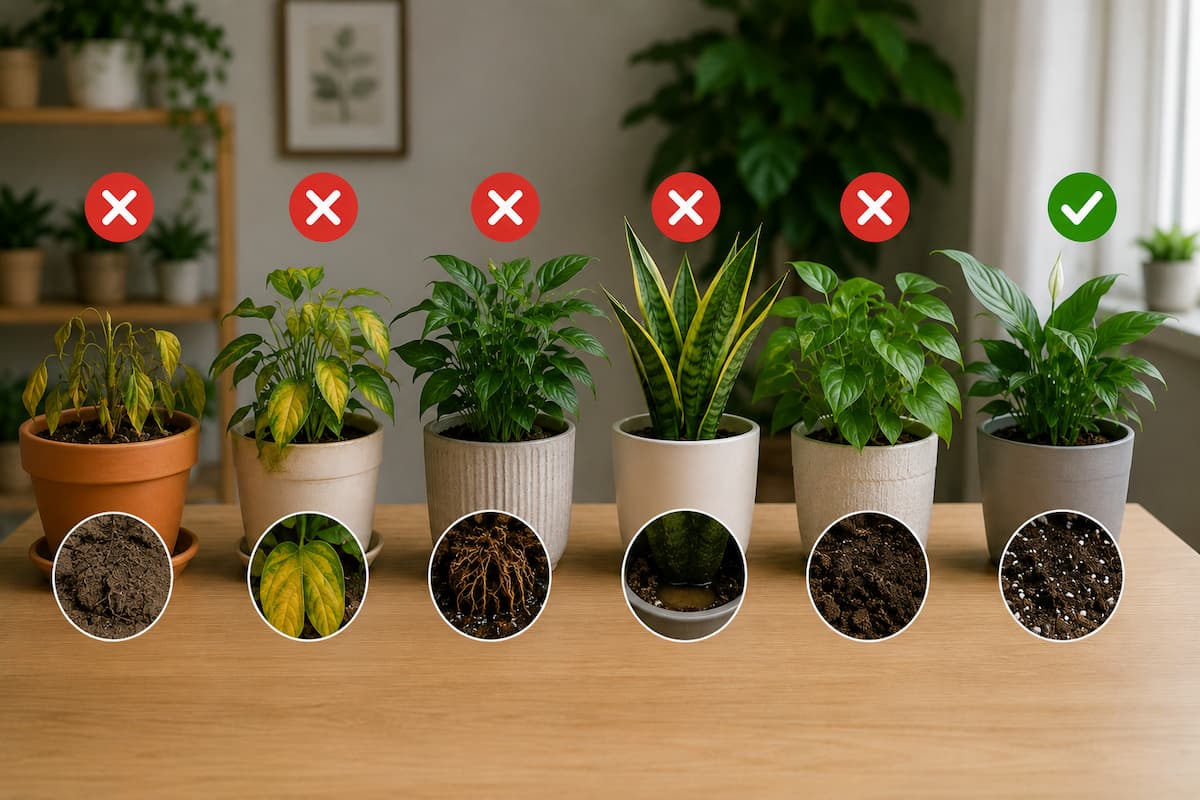
The symptoms of overwatering are easy to misread. Leaves turn yellow or brown. The plant wilts. The soil smells off. Many owners respond to these signs by adding more water, assuming the plant is thirsty. In reality, the roots are drowning. When soil stays wet for too long, oxygen cannot reach the root zone. The roots suffocate, begin to rot, and lose their ability to absorb water at all — which causes the plant to wilt further, triggering another misguided watering. It is a death spiral disguised as care.
The only reliable prevention is to check the soil before every watering. Stick your finger into the top inch or two. If it feels damp, wait. If it is dry, water thoroughly until water runs from the drainage holes, then discard the excess from the saucer. Never let the pot sit in standing water. That saucer is for catching overflow, not for storage.
Root Rot Check: If you suspect overwatering, gently remove the plant from its pot and inspect the roots. Healthy roots are white or cream-colored and firm. Rotting roots are gray, brown, or black, and feel slimy or mushy. They may also smell foul. A plant with advanced root rot rarely recovers, but early intervention — trimming damaged roots, repotting in fresh dry soil, and withholding water — can sometimes save it.
Shallow Watering: The Survival Trap
Watering frequently but lightly is almost as damaging as overwatering. When you give a plant a small splash every day, only the top layer of soil gets wet. The roots, sensing moisture near the surface, stop growing deeper. The result is a shallow, weak root system that cannot support the plant properly. The plant survives, but it never thrives. It becomes dependent on frequent watering and vulnerable to any disruption.
The correct approach is to water deeply and less often. When you do water, apply enough that excess flows from the drainage holes. This ensures the entire root ball is saturated, encouraging roots to grow downward and outward in search of moisture. Then let the soil dry appropriately before watering again. For most easy-care houseplants in standard potting mix, this means waiting until the top one to two inches of soil are dry to the touch.
Confusing Frequency With Quantity
This is the most common conceptual error. You read that a plant “needs more water” and interpret that as “water it more often.” What it actually means is “give it a thorough soaking when it is dry.” A plant that needs a lot of water does not want a daily splash. It wants a full drink, then time to dry.
Think of it this way: in nature, rain does not fall as a gentle mist every morning. It pours, then stops, and the soil dries over days or weeks. Your watering should mimic that rhythm. A complete wetting of the soil followed by a proper dry period is healthier than constant light moisture. This is especially true for plants like pothos, ZZ plants, and snake plants, which are specifically adapted to cycles of wet and dry.
Using Ice Cubes: A Cold Myth
Despite persistent advice — especially for orchids — ice cubes have no place in houseplant care. Houseplants are overwhelmingly tropical or subtropical in origin. They do not encounter frozen water in their natural habitats, and their root systems are not equipped to handle it. Cold shock damages root tissue, and the small amount of water provided by a couple of ice cubes is rarely sufficient anyway. The plant ends up both stressed and underwatered.
Jeanna Liu, founder of Cowbell Plant Co., is unambiguous: “I am not sure when the ice cube for orchids myth came to be, but this is a hard no.” Use room-temperature or lukewarm water instead. In winter, tap water can be surprisingly cold straight from the pipe. Let it sit for a few minutes before watering, or your sensitive plants may experience the same shock they would from ice.
Ignoring the Season
Plants do not live on the same schedule year-round. In winter, shorter days, lower light intensity, and cooler indoor temperatures all slow down a plant’s metabolism. Growth stalls. Water in the soil evaporates more slowly. The plant simply needs less moisture. Yet many owners maintain the same summer watering routine straight through December, and wonder why their plants start yellowing in January.
The rule is straightforward: water less in winter. For most easy-care houseplants, this means extending the dry period between waterings by several days, sometimes by a week or more depending on your home’s humidity and temperature. The only way to know for sure is to check the soil. Do not water on a calendar. Water when the plant is actually dry.
Seasonal Adjustment Guide: In summer, most easy-care plants need water when the top inch of soil dries — typically every 7 to 10 days. In winter, that same plant may only need water every 14 to 21 days. Succulents and snake plants can go a month or longer in cool, low-light conditions. The only reliable indicator is your finger in the soil, not the date on your calendar.
Bottom Watering vs. Top Watering: When to Use Which
Most people water from the top because it is intuitive. Water goes on the soil, gravity pulls it down, roots drink. But bottom watering — placing the pot in a container of water and letting the soil absorb moisture from below — has legitimate advantages for certain situations.
Bottom watering ensures the entire root ball gets evenly moist, which is especially helpful when soil has dried out completely and repels water from the top. It also keeps leaves dry, which matters for plants with fuzzy or sensitive foliage like African violets, snake plants, and certain philodendrons. It discourages fungus gnats by avoiding surface moisture where they lay eggs. And it promotes deeper root growth as roots grow toward the water source.
However, bottom watering is not universally better. Top watering is necessary every four to six months to flush accumulated mineral salts from fertilizer out of the soil. Without this occasional flush, salts build up and can burn roots. Large pots are also impractical to bottom-water simply because they are too heavy to move. And bottom watering takes longer — roughly 15 to 30 minutes for a small pot, longer for larger ones.
| Method | Best For | Avoid For | Key Caution |
|---|---|---|---|
| Top Watering | Regular maintenance; large, heavy pots; flushing salts | Plants with sensitive leaves; extremely dry soil that repels water | Water until it runs from drainage holes; do not let pot sit in runoff |
| Bottom Watering | Very dry soil; fuzzy-leaf plants; fungus gnat prevention; promoting deep roots | Large containers too heavy to lift; routine long-term use without occasional top flushing | Do not leave pot in water for hours; remove once top soil feels moist |
Neglect Followed by Overcompensation
Perhaps the most heartbreaking mistake is the cycle of abandonment and apology. You forget to water for three weeks. The leaves wilt and crisp. Guilt sets in. You drench the plant with a gallon of water to make up for it. The plant, already stressed from drought, now faces the additional shock of sudden saturation. Roots that had begun to dry out and shrink cannot absorb that much water at once. The result is often worse than if you had simply continued the neglect.
Jeanna Liu identifies this pattern as “the biggest culprit of plant death.” The fix is gradual rehydration. If a plant has dried out severely, water it lightly, let it absorb, and water again the next day. Repeat over several days rather than flooding it in one session. Think of it as an IV drip, not a fire hose.
Pots Without Drainage: The Silent Saboteur
Decorative pots without drainage holes are everywhere. They look clean and modern on a shelf. They are also death traps for houseplants. Water that cannot escape pools at the bottom of the pot, creating a permanently soggy layer that roots cannot survive. Even if you are careful with your watering, a pot without drainage makes precision impossible. You cannot see how much water has accumulated, and you cannot remove it.
If you already have a plant in a decorative pot without holes, you have two options. Repot it into a container with proper drainage, or remove the plant, drill drainage holes, and replant. Some people use a nursery pot inside the decorative one, which works only if you remove the inner pot to water and let it drain completely before returning it. Leaving a nursery pot sitting in a decorative pot full of water defeats the purpose.
Disregarding Soil Type
Not all potting soil behaves the same way. Chunky, well-draining mixes with perlite or bark dry out two to three times faster than dense coco coir or standard potting soil. If you water all your plants on the same schedule regardless of what they are potted in, you will inevitably overwater some and underwater others.
Easy-care plants like snake plants and ZZ plants need fast-draining soil. A dense, moisture-retentive mix meant for tropical plants will stay wet too long for them. Conversely, a fern in cactus mix will dry out and crisp within days. Match your soil to your plant, and adjust your watering frequency accordingly. When in doubt, err on the side of faster drainage for plants marketed as “easy care” — they are almost always drought-tolerant species that prefer to dry out.
Watering is not a talent. It is a habit, and like any habit, it can be rebuilt. The plants that are labeled easy-care are not asking for perfection. They are asking for restraint — the discipline to check before you pour, the patience to let them dry, and the humility to accept that sometimes the best thing you can do is nothing at all. The smell of root rot is avoidable. The yellow leaves are avoidable. The quiet decline of a plant that was only ever trying to survive your generosity is avoidable. All it takes is paying attention to what is actually happening in the pot, not what you assume should be happening.
About This Article: This piece was written for anyone who has ever killed a “unkillable” plant and wondered where it went wrong. The advice draws on expert guidance from horticulturists and plant care specialists. No affiliate links or brand relationships exist. If your plant shows signs of serious distress, consult a local nursery or extension service for hands-on diagnosis.
Sources and References
- Martha Stewart – 6 Watering Mistakes That Are Slowly Killing Your Houseplants (February 2026)
- Sybotanica – Watering Plants: The 7 Most Common Mistakes (& How to Prevent Them) (November 2024)
- The Spruce – What Is Bottom Watering? Here’s How it Helps Your Plants (May 2024)
- Plant Savvy – Why You Should Be Bottom Watering Your Plants and How (August 2025)
- Love That Leaf – Is it better to top water or bottom water indoor plants?
- Swan Lake Market – Common Houseplant Mistakes (February 2022)
- Good Housekeeping – 7 Watering Mistakes That Kill Plants, According to a Pro (May 2026)