
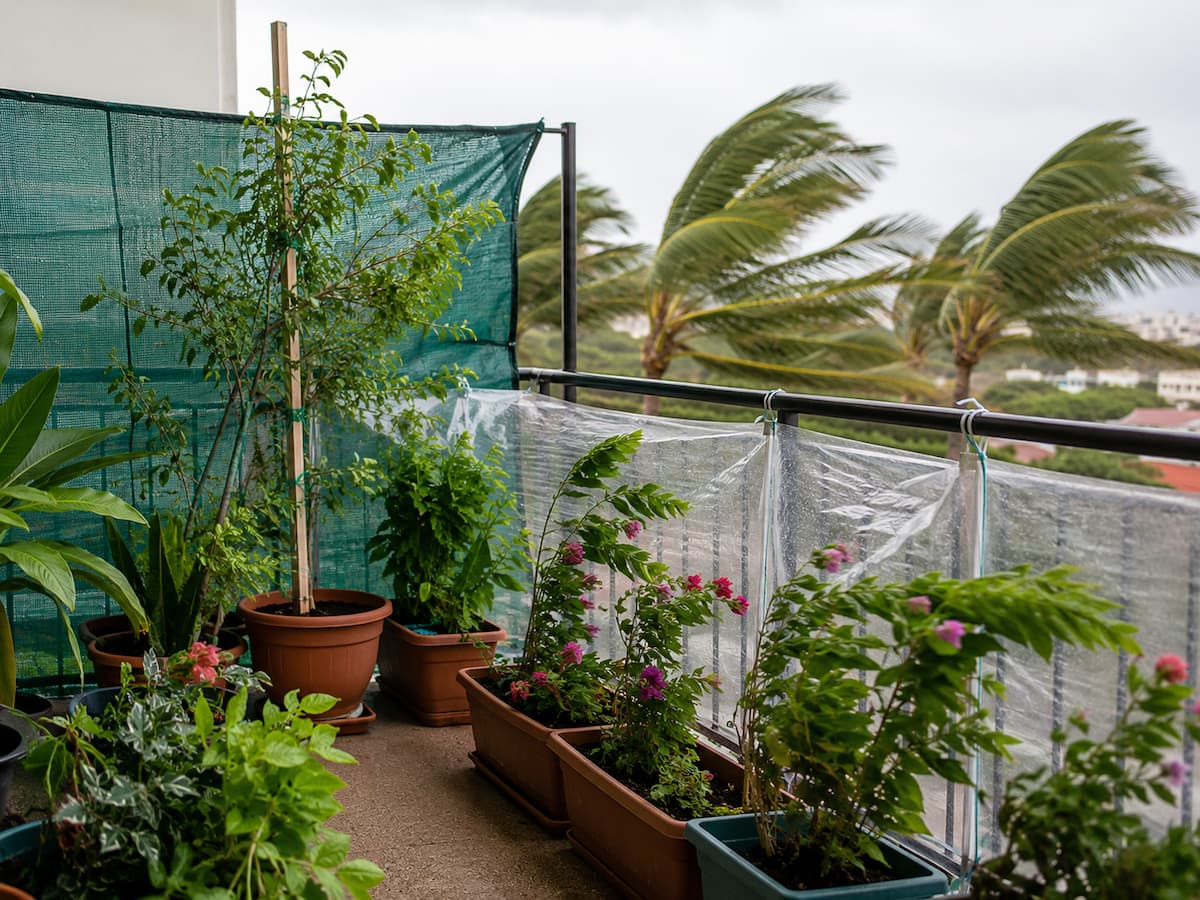
Growing plants on a balcony can be challenging. Balkon plants often face wind from multiple directions, unlike plants protected by a garden wall, trees, or other vegetation. Strong winds can topple containers, snap stems, dry leaves, scatter potting mix, and destroy fragile new growth. Storms, harsh sunlight, rapid temperature fluctuations, and heavy rain can cause problems. Not all plants need to be brought indoors when the weather changes. Better yet, make the balcony a more stable growing environment. A balcony garden’s weather resistance depends on container size, plant placement, pot weight, support, drainage, watering practices, and plant kind. Even slight modifications lessen plant stress. It’s better to prepare for storms than to rescue plants afterward.
Start by Understanding Where the Wind Hits Your Balcony
Before buying wind protection, inspect your balcony. Not all wind moves equally across a balcony. Air can be diverted around corners, between buildings, or via railings. When the wind shifts, a tranquil area might become very exposed. Keep track of the strongest gusts and sheltered locations. Watch how lightweight pots, leaves, hanging baskets, and other items respond in windy circumstances. This can help you arrange plants smarter. Plant weak plants in naturally protected regions and stronger plants in more exposed situations. A wall or strong balcony corner can hide from wind, but not completely. Do not place fragile plants along an open railing since it gets more sunlight. A modestly shaded site with diverse light may be better than a sunny spot with strong winds. Balcony microclimate is as important as overall climate.
Heavy, Stable Containers for Large Plants
Wind-caught leaves can swiftly topple a tall plant in a lightweight planter. The issue goes beyond plant weight. Like small sail, wind on leaves and stems might tip the container. A heavier, wider container can stabilize larger balcony plants. Broad-base pots are less likely to tip than tall, narrow ones. Compatible containers can be grouped for mutual stability. Avoid making an arrangement that’s difficult to shift in bad weather. Your container should also be in sound condition. High winds can cause cracked pots, unstable stands, and loose saucers. Consider structural load for balconies. Wet growing media can weigh down large containers. Do not presume a balcony can hold infinitely huge plants just because they look manageable. Instead of guessing, check the building’s balcony load requirements for a large container garden.
Give Tall Plants Support
Wind damage usually starts at the top of a plant. Strong winds can repeatedly bend tall stems. When a plant has blooms, fruit, or heavy foliage, repeated movement can snap stems. Plant support can help. Stakes, trellises, cages, or gardening ties can support plants, depending on the species. Not every stem should be immobilised. Tight knots can injure stems, and plants need movement. Avoid excessive bending or rapid movement by providing proper support. Use soft ties instead of thin wire tightly wrapped around stems. A loose knot many weeks earlier can become restrictive as plants grow, so inspect supports occasionally. A well-anchored trellis reduces uncontrolled movement for climbing plants. The trellis should be properly fixed and not become a big wind-catching surface that affects stability.
Remove Weak Pots Before Storms
Weather protection is easiest with temporary relocation. Move fragile or lightweight containers away from exposed areas during intense storms or high winds. Sheltered corners, porches, and other protected areas can prevent direct wind and rain on the plant. Avoid waiting till the weather is bad. Heavy gusts might make moving multiple large pots dangerous. Expect extreme weather and plan ahead. Due to their portability, little plants are easier to protect. Avoid overcrowding a balcony with heavy pots because large containers take more planning. If a container is hard to move, stabilize it before inclement weather.
Guard Plants Without Blocking Air
Installing a solid barrier to restrict wind may seem sensible, but obstructing airflow is not always optimum. Air flowing around and over a solid barrier might behave erratically. Depending on design and location, it may cause turbulence instead of removing wind. A well-designed screen reduces direct exposure while enabling airflow. Outdoor screens, lattice structures, and other barriers can be balcony windbreaks. Permanent installations must follow building codes and be secure. Avoid making temporary windbreaks from heavy objects, loose sheets, or unstable panels. Anything wind-prone can be dangerous. The idea is to lessen wind exposure, not add a loose object.
Do Not Overwater Before Rain
Rain can make balcony gardening difficult since containers drain differently than garden soil. Before heavy rain, examine the growing media instead of watering automatically. If the soil is already moist, adding water before heavy rain may overwet the container. Waterlogged growth material can decrease root airflow and harm some plants. Thus, weather preparation relies heavily on drainage. Container drainage apertures should not be blocked by compacted soil or rubbish. Make sure water can escape. However, don’t assume rain always delivers enough moisture. Some balconies are partially protected from rain, although wind can exacerbate moisture loss from foliage and containers. Instead of watering regardless of weather, check the plant and growth medium.
Keep the Soil From Blowing Away
Not only does strong wind destroy foliage. Additionally, it helps remove loose potting mix from containers. This is especially true for shallow pots and containers under strong airflow. Blowing soil over the balcony edge exposes roots and causes a mess. To prevent disturbance of the growth media, a layer of mulch or other covering can be used. The material should suit the plant and container. Be careful not to pile stuff against stems or keep the plant’s top wet. If soil regularly blows out of a pot, it may be too exposed. Instead of replenishing soil, moving the container to a sheltered location can fix the issue.
Match Plants to Balcony Conditions
Weather protection begins before the plant reaches the balcony. Some plants naturally tolerate wind, temperature changes, and exposure better. In difficult balcony sites, plants with flexible stems, strong growth patterns, or adaptable leaves may be easier to manage. Brittle stems or huge, soft leaves can make delicate plants need greater protection. This does not mean you must remove beloved plants. Instead, plant sensitive types in the most sheltered locations and more hardy ones around exposed areas. Plant size matters. Young and mature plants with extensive canopies may handle wind differently. Consider balcony growth conditions while purchasing plants, not just beauty. Light, wind, container size, temperature, and watering interact. Growing many levels above earth may require more care for a plant that thrives in a protected garden bed.
Watch Balcony Hanging Baskets
Windy weather can be dangerous for hanging baskets. A swinging basket can hit walls, railings, or other things from its elevated position in moving air. The container may dry up faster than a larger pot depending on size and exposure. Check hanging hardware and verify the support system can handle the container’s weight. Watering makes a basket heavier. Saturated containers may weigh more than dry ones. Bringing hanging baskets inside during bad weather is safer. Reduce excessive movement and examine the mounting point before inclement weather if a basket cannot be safely removed. Avoid using decorative hooks or lightweight indoor hanging fixtures outdoors.
Protect Plants from Extreme Heat
A balcony’s weather issues go beyond wind. Under direct sunlight, concrete, metal railings, walls, and other building surfaces can heat up. Small, dark, or afternoon-sun-exposed containers heat rapidly. Extreme heat can stress plants and increase water loss. If the plant is suitable, midday shade can lessen heat exposure. A larger neighboring plant, shade structure, or repositioning may help. Avoid abrupt alterations that deprive a sun-loving plant of light. Furthermore, container placement affects root temperature. Raising a pot above a hot surface or utilizing the right container material might make the growing medium heat up faster. The optimal approach depends on the plant, climate, season, and balcony orientation.
Check Plants After Wind and Rain
Weather damage isn’t usually visible. Check stems, leaves, containers, supports, and exposed roots after heavy winds. Examine for broken branches, loosened plants, damaged ties, overturned pots, and displaced soil. After heavy rain, please check containers for proper drainage and any water collection. Do not remove all broken leaves. Some leaves can survive cosmetic damage, but significantly broken stems may need more care. Avoid stressing the plant and let it recover. Check the plant and pot for cracks before handling a tipped container. Move it carefully, replace displaced growing material, and examine roots for damage. Post-storm inspections provide vital knowledge for future weather events. Change the setup if one area continues to cause problems.
Avoid Last-Minute Fixes That Cause More Issues
Gardeners occasionally tie pots with ropes, hefty items, loose plastic sheets, or other non-outdoor materials to protect plants in a hurry. These solutions may increase risks. A loose covering can sail in the wind. Unstable objects fall. Wrapping foliage with plastic restricts ventilation and traps moisture. Poorly anchored supports can collapse with the plant they protect. Weatherproofing should make the balcony safer, not just shift the risk. When feasible, use gardening or outside equipment and follow manufacturer directions for screens, supports, containers, and other equipment. Saving a plant should be secondary to safeguarding humans and loose balcony objects during extreme weather.
Create an Easy Weather-Ready Balcony Routine
You don’t need to check every plant for hours before weather changes. A simple routine simplifies preparation. Before heavy winds, relocate lightweight containers, support tall plants, secure hanging baskets, and remove or secure loose objects. Check drainage and avoid watering damp pots before heavy rain. Consider whether sensitive containers are exposed to afternoon heat before high heat. Check plants, containers, supports, and drainage after storms. This process gets easier as you discover which balcony areas are more exposed and which plants need the most care. The best balcony garden may not have the most fancy equipment. The one based on space conditions.
Conclusion
Most balcony plant protection from extreme winds and weather involves decreasing exposure and enhancing stability. Start with the balcony. Find where the wind is greatest, shelter sensitive plants, use stable containers, support tall stems, and secure hanging baskets and other structures. Maintain drainage, minimize overwatering before heavy rain, and observe containers for excessive heat in hot weather.
Plant choice also matters. A balcony with plants that suit its light, wind, temperature, and container conditions is easy to handle. Most importantly, prepare for bad weather. Securing plants and relocating fragile pots for a few minutes can prevent major harm. If the storm is severe, prioritize personal safety and follow local building or weather instructions rather than protecting plants.
FAQs
1. How can you prevent balcony plants from blowing over in the wind?
Use sturdy pots with a wide base, place plants in sheltered spots, group pots of the appropriate size together, and provide support for taller plants. Lightweight pots may need to be moved to a sheltered area if strong winds are forecast.
2. Should I bring my balcony plants indoors during a storm?
If the plants are small enough to move safely and are particularly vulnerable, moving them temporarily can provide effective protection. Keep larger plants outside in a sheltered spot. Do not take risks by moving heavy pots during severe weather.
3. How can I protect plants from strong winds without completely blocking airflow?
Suitable windbreaks or barriers can reduce plants’ direct exposure to strong winds while still allowing for some air circulation. Avoid using loose plastic sheets or unstable panels, as these can easily blow over and pose a hazard.
4. Should I water my balcony plants before a storm?
Not necessarily. Check the potting soil first. If the soil is already sufficiently moist and heavy rain is expected, extra watering may not be necessary. Also, check the pots’ drainage.
5. Why do balcony plants dry out quickly in windy weather?
Airflow accelerates water loss through the leaves and the exposed growing medium. Additionally, small pots can hold relatively little water. Wind speed, sunlight, temperature, pot size, and plant species all influence the rate at which plants dry out.
6. What should I do with damaged plants after a storm?
Inspect the plants for broken stems, loosened roots, damaged pots, and loose supports. Restore the plants’ stability and improve drainage if necessary. If a plant is capable of recovering from minor damage, avoid unnecessary pruning.