
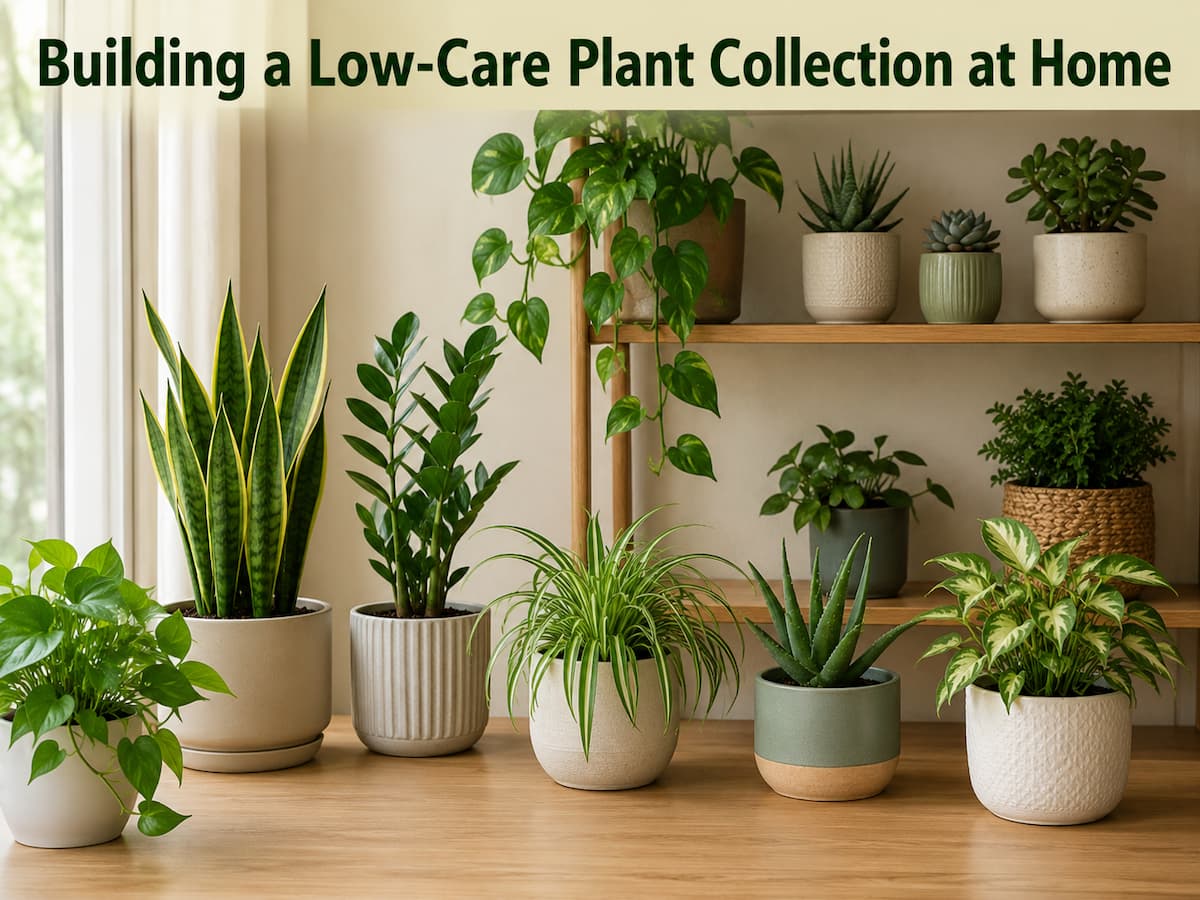
A house full of plants can be welcoming without becoming a daily chore. It’s not enough to pick “easy” plants. Matching plants to your home’s environment creates a low-care collection. A sunny windowsill, gloomy hallway, dry bedroom, and wet bathroom can host diverse plants. When the plant and location match, watering is less frequent, faults are easier to identify, and the collection is more forgiving when life gets busy.
Many choose the opposite. After buying several gorgeous plants, they try to decorate around them. That typically causes yellow leaves, strained growth, moist soil, or plants that need more care. Better to start with the room, understand its constraints, and grow the collection slowly. Low-care does not mean maintenance-free. Every living plant needs care. A collection that makes daily care a habit rather than a weekly project is the goal.
Start with Room, Not Plant
Check your home before buying. Check how much natural light reaches the places you want plants to live. Different plants can grow in a corner several feet from a north-facing window that receives several hours of brilliant indirect light. A sunny room near glass may get hotter in summer and cooler in winter.
This examination doesn’t require pricey equipment. Notice where morning and afternoon sunlight falls for a few days. Check for closed curtains, objects blocking the window, and heating vents or air conditioners near a prospective plant location. This simple observation can prevent one of the most common houseplant problems: buying a plant because it looks appealing in the store but not having the right conditions.
A useful way to divide your home
| Home condition | What to look for |
|---|---|
| Bright indirect light | Plants that enjoy strong filtered light |
| Moderate light | Adaptable foliage plants |
| Lower-light areas | Tolerant plants that do not demand strong sunlight |
| Very sunny windows | Plants that can handle stronger light |
| Dry rooms | Plants that tolerate ordinary indoor humidity |
| Humid rooms | Plants comfortable with higher moisture in the air |
The exact conditions matter more than the label on the plant.
The Easiest Collection Is Usually a Small One
There is a temptation to fill an empty shelf with six or eight plants at once. It looks impressive for a few weeks, but it can make basic care surprisingly confusing. When every plant has a different watering schedule, different light preference, and different response to seasonal changes, you have created a small management system rather than a relaxing hobby. Starting with three or four plants is often more practical.
Choose plants with somewhat similar needs, place them where those needs are naturally met, and observe them for a month or two. You will quickly learn how fast the soil dries in your home, which windows are brighter than they appear, and which areas stay cooler or warmer. Once that first group is doing well, add another plant. This gradual approach also makes it easier to identify problems. If one plant suddenly develops yellow leaves, you have fewer possible causes to investigate. You are not trying to diagnose six different species with different requirements all at once.
Choose Plants That Fit Your Habits
A low-care plant collection should match the way you actually live. Someone who enjoys checking plants every morning can comfortably grow species that need more regular attention. Someone who travels frequently or simply forgets about watering may be happier with plants that tolerate the soil drying between waterings. This is where plant shopping becomes less about appearance and more about honesty.
If you know you tend to overwater, avoid building your collection around plants that dislike consistently wet soil. If you regularly forget to water, choose plants that are more forgiving of occasional dryness. If your space has limited natural light, avoid buying several sun-loving plants and expecting a grow light to solve everything later. Think about your habits before you think about your shopping list.
Plants are often considered relatively forgiving.
Common choices for beginners include snake plants, pothos, ZZ plants, cast-iron plants, spider plants, and some varieties of philodendron. Their needs are not identical, and no plant should be treated as indestructible, but these groups are often easier to manage than particularly demanding tropical species. The important point is not that one particular plant is “easy.” A snake plant sitting in constantly wet soil can still develop problems. A pothos placed in a very dark corner may produce weak, stretched growth. Even tolerant plants have limits.
Think in Groups Instead of Collecting Randomly
Small groupings with comparable demands make plant maintenance easier. You may have a bright-window, moderate-light shelf, and low-light group. Select plants that withstand similar watering conditions in each location. Not all plants in a group need the same quantity of water. Instead, it decreases the number of distinct processes to remember. It also simplifies collection rearrangement.
Imagine several healthy plants on a light shelf, but one starts to stress. That plant can be moved without affecting others. Your home becomes a series of little growing environments rather than one large one treated the same. This approach is useful during seasonal changes. A window with soft winter light may shine brighter in the summer. Window plants may perceive temperature changes that other plants don’t.
Potting Soil Can Make More Difference Than People Expect
Many people blame watering for houseplant problems, but the real issue is how long the soil stays wet. A container with poor drainage and dense, slow-drying soil can leave roots surrounded by moisture for too long. Even a plant that enjoys regular watering can struggle if the root area never gets a chance to breathe. For most indoor plants, the potting mix should suit the plant and the growing environment. Plants that prefer drier conditions generally need a mix that drains readily. Plants that enjoy more consistent moisture may tolerate a different mixture.
The container matters too. A decorative pot without drainage may look attractive, but it makes watering harder to judge. If excess water cannot escape, the bottom of the container can remain wet long after the surface appears dry. For a low-care collection, drainage holes are one of the simplest conveniences you can give yourself.
The Pot Should Not Be Much Bigger Than the Root System
Buying a large pot because you want a plant to “grow into it” sounds sensible, but an oversized container can make watering more difficult. More soil holds more moisture. If the plant has a relatively small root system, that soil may take a long time to dry. The result can be a plant that appears to need water because the surface looks dry while the deeper soil is still damp.
A container that is appropriately sized for the plant makes moisture easier to manage. This does not mean plants should remain permanently root-bound. They eventually need repotting when the root system has filled the container or the growing medium needs water; water it thoroughly enough to moisten the root area, then allow it to drain, because a larger decorative pot looks better.
Watering Should Be Based on the Soil, Not the Calendar
A fixed watering day can make plant care feel wonderfully organized, but plants do not lose moisture at exactly the same rate every week. Indoor temperature, sunlight, pot size, soil composition, plant size, and season all affect how quickly a container dries. Instead of thinking, “It is Sunday, so everything needs water,” check the plants individually.
For many houseplants, feeling the soil near the surface provides you useful information. You can also lift a small pot to notice its weight before and after watering. With experience, the difference becomes surprisingly easy to recognize. When a plant needs water, water it thoroughly enough to moisten the root area, then allow the excess water to drain away. Avoid leaving the container sitting in standing water for long periods. The best routine is therefore not a complicated schedule. It is a quick inspection that becomes part of another habit, such as watering while cleaning the room or checking plants when opening the curtains.
You Do Not Need to Mistake Everything
Misting is one of those houseplant habits that sounds harmless but is often treated as a universal solution. A light spray may temporarily wet the leaves, but it does not automatically solve problems caused by dry indoor air. It also does not replace proper watering of the root zone.
For a low-care collection, it is usually better to choose plants that tolerate the humidity already present in your home rather than constantly trying to change the environment. If your home is naturally dry, especially during heating season, select plants that cope reasonably well with ordinary indoor conditions. If you enjoy humidity-loving plants, group them in a naturally more humid location when appropriate. The goal is to make the environment work for the plants instead of creating another daily task for yourself.
Keep Plant Maintenance Visible
One surprisingly effective trick is to make plant care easy to see. If you scatter plants around the house, you may forget one for weeks. A few plants grouped in sensible locations are much easier to inspect. Keep basic supplies nearby. A small watering can, clean scissors for occasional pruning, a soft cloth, and a suitable potting mix can cover many routine needs.
You do not need a cabinet full of specialized products. In fact, buying fewer products can make plant care simpler. Most houseplants do not need constant sprays, leaf-shine products, complicated feeding programs, or a different bottle of something for every possible problem. Good light, suitable soil, sensible watering, drainage, and occasional cleaning will take care of a surprising amount of routine maintenance.
Build a Collection Around Different Textures
Low-care does not have to mean boring. You can create visual variety by combining plants with different leaf shapes and growth habits. A tall, upright plant can balance a trailing plant, while a compact plant can fill the front of a shelf. Consider the overall arrangement rather than collecting the same type repeatedly.
For example, a narrow shelf might work well with one upright plant, one trailing plant, and a smaller plant with broader leaves. A large floor pot can become the visual anchor while smaller containers fill nearby surfaces. This approach lets you create a collection that looks intentional without requiring dozens of plants.
Leave Some Space Between Them
Packing plants tightly together can create a lush appearance, but it also makes inspection harder. When leaves overlap heavily, it becomes easier to miss yellowing foliage, damaged leaves, insects, or changes in soil moisture. Crowded plants may also reduce air movement around them.
Give each plant enough room for you to see its leaves and reach the container. That small amount of space is valuable. A plant collection should be attractive, but it should also be practical to maintain. If you cannot easily reach the soil, rotate the pot, wipe the leaves, or inspect the underside of foliage, the arrangement is probably too crowded.
Watch the Plant Before You Change Anything
One of the most useful habits for a new plant owner is to learn to observe before reacting. A yellow leaf does not automatically mean the plant needs fertilizer. Drooping does not always mean it needs water. Brown leaf edges can have several possible causes. Look at the whole plant.
- Is the soil wet or dry?
- Has the light changed?
- Are only older leaves affected?
- Is new growth healthy?
- Are there signs of insects?
- Has the plant recently been moved?
This approach prevents the common cycle of adding water, fertilizer, mist, and other treatments all at once. Changing several things simultaneously makes it almost impossible to know what helped. A low-care collection becomes much easier when you make one reasonable adjustment and then give the plant time to respond.
What to Do When a Plant Starts Looking Unhappy
Imagine you come home and notice that one plant has several yellow leaves. Your first reaction might be to water it. Instead, check the soil. If the soil is already quite wet, adding more water could make the situation worse. If the soil is extremely dry and the plant’s needs suggest it should have been watered earlier, lack of moisture may be part of the problem.
Next, check the light and the roots if you have a clear reason to suspect a root problem. Check the leaves for pests or unusual markings. The point is not to become a plant detective every time something changes. It is simply to avoid treating symptoms without looking at the conditions that produced them. A low-care collection depends heavily on early observation because small adjustments are usually easier than major rescue attempts.
A Simple Seasonal Reset Helps
Your plants do not experience your home in exactly the same way throughout the year. During warmer, brighter periods, some plants may use water more quickly. During darker or cooler periods, growth may slow and the soil may remain damp longer. Rather than changing your entire routine every season, perform a simple reset.
Look at the brightest areas of the home. Check plants that sit near windows. Notice which containers are drying faster or slower than before. Remove damaged leaves and rotate plants if necessary. This takes little time but keeps the collection aligned with changing conditions. It is also a valuable opportunity to decide whether a plant still belongs where it is. Sometimes the easiest solution to a struggling plant is simply moving it to a more suitable location.
When Buying New Plants, Pause Before Bringing Them Home
Impulse buying is responsible for many difficult plant collections. A plant looks beautiful at a garden center, so it comes home. Then another one catches your attention the following weekend. Before long, the collection contains plants with entirely different needs.
Before buying a new plant, ask yourself three simple questions:
Where will it live?
If you cannot find a suitable location, please wait.
Does that location provide the light it needs?
Do not assume that a bright room means every corner is bright enough.
Does its care fit your routine?
If it requires conditions you know you will struggle to provide, choose something more forgiving.
This short pause can save money, space, and frustration.
A Low-Care Collection Should Still Feel Personal
There is no perfect number of plants for a home. For one person, five carefully chosen plants may be enough. Another person may happily care for twenty. The point of a low-care collection is not to reach a specific number. It is to create an arrangement that you can maintain without feeling overwhelmed.
Choose plants because you genuinely like living with them, not because a particular species is currently popular. Notice which ones respond well to your home. Keep the plants that fit your space and routine. Replace plants that consistently struggle when the problem is clearly a mismatch rather than a temporary issue. Over time, such an approach creates something better than a collection assembled from a shopping list. You develop a group of plants that suits your rooms, your schedule, and your level of interest.
The Best Low-Care Routine Is Surprisingly Ordinary
You do not need to spend hours every weekend caring for houseplants. A practical routine might involve checking the soil when you walk past, removing an occasional damaged leaf, wiping dusty foliage when needed, turning containers so growth remains balanced, and watering plants when their conditions call for it. Every few weeks, take a closer look at the collection.
- Are the plants receiving enough light?
- Is anything becoming overcrowded?
- Are there signs of pests?
- Are some pots staying wet much longer than others?
That is often enough to catch problems early. The biggest advantage of building a low-care collection is not that you never have to work. It is that the work becomes predictable and manageable. Instead of constantly trying to rescue unhappy plants, you create conditions in which most of them can simply grow.
Conclusion
Building a low-care plant collection is more about making smart decisions before problems arise than finding a magic list. Start with your home’s conditions, choose plants that fit, use containers with effective drainage, and don’t rush to create a sophisticated collection. A collection that fits your habit typically works best. Plants shouldn’t require regular scheduling, complicated measurements, or specialized products.
Start small. See what works. Relocate plants in bad locations. Introduce new types gently. You will eventually learn which sections of your home keep light, which pots dry quickly, which plants tolerate your occasional forgetfulness, and which ones require more attention than you wish. This understanding makes a group of houseplants truly low-care.
FAQs
1. Should I start with how many plants?
Starting with three to five plants is common for beginners. This provides a room enough variation to feel greener without a rigorous care regimen. Instead of picking beginner-friendly plants, choose ones that fit your home’s light and climate. Add extra containers as you learn how quickly they dry and how your plants respond to their locations.
2. Do low-light rooms allow houseplants?
However, “low light” does not signify full darkness. All plants need light for photosynthesis, although some may withstand less. Long-term plant development may require artificial lighting in a room with little natural light. A dimly lit plant may develop slower or have less thick foliage.
3. How often should I water low-care plants?
No schedule for watering is universal. Assess the soil, plant needs, container size, light, temperature, and season. Some plants like dry soil between waterings, while others like regular wetness. Calendars can remind you to check your plants, but they shouldn’t automatically water them.
4. Do attractive pots help low-care plants?
They can, but drainage matters. While the plant is in a nursery pot with drainage holes, a decorative container can cover it. This setup lets excess water escape while maintaining your appearance. Don’t leave water around the plant’s root container for long.
5. What should I do with a suffering plant?
First, find a plant-environment mismatch. Examine light, soil moisture, drainage, temperature, and pests. Moving the plant may assist if it struggles despite care. Sometimes the best option is to admit that a species isn’t right for your home and choose a better one.