
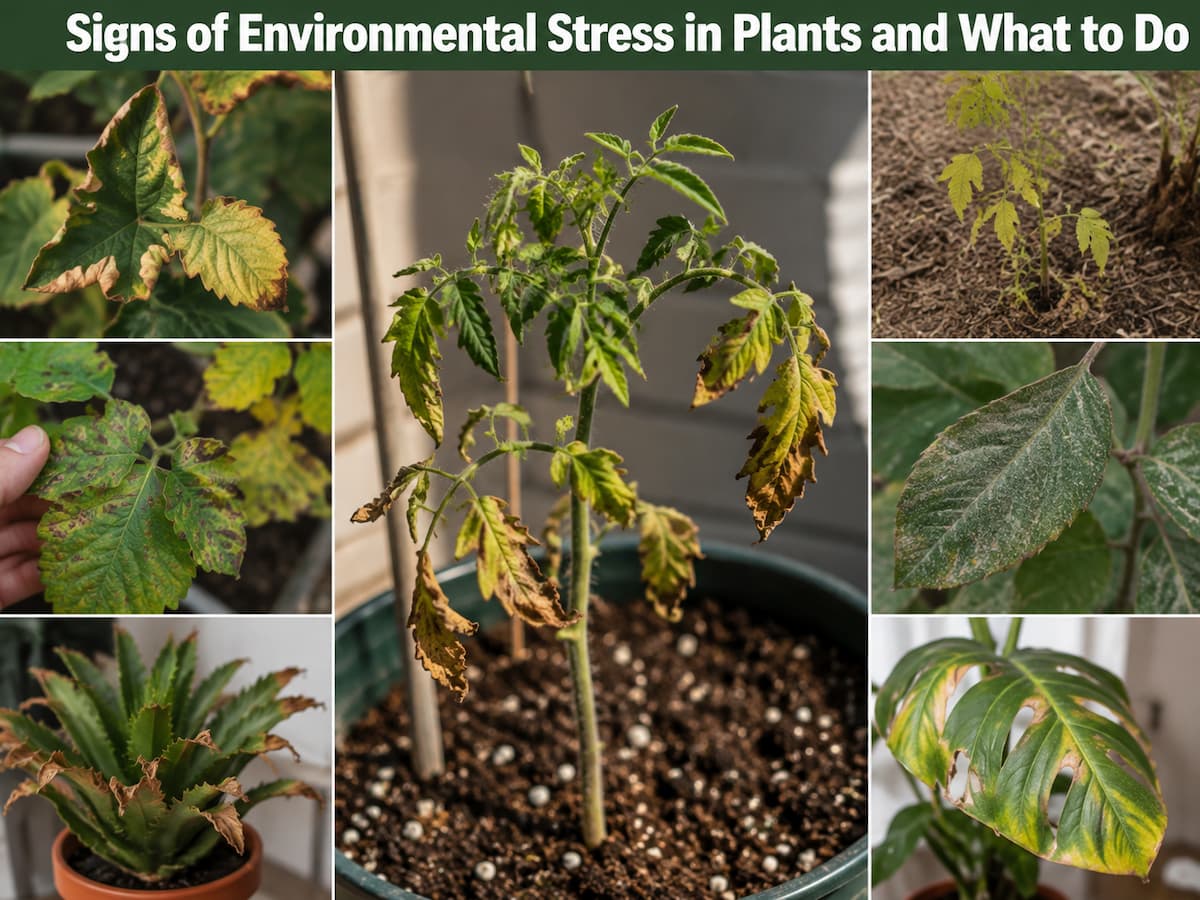
A plant can look perfectly healthy one week and suddenly seem unhappy the next. Leaves may droop, edges may turn brown, growth can slow down, or new leaves may come out smaller than usual. It is tempting to assume that the plant needs more fertilizer or water, but environmental stress is often the real reason.
Plants respond to changes around them. Too much heat, cold temperatures, strong wind, poor light, excessive moisture, dry air, or sudden changes in growing conditions can all place stress on a plant. Sometimes several factors occur together, making the problem harder to identify. The useful thing is that plants often give clues before serious damage occurs. The trick is learning to read those clues instead of immediately reaching for a treatment.
The Plant Usually Tells You Something Has Changed
Environmental stress rarely appears as one perfectly clear symptom. A drooping plant, for example, could be thirsty, sitting in overly wet soil, suffering from heat, or reacting to root damage. Brown leaves can also have several causes. This is why looking at one leaf is not enough. Step back and examine the entire plant and its surroundings. Ask yourself what has changed recently.
- Has the weather become unusually hot?
- Has the plant been moved?
- Has it received more rain than normal?
- Did a nearby tree begin blocking sunlight?
- Was it recently repotted?
The timing of the symptoms can be particularly helpful. If a plant begins struggling shortly after a major weather change, the environment deserves attention before you assume the problem is a nutrient deficiency or disease.
When Leaves Start Drooping
Drooping is a clear sign of plant stress, but it is also easy to misread. A plant that has become dry may droop because its roots cannot supply enough water to the leaves. On a very hot afternoon, some plants may also temporarily wilt as they lose water faster than their roots can replace it. But adding more water is not always the answer.
If the soil is already wet and the plant continues to droop, watering again may make conditions worse. Roots need oxygen as well as moisture, and constantly saturated soil can interfere with healthy root function. Before watering a wilted plant, push a finger into the soil or use another simple method to check moisture below the surface. Look at the leaves, inspect the container’s drainage, and consider the recent weather.
The question is not simply, “Does the plant look thirsty?” It is, “Why is the plant losing water or struggling to use it?”
Brown Leaf Edges Often Point to a Water Problem
Crispy brown edges are common when plants experience inconsistent moisture or dry conditions. Hot weather, low humidity, strong wind, and limited watering can all increase moisture loss. Plants in containers can be particularly sensitive because they have limited soil volume. A small pot can dry much faster than a large garden bed.
However, brown edges do not automatically mean the plant needs more water. Root problems, salt buildup, excessive fertilizer, and other growing conditions can also contribute to damaged foliage. Look at the pattern rather than focusing on one damaged leaf. If older leaves show damage but new growth looks healthy, the plant may already be recovering. If new leaves continue developing with damage, the underlying problem may still be present. Brown tissue will not turn green again. The goal is to improve the conditions so that future growth develops normally.
Yellow Leaves Need a Little Detective Work
Yellowing leaves can make gardeners reach immediately for fertilizer. That is understandable, but it can lead to the wrong solution. A plant may develop yellow foliage because the soil is staying too wet, roots are struggling, light levels are unsuitable, or the plant is naturally shedding older leaves. Nutrient problems are possible too, but they are only one explanation. Start with the basics.
Check the soil moisture. Look at the light. Examine whether the container drains properly. Then consider whether the yellowing is happening mostly on old leaves, new leaves, or throughout the plant. A few older yellow leaves may be part of normal growth. A large amount of sudden yellowing, especially when combined with wilting or poor growth, deserves closer attention. Good diagnosis begins with observation rather than adding products.
Heat Can Stress Plants Without Leaving Obvious Damage
Heat can affect a plant even if it is not visibly scorched. During very hot weather, growth may slow and leaves may droop, especially during the hottest part of the day. Containers can become particularly challenging because their roots are surrounded by a relatively small amount of soil. Dark containers exposed to intense sunlight can also become considerably warmer than the surrounding ground.
When extreme heat is expected, focus on reducing stress rather than trying to force growth. Water plants appropriately based on their needs and soil conditions, protect vulnerable containers from intense afternoon exposure when practical, and avoid major pruning or unnecessary disturbance during periods of severe heat. Plants generally cope better when changes are gradual. Moving a plant suddenly from shade into intense sunlight, for example, can create another source of stress.
Cold Weather Leaves a Different Set of Clues
Cold stress can appear as limp foliage, discoloration, damaged new growth, or sudden decline after a cold spell. Tender plants are especially vulnerable when temperatures fall unexpectedly. Frost can damage exposed leaves and stems, but the full extent of the injury may not be obvious immediately. Some tissue may appear fine at first and deteriorate later.
After a cold event, avoid assuming that every damaged-looking plant is dead. Give the plant time to show which parts remain viable. For future cold spells, sensitive plants may benefit from being moved to a more protected position, while outdoor plants can sometimes be protected with appropriate frost coverings or other measures suited to the situation. The most important point is to avoid creating additional damage while trying to rescue the plant.
Wind Can Dry Out a Plant Faster Than You Expect
Strong wind is not only a physical threat. It can also increase moisture loss from leaves and soil. A plant exposed to repeated wind may develop torn leaves, bent stems, dry foliage, or a generally worn appearance. Container plants can be especially vulnerable because strong gusts may move or overturn them.
If wind is a recurring problem, look at the garden’s layout rather than simply tying every plant to a stake. A fence, wall, hedge, or other suitable barrier can reduce exposure while still allowing reasonable airflow. Young plants may need temporary support while their stems become stronger. Containers should be placed where they are stable and cannot easily fall. Wind damage can sometimes look similar to drought stress, so consider both possibilities when diagnosing the problem.
Light Stress Is Easy to Overlook
Plants need light, but more light is not always better. A plant receiving too little light may become stretched, weak, pale, or slow-growing. It may lean toward a window or produce larger gaps between leaves as it searches for better illumination.
On the other hand, a plant adapted to lower light can struggle when suddenly placed in intense direct sun. Leaves may bleach, scorch, or develop dry patches. This is why plant placement matters. A plant that thrived in one part of the garden may react poorly if you move it just a few feet. If you need to increase light exposure, gradual adjustment is often easier on plants than an abrupt change.
Soil That Stays Wet Can Create Its Own Problems
Overwatering is often described as giving a plant too much water, but the more profound issue is frequently poor drying conditions. A plant may receive the correct amount of water yet still struggle if the soil remains saturated for long periods. Poor drainage, compacted soil, blocked drainage holes, or an oversized container can contribute to the problem.
Look at the roots and soil when appropriate, particularly if a container plant continues declining despite regular care. If water drains slowly, solve the underlying drainage issue rather than simply changing the watering schedule. In some situations, moving the plant to a better-draining container or location may be more useful than reducing watering alone.
Sudden Changes Can Stress a Healthy Plant
Sometimes nothing is obviously “wrong” with the new location, but the plant still struggles after being moved. That can happen because plants become accustomed to particular combinations of light, temperature, humidity, wind, and watering. Moving them changes several conditions at once.
A plant coming from a shaded nursery environment, for example, may react poorly if immediately placed in strong afternoon sunlight. The same principle applies to repotting. A plant may temporarily slow down after you disturb its roots and growing environment. When possible, make environmental changes gradually and give the plant time to adjust.
What to Do First When a Plant Looks Stressed
When a plant suddenly looks unhealthy, resist the urge to change everything at once. Multiple treatments make it difficult to determine what actually helped.
Start with the growing conditions.
- Check the soil. Is it bone dry, comfortably moist, or staying wet?
- Look at the light. Has the plant been receiving more or less sunlight than usual?
- Consider the weather. Consider recent heat, cold, wind, heavy rain, or unusually dry conditions.
- Inspect the container or planting area. Inspect the container or planting area. Ensure excess water can escape and the plant is physically stable.
- Look at new growth. Healthy new leaves can be a reassuring sign even when older foliage is damaged.
- Remove only clearly dead or badly damaged material when appropriate. There is usually no need to strip a stressed plant of every imperfect leaf.
Once you identify the most likely environmental problem, correct that condition and observe the plant before making several additional changes.
A Quick Way to Separate Stress From Other Problems
Environmental stress and pest or disease problems can sometimes look alike. A practical starting point is to consider whether the damage follows an environmental pattern. If a heat wave, cold night, strong wind, or major change in light affects an entire plant, environmental stress is more likely.
If damage appears in specific spots, spreads in a particular pattern, or is accompanied by visible insects, webbing, unusual growth, or other distinctive signs, investigate further rather than assuming weather is responsible. This does not provide a perfect diagnosis, but it prevents one common mistake: treating every unhealthy-looking plant as though it has the same problem.
Give the Plant Time to Recover
One of the hardest parts of gardening is accepting that recovery may take time. A stressed plant cannot repair already damaged leaves. Improvement is often easier to see in new growth. If the roots and growing points remain healthy, a plant may gradually produce better foliage once conditions improve.
During recovery, consistency is often more useful than constant intervention. Keep moisture appropriate, provide suitable light, protect the plant from further severe stress, and monitor changes. Avoid responding to every imperfect leaf with another product or major change. Plants can sometimes recover surprisingly well after you resolve the environmental problem.
The Best Prevention Is Knowing Your Garden
Environmental stress becomes easier to prevent when you understand the conditions in your growing space. Notice which areas become hot in the afternoon. Learn where wind is strongest. Watch which containers dry quickly and which stay damp. Pay attention to seasonal shade from trees and buildings.
Keep simple notes if you are trying to understand a recurring problem. Even recording weather conditions anwatering patterns for a few weeks can reveal useful connections. Over time, this information becomes more valuable than a generic care schedule because it tells you how your particular garden behaves.
Conclusion
Plants cannot tell us exactly what is wrong, but they give us plenty of clues. Drooping leaves, brown edges, yellow foliage, weak growth, scorching, and weather damage can all be signs that growing conditions have become difficult. The important step is to look beyond the symptom. Instead of immediately watering, fertilizing, pruning, or repotting, examine the environment first.
Check moisture, sunlight, temperature, wind, drainage, and recent changes. Correct the most likely source of stress, then give the plant enough time to respond. Good gardening is not about keeping every leaf perfect. It is about understanding what plants need and noticing when their surroundings stop providing those conditions.
FAQs
1. Should I fertilize stressed plants?
Not necessarily. Fertilizing does not solve environmental problems such as drought, poor drainage, extreme temperatures, or insufficient light. Improve growing conditions first, and only consider fertilizing if you are certain the plant truly needs nutrients.
2. Why is my plant dripping moisture even though the soil is moist?
Moist soil does not necessarily mean the roots are functioning healthily. Poor drainage or prolonged soil saturation can affect root health. Check that excess water drains away and avoid repeated watering until the cause has been identified.
3. Why are the edges of my plant’s leaves turning yellow?
Yellowing leaf edges can be linked to drought, inconsistent moisture levels, high temperatures, strong winds, low humidity, or other growing issues. Examine the plant’s overall growing environment rather than assuming there is a single specific cause.
4. Does excessive sunlight cause stress in plants?
Yes. Plants that do not tolerate bright, direct sunlight can suffer from leaf scorch, discoloration, or damage. Suddenly moving a plant from shade to bright light can also cause stress.
5. How can you protect plants from sudden weather changes?
If possible, move sensitive potted plants to a more sheltered location, provide adequate protection during extreme weather, and avoid unnecessary disturbance during periods of extreme heat, cold, or strong winds.