
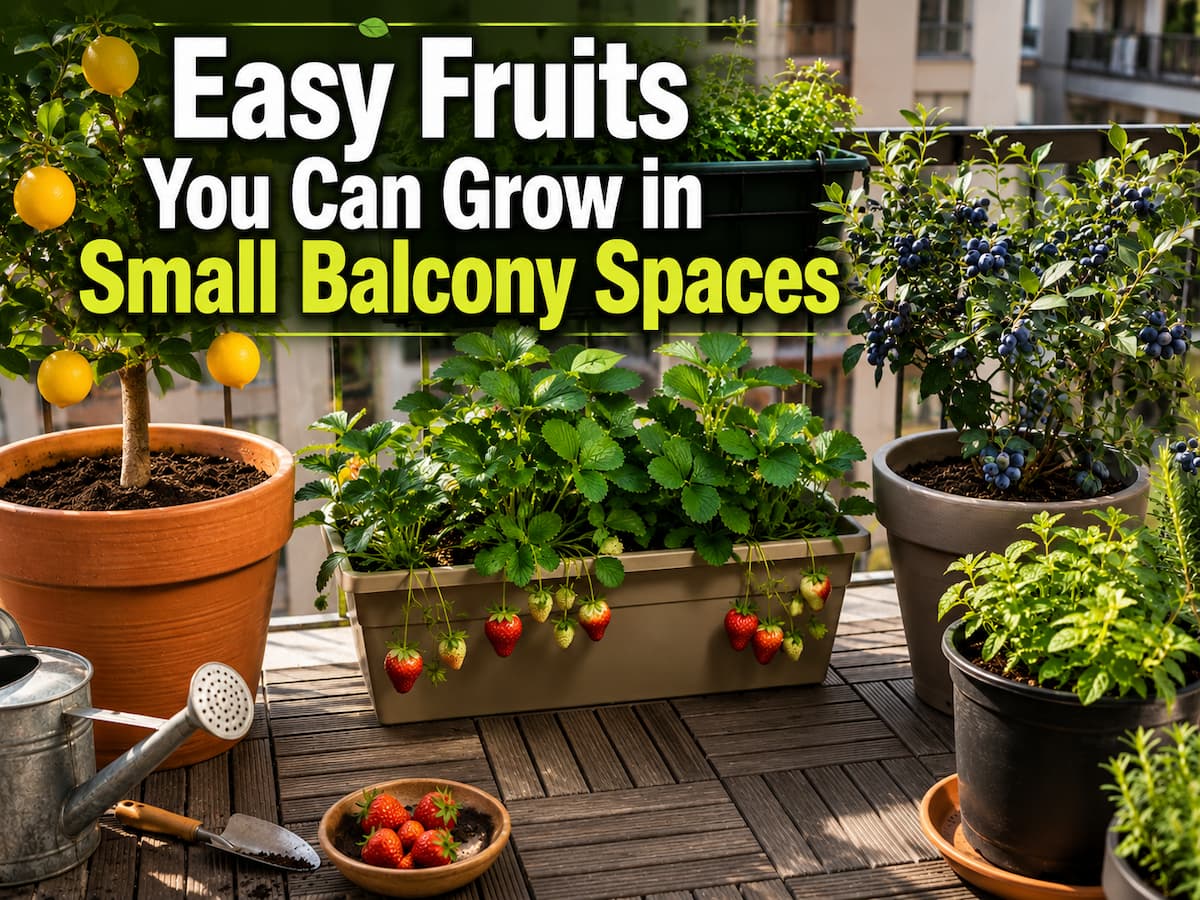
No fancy garden or expansive backyard is necessary to grow your fruit. If you know what plants need and pick the correct ones, even a tiny balcony can become a flourishing garden. Many people think that fruit plants require a lot of room, rich soil, and a lot of gardening expertise, but you can really produce a lot of different kinds of fruit in containers and in smaller places. One of the best things about balcony fruit growing is the way it blends the delight of nurturing plants with the practical benefits of gardening. Unlike with store-bought produce, there is a profound sense of connection with nature experienced while seeing the transformation of blooms into berries, citrus fruits, or tiny harvests.
The secret to a successful fruit tree is picking fruits that thrive in the circumstances of your balcony. Light, container size, weather, watering frequency and pattern, and available space are some of the factors that affect a plant’s growth rate. If you choose your fruit trees well, even a tiny balcony with a few hours of sunshine every day can produce a bounty. A Beginner’s Guide to Growing Fruits in Containers covers How to Grow Easy Fruits in Containers, What Not to Do, and How to Make a Minimalist Fruit Garden That Fits Your Lifestyle.
Understanding Balcony Fruit Gardening
Balcony fruit gardening is the practice of growing fruit-producing plants in containers or small growing areas instead of planting directly into the ground. This method allows people living in apartments, urban homes, or homes with limited outdoor space to enjoy fresh fruit plants. The most significant difference between balcony gardening and traditional gardening is that container plants depend entirely on the environment you create for them. The container replaces natural soil conditions, which means you control water, nutrients, drainage, and growing space. Successful balcony fruit gardening depends on three main factors:
| Factor | Why It Matters |
|---|---|
| Sunlight | Most fruit plants need enough light to produce flowers and fruit |
| Container Size | Roots need enough space to remain healthy |
| Plant Selection | Some varieties naturally perform better in small spaces |
A common beginner mistake is choosing plants based only on appearance. A beautiful plant may not perform well if your balcony does not provide the right conditions. The best choices are plants that match your available space and daily care routine.
Checking If Your Balcony Is Suitable for Growing Fruit
Before buying fruit plants, evaluate your balcony conditions. This simple step prevents many common problems because different fruits have different requirements.
Measure Your Sunlight: Sunlight is one of the most important factors for fruit production. Many fruit plants need several hours of direct sunlight each day to grow strong and produce a harvest.
Consider Wind Exposure: Balconies can experience stronger winds than ground-level gardens. Strong wind can dry soil quickly, damage leaves, and make tall plants unstable. If your balcony gets frequent wind, choose shorter plants, use heavier containers, and place plants near protective walls when possible.
Check Weight Limits: Large containers filled with soil can become very heavy. Before creating a balcony garden with multiple large pots, make sure the space can safely support the weight. Small and medium containers are usually easier for beginners because they are simpler to move, maintain, and protect during extreme weather.
Choosing the Right Containers for Fruit Plants
Containers are the foundation of balcony fruit gardening. The right pot gives roots enough space, prevents water problems, and supports healthy growth. A common mistake is choosing containers based only on available space. Very small pots may look convenient, but they often dry out quickly and restrict root development.
Container Size Guide
| Fruit Plant | Recommended Container Consideration |
|---|---|
| Strawberries | Small pots, hanging baskets, or shallow containers |
| Blueberries | Larger containers with suitable soil conditions |
| Dwarf citrus | Large stable pots for root development |
| Figs | Deep containers with good drainage |
| Raspberries | Medium to large containers with support |
Important Container Features
- Drainage holes to prevent excess water
- Strong material that handles outdoor conditions
- Enough depth for root growth
- Stable design for windy balconies
Good drainage is especially important because container plants cannot spread roots to escape overly wet soil. Waterlogged roots may become unhealthy even when the plant appears thirsty.
Growing Strawberries in Small Spaces
Strawberries are one of the easiest fruits for beginners because they grow well in containers and need little space. Their compact growth habit makes them ideal for balconies, windowsills, and small patios. They can be grown in traditional pots, hanging baskets, or vertical planters. This flexibility allows gardeners with limited space to create productive growing areas.
Why Strawberries Work Well on Balconies
| Feature | Benefit |
|---|---|
| Small size | Fits limited spaces |
| Fast growth | Beginners can see progress quickly |
| Container friendly | Works well in pots and baskets |
| Attractive flowers | Adds decorative value |
Strawberries prefer consistent moisture but do not like constantly wet soil. Regular checking is important because containers can dry out faster than garden beds.
Common Strawberry Growing Mistakes
- Using containers without drainage
- Placing plants in too much shade
- Allowing soil to dry completely
- Overcrowding too many plants together
With proper sunlight and care, strawberries can provide repeated harvests and are a practical starting point for anyone new to balcony fruit gardening.
Growing Blueberries on a Balcony
Blueberries are another excellent option for container gardening, but they require more attention to soil conditions than strawberries. They grow best when their specific needs are met. One important consideration is soil acidity. Blueberries naturally prefer acidic growing conditions, so using the correct soil mixture is essential for healthy growth.
Blueberry Container Requirements
| Need | Importance |
|---|---|
| Large container | Provides space for roots |
| Acidic soil | Supports nutrient availability |
| Good sunlight | Helps fruit production |
| Regular watering | Keeps roots healthy |
Blueberries are a good choice for patient gardeners because they can provide attractive foliage, flowers, and fruit. However, beginners should research suitable varieties because some types perform better in containers than others.
Growing Dwarf Citrus Trees in Containers
Dwarf citrus trees are among the most rewarding fruit plants for balconies because they combine attractive foliage, fragrant flowers, and edible fruit. Varieties such as dwarf lemons, limes, and certain oranges can adapt well to container growing when they receive the right conditions. Unlike small berry plants, citrus trees require more space and patience. They are long-term plants that can remain in containers for many years if they are properly maintained.
Basic Citrus Care Requirements
Citrus trees generally prefer bright sunlight, well-draining soil, and consistent watering. They do not like sitting in waterlogged soil because excess moisture can damage roots.
- Place the tree in the sunniest balcony location available.
- Use a stable container that supports root growth.
- Protect the plant from extreme cold conditions.
- Remove damaged or unhealthy growth when necessary.
A common mistake is treating a citrus tree like a small seasonal plant. Citrus trees are permanent plants that require regular care throughout the year.
Growing Figs in Limited Space
Figs are surprisingly suitable for container gardening because they naturally tolerate restricted root space better than many other fruit trees. In fact, keeping figs slightly limited in their root growth can sometimes help maintain a manageable size. A fig tree can become a beautiful balcony feature because of its large leaves and attractive structure. However, beginners should choose compact varieties and provide enough sunlight for healthy fruit production.
Fig Tree Requirements
| Requirement | Purpose |
|---|---|
| Large container | Supports root health |
| Sunlight | Encourages fruit development |
| Good drainage | Prevents root problems |
| Regular pruning | Maintains manageable size |
Figs usually perform best when they are protected from harsh conditions. In colder regions, container-grown figs have an advantage because they can sometimes be moved to sheltered areas during winter.
Growing Raspberries in Containers
Raspberries can also be grown in smaller spaces, although they require more planning because some varieties produce long canes that need support. Choosing compact or dwarf varieties makes them easier to manage on a balcony. They are attractive plants because they produce flowers before developing colorful berries. Their vertical growth habit can also make good use of limited balcony space.
Balcony Raspberry Considerations
| Factor | Advice |
|---|---|
| Container | Use a deep, stable pot |
| Support | Provide a structure for growing canes |
| Sunlight | Choose a bright location |
| Maintenance | Remove old canes when needed |
Raspberries may require more maintenance than strawberries, but they are still manageable for beginners who are willing to provide support and regular care.
Essential Balcony Fruit Plant Care
Growing fruit in containers requires a slightly different approach than growing directly in the ground. Since plants depend on a limited amount of soil, regular attention becomes more important.
Watering Container Fruit Plants: Container plants often dry faster because their roots have access to less soil. However, watering too frequently can create problems. The best approach is checking the soil regularly. Do not follow a strict schedule without considering weather, container size, and plant needs.
Feeding Fruit Plants: Container plants eventually use nutrients from their limited soil. Providing appropriate plant nutrition helps support healthy leaves, flowers, and fruit production.
Follow product instructions carefully and avoid applying excessive amounts. More fertilizer does not always mean more fruit, and too much can damage plants.
Common Balcony Fruit Gardening Mistakes
Small-space gardening is rewarding, but beginners often face similar challenges. Understanding these mistakes can save time and prevent unnecessary frustration.
- Choosing Plants That Are Too Large
- Using Very Small Containers
- Ignoring Sunlight Requirements
- Overwatering
- Expecting Immediate Harvests
Conclusion
For a beginner, growing fruit on a small balcony is a realistic aim. You don’t need a big garden to gain the experience of raising your own food. With the proper plants, in the correct containers, and with regular care, even a little outdoor space may become a fruitful growing area.
The key is to select fruit plants that are appropriate for your environment. Choose easier options, study how your balcony circumstances affect growth, and develop gradually as you acquire confidence. A balcony fruit garden isn’t only about producing food. It’s about building a better relationship with nature, acquiring new skills, and transforming small space into something that is valuable and pleasurable.
FAQs
1. How much sun do balcony fruit trees require?
Most fruit-bearing plants need a few hours of direct sunshine every day. Plants can still make leaves without enough light, but they will make fewer blossoms and fruit. Before you choose plants, check how much sun your balcony gets during the day.
2. Do fruit trees need larger pots as they grow?
Some plants may require larger containers as the root systems develop. The necessity varies with the type and variety of fruit. Start with a container of the right size and you’ll be less stressed and won’t have to repot as often.
3. Why is my fruit plant on the balcony producing leaves but not fruit?
A plant may fail to produce fruit if it receives insufficient sunshine, has improper irrigation, is immature, experiences incorrect temperatures, or has poor growing conditions. Healthy leaves are a positive sign, but fruit production requires a combination of conditions to come together.
References
- United States Department of Agriculture (USDA) – Plant Hardiness Zone information and gardening resources.
- Royal Horticultural Society (RHS) – Container gardening and fruit plant care guidance.
- University Extension Gardening Programs – Research-based advice on growing fruit plants in home gardens.
- University of Minnesota Extension – Container gardening and small-space growing resources.
- Cornell Cooperative Extension – Home fruit growing recommendations.