
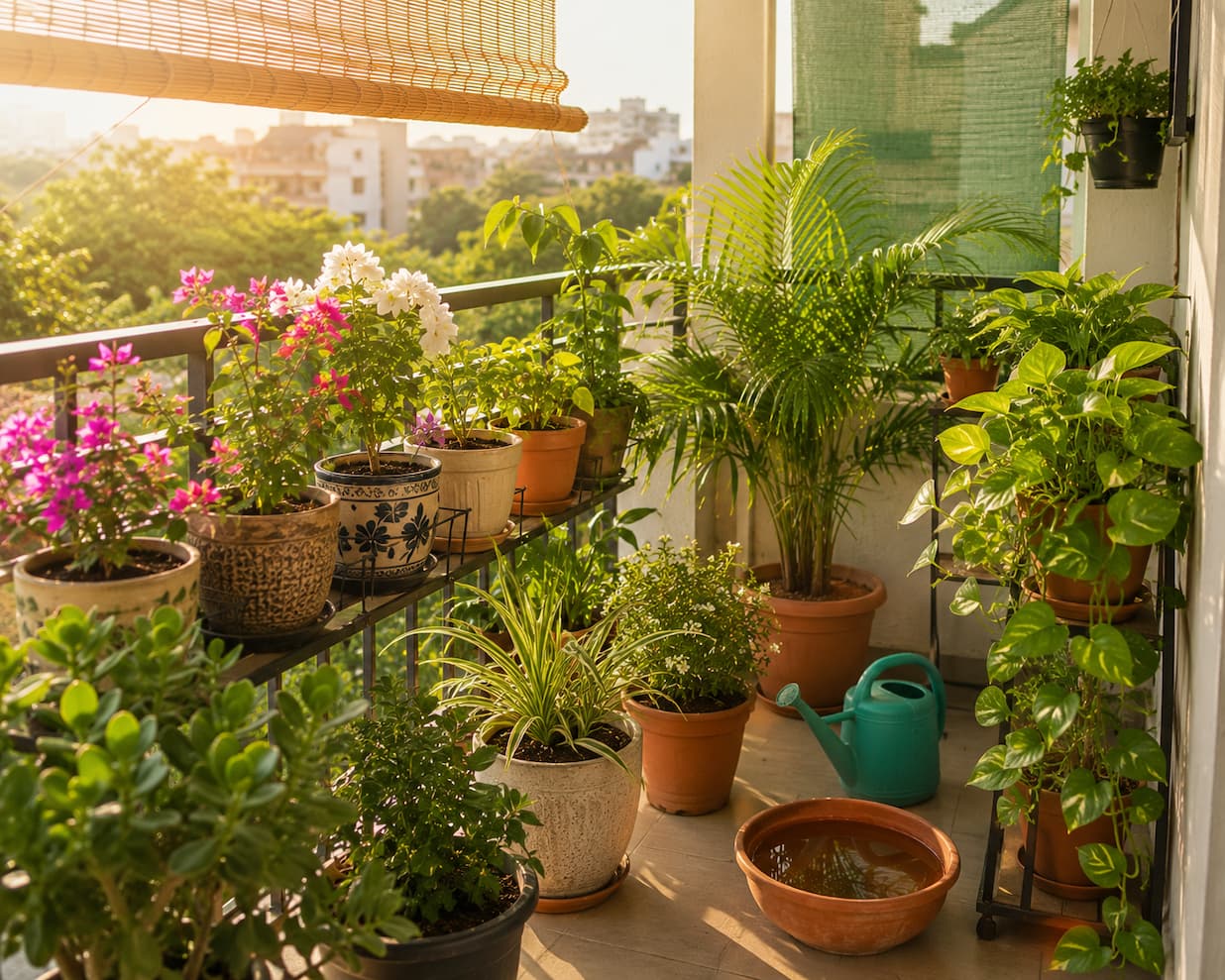
There is something quietly devastating about watching a plant you have nurtured for months suddenly wilt under a July sun. For balcony gardeners, the summer months are less a season of abundance and more a test of endurance. The concrete radiates heat like a furnace, the wind strips moisture from leaves in minutes, and the afternoon sun lingers far longer than any plant care label ever warned you about.
This is not another generic list of watering tips. It is a practical field guide for anyone who has ever stood on a balcony at 2 PM, squinting at a drooping fern, wondering what went wrong.
Understanding What Heat Actually Does to Your Plants
Before reaching for the watering can, it helps to understand the mechanics. When temperatures climb above 32°C (90°F), plants enter a kind of survival mode. Stomata, the tiny pores on leaves that regulate gas exchange, begin to close. Photosynthesis slows. Root systems, especially in small containers, can reach soil temperatures exceeding 40°C, effectively cooking the delicate root hairs responsible for water uptake.
Watering: Timing Is Everything
The single biggest error balcony gardeners make is watering on a schedule rather than responding to conditions. A plant in a black plastic pot on a south-facing balcony will need entirely different care than the same species in a glazed ceramic container on the north side.
| Container Type | Heat Retention | Watering Frequency (Summer) | Best Practice |
|---|---|---|---|
| Black plastic | Very high | Daily, sometimes twice | Move to partial shade; use mulch |
| Terracotta (unglazed) | High | Every 1–2 days | Soak thoroughly; seal interior if possible |
| Glazed ceramic | Moderate | Every 2–3 days | Check drainage holes; avoid saucers in heat |
| Concrete/cement | Very high | Daily | Line interior with bubble wrap or insulation |
| Self-watering | Low | Refill reservoir weekly | Monitor for algae; clean monthly |
| Fabric grow bags | Low | Every 1–2 days | Excellent airflow; dries quickly in wind |
The Mulch Factor: Your First Line of Defense
Mulch is not just for garden beds. On a balcony, a 3–5 cm layer of organic mulch, bark chips, coconut coir, or even decorative pebbles can reduce soil temperature by up to 10°C. It also cuts evaporation by roughly 50%, which means less frequent watering and happier roots.
Some effective balcony-friendly mulch options:
- Shredded bark – breaks down slowly, adds organic matter
- Coconut coir – lightweight, excellent for small containers
- White pebbles or crushed shells – reflect heat and are ideal for succulents
- Dried grass clippings – free, nitrogen-rich, apply thinly to avoid mold
Shade Solutions for Small Spaces
Not every balcony can be repositioned, but almost every balcony can be shaded. The trick is filtering light without creating a dark, humid cave where mold thrives.
Here is what actually works:
Shade cloth (40–60% density) – Inexpensive, clips onto railing with binder rings or zip ties. Remove in September when temperatures drop.
Old bedsheets or sheer curtains – Surprisingly effective for a temporary heatwave. Hang with tension rods. White or light colors reflect heat best.
Umbrellas and parasols – A tiltable balcony umbrella gives you control. Move it as the sun shifts. Avoid placing it so close that it blocks airflow entirely.
Companion planting with taller species – A pot of tall ornamental grass or a dwarf sunflower can cast afternoon shade onto lower, more delicate plants.
Wind: The Silent Moisture Thief
Balconies, especially on upper floors, are wind tunnels. A steady breeze of 15 km/h can double the rate of transpiration from leaf surfaces. Your plant may be losing water faster than its roots can supply it, even if the soil feels damp.
Windbreaks do not need to be ugly. A row of taller planters along the windward edge, a decorative lattice panel, or even a rolled bamboo screen breaks the airflow without stopping it entirely. Plants still need to breathe.
Container Size and Root Health
Small pots heat up faster and dry out quicker. If your balcony plants are struggling every summer, the container may be the problem, not your care routine.
| Plant Type | Minimum Pot Diameter | Soil Volume | Summer Survival Notes |
|---|---|---|---|
| Leafy herbs (basil, cilantro) | 20 cm | 5–7 liters | Shallow roots; wide pot preferred over deep |
| Tomatoes (dwarf varieties) | 30 cm | 15–20 liters | Deep roots; needs consistent moisture |
| Peppers | 25 cm | 10–12 liters | Heat-tolerant but hates dry spells |
| Ferns and shade lovers | 25 cm | 8–10 liters | Keep out of direct afternoon sun entirely |
| Succulents and cacti | 15 cm | 2–3 liters | Prefer heat; protect from intense afternoon sun only |
| Flowering annuals | 20 cm | 5–8 liters | Deadhead regularly; mulch heavily |
Fertilizer: Less Is More in High Heat
When plants are heat-stressed, their metabolic processes slow. Pouring fertilizer onto stressed roots is like forcing a sick person to eat a heavy meal. The salts accumulate, burn root tips, and make recovery harder.
During peak summer (roughly late June through August in most temperate zones), reduce fertilizer strength by half. Switch to liquid feeds applied in the early morning. Avoid granular slow-release fertilizers in small containers during heatwaves; they release faster when soil is hot and can cause salt burn.
Recognizing the Warning Signs
Plants communicate distress if you know what to look for. Here is a quick diagnostic guide:
| Symptom | Likely Cause | Immediate Action |
|---|---|---|
| Leaf edges turning brown and crispy | Heat + low humidity | Move to shade; increase humidity with misting (early AM only) |
| Yellowing leaves, starting from bottom | Overwatering or poor drainage | Check drainage; let soil dry between waterings |
| Wilting despite moist soil | Root temperature too high | Insulate pot; move to shade; do not water more |
| White or bleached patches on leaves | Sun scald | Provide filtered light; damaged leaves will not recover |
| Leaves dropping suddenly | Severe heat stress or root damage | Move to coolest spot; reduce all stressors; wait |
| Stunted growth, no new leaves | Heat dormancy | Normal for some species; reduce care, do not force growth |
Humidity Hacks for Dry Climates
Balconies in arid regions or during drought conditions present a unique challenge. The air itself strips moisture from leaves. Misting helps briefly, but there are better long-term strategies.
Grouping plants together creates a microclimate. The collective transpiration raises local humidity. A shallow tray of water with pebbles placed among pots works similarly. Some gardeners swear by placing a damp towel over a railing near sensitive plants on the hottest days, though this requires daily refreshing.
What About Vacation? Preparing for Absence
A long weekend away should not mean plant casualties. A few preparations make a significant difference:
- Move all pots to the shadiest part of the balcony three days before leaving. This reduces their water needs without shocking them.
- Water deeply the night before departure, not the morning of. Overnight absorption is more thorough.
- Mulch every exposed soil surface generously.
- Place containers in large trays of water if you will be gone less than five days. For longer trips, invest in a simple drip irrigation kit; many are designed for balconies and run off a standard faucet timer.
- Ask a neighbor. Even a non-gardener can handle “pour water on these four pots every three days.” Leave written instructions.
Plant Selection: Working With Nature, Not Against It
Some plants are simply built for this. If your balcony is a sun-baked concrete slab facing southwest, growing delicate ferns is an exercise in frustration. Choose species that match your conditions.
Heat-tolerant balcony champions include:
- Lantana – thrives in brutal sun, attracts pollinators
- Portulaca (moss rose) – succulent leaves, vibrant flowers, nearly indestructible
- Rosemary – Mediterranean native, loves heat and poor soil
- Marigolds – cheerful, drought-tolerant once established
- Zinnias – cut-and-come-again flowers that laugh at heat
- Sedum varieties – fleshy leaves store water, stunning textures
Plants to avoid or place in deep shade during peak summer:
- Impatiens and begonias (unless in full shade)
- Most ferns and calatheas
- Lettuce and spinach (bolt almost immediately above 25°C)
- Pansies and violas (winter performers, not summer soldiers)
Cleaning and Maintenance in Summer
Dust and pollution accumulate on balcony leaves, especially in urban environments. A layer of grime blocks sunlight and reduces photosynthesis. Once a week, gently wipe broad leaves with a damp cloth or give the entire plant a lukewarm shower in the sink or bathtub.
Deadheading spent flowers redirects the plant’s energy from seed production back into growth and blooming. In summer, this is particularly important for annuals like petunias and geraniums. Remove yellow or damaged leaves promptly; they attract pests and diseases.
Dealing With Pests That Thrive in Heat
Hot, dry conditions favor spider mites, aphids, and whiteflies. These pests reproduce rapidly when plants are stressed. Inspect leaf undersides weekly. A strong spray of water dislodges most infestations early. For persistent problems, insecticidal soap or neem oil applied in the evening is effective and safe for edible plants.
Final Thoughts: Patience Over Panic
Every balcony gardener loses plants. It is part of the learning curve. The goal is not perfection; it is observation. Notice which corner of your balcony stays coolest. Track which plants bounce back after a rough week. Adjust containers, watering times, and shade strategies based on what you see, not what a calendar says.
Summer balcony gardening is less about following rules and more about reading the room, or rather, reading the weather, the wind, and the way your particular plants respond to your particular space.
Sources and References
- University of California Division of Agriculture and Natural Resources. “Container Gardening.” UCANR Publication 3485. ucanr.edu
- Royal Horticultural Society. “Watering: Containers and Baskets.” RHS Gardening Advice. rhs.org.uk
- Cornell University Cooperative Extension. “Mulches for Landscaping.” Gardening Resources. gardening.cals.cornell.edu
- Texas A&M AgriLife Extension. “Earth-Kind Landscaping: Mulching.” aggie-horticulture.tamu.edu
- Missouri Botanical Garden. “Gardening Help FAQs: Container Plants.” missouribotanicalgarden.org
- University of Florida IFAS Extension. “Growing Herbs in Containers.” gardeningsolutions.ifas.ufl.edu
- University of Minnesota Extension. “Growing tomatoes in home gardens.” extension.umn.edu
- North Carolina State University Extension. “Container Vegetable Gardening.” content.ces.ncsu.edu