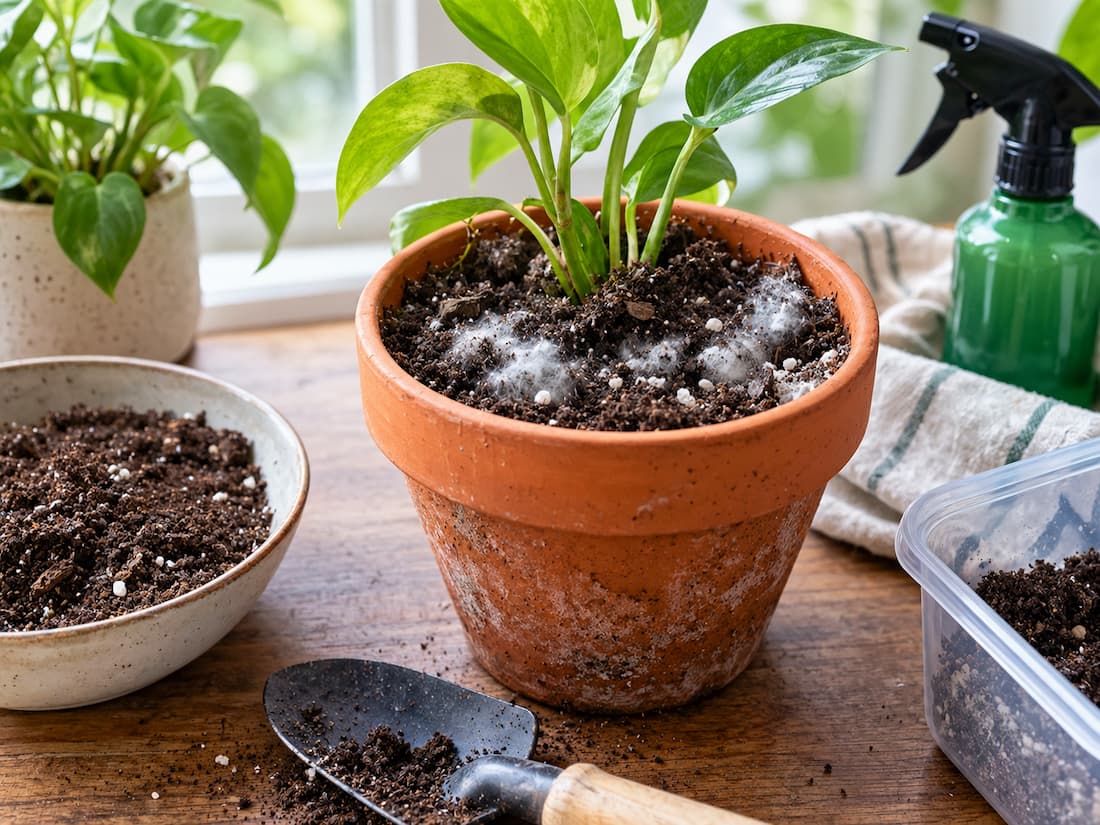
You notice a white patch on the surface of the potting soil beneath your favourite houseplant. It may look like a thin layer of cotton, a cluster of tiny threads, or a pale crust around the edge of the pot. The plant itself might look perfectly healthy, with firm stems and fresh leaves. Before removing the plant from its pot or reaching for a fungicide, take a closer look. White material on potting soil can have several causes, and the right response depends on what you observe and the conditions inside the container. Sometimes, the material is surface fungal growth that develops as organic matter breaks down in moist conditions. In other cases, it is a mineral deposit left behind when water evaporates or a residue associated with fertiliser and other substances in the growing medium. These materials can look similar, especially when they first appear. The goal is not simply to remove what you see. It is to understand why it appeared, choose a suitable response, and check whether the problem returns.
What Could the White Material on Your Potting Soil Be?
Three possibilities account for many cases of white material on the surface of potting mix. They require different approaches, so identifying the likely cause is a useful first step.
1. Surface fungal growth
Many potting mixes contain organic ingredients such as peat, compost, bark, and other plant-based materials. Fungi help break down this organic matter. Under suitable conditions, their fine threads can form a visible white or pale layer across the soil surface. This growth may look fuzzy, web-like, or similar to a thin layer of cotton. It may develop in patches around pieces of bark, fallen leaves, or other organic debris.
Surface fungal growth is more likely when the growing medium remains damp for extended periods and air movement is limited. However, its presence does not automatically mean the plant has a disease or that the roots are infected. Some surface fungi are mainly involved in decomposition. Others may appear alongside conditions that are unfavourable for the plant, such as persistently wet soil. The important distinction is between limited growth on the surface and a broader problem involving the roots or the growing medium.
2. Mineral deposits from water
White material can also form when dissolved minerals remain behind after water evaporates. This often happens when tap water contains relatively high amounts of dissolved minerals. The deposits may appear as a thin, hard crust, pale rings around the inside of a pot, or scattered white particles across the soil surface. They can become more noticeable after repeated watering because minerals accumulate over time.
Unlike many fungal growths, mineral deposits are usually not fuzzy. They may feel gritty or crusty, although this clue is not definitive. Mineral accumulation matters because excessive salts can affect the growing conditions around roots, particularly in sensitive plants. A visible crust does not reveal the exact mineral content of the soil, however, so avoid assuming that every white deposit represents harmful salt levels.
3. Fertiliser or growing-medium residue
Fertilisers contain dissolved nutrients and other compounds that may leave visible residue as moisture evaporates. Some potting mixes also contain pale particles, such as perlite, that can become exposed as the surface settles or shifts. A white layer may therefore reflect fertiliser history, ingredients in the mix, or a combination of substances rather than fungal growth alone.
Consider whether you recently applied liquid fertiliser, sprinkled granular fertiliser over the surface, added a soil amendment, or changed the potting mix. These details can help explain why the material appeared. The three causes may sometimes occur together. For example, a pot can develop fungal growth in damp organic material while also accumulating minerals from repeated watering. You do not have to force every observation into a single explanation.
How to Inspect the White Patch Before Taking Action
A short inspection can help you narrow down the possibilities without disturbing the roots unnecessarily.
Step 1: Examine the texture.
Look closely at the white material under good lighting.
- Fuzzy or thread-like: This can be consistent with fungal growth, particularly when fine strands spread across organic debris.
- Hard, crusty, or gritty: This may indicate mineral deposits or fertiliser residue.
- Small, separate white particles: These may be ingredients in the potting mix rather than a new growth.
- A mixture of textures: More than one cause may be present, or the material may be difficult to identify by sight.
- Do not rely on texture alone. Fine fungal growth can look powdery, and mineral residue can break into small pieces.
Avoid deliberately sniffing the material or creating airborne dust while inspecting it. A noticeable musty odour may support concern about persistently damp conditions, but smell is not a reliable way to identify a particular fungus.
Step 2: Check where the material appears.
Notice whether the material is concentrated in one place or spread across the entire surface. A patch around a fallen leaf, bark chip, or other organic fragment may be associated with decomposition. A crust along the pot’s rim or near the edges of the soil may be consistent with minerals left behind as water evaporates. Look at the drainage holes and the outside of the container, too. White residue on the pot itself may provide another clue about mineral accumulation. These patterns are useful observations, not definitive tests.
Step 3: Review recent watering and feeding.
Think about what has happened over the past few weeks.
- Has the potting mix stayed wet for several days longer than usual?
- Have you watered repeatedly before checking the soil?
- Does the container drain freely after watering?
- Have you recently added fertiliser?
- Has the white material appeared after changing your water source?
A damp surface combined with fuzzy growth makes fungal activity more plausible. A recurring crust after watering or fertilising may point toward mineral or fertiliser deposits. However, surface appearance can be misleading. The top layer may dry while the lower portion of the pot remains wet. Conversely, a dry-looking surface does not always mean the roots lack moisture.
Step 4: Look at the underlying growing medium and plant.
Check whether the mix beneath the white layer is loose and evenly textured or dense, compacted, and persistently wet. Also inspect the plant’s overall condition. Healthy-looking leaves and firm stems are reassuring, although they do not guarantee healthy roots. Wilting despite wet soil, a sour or decaying odour from the growing medium, or progressive yellowing may justify closer investigation. Do not pull the plant out of its container solely because a small white patch has appeared. First consider whether there are additional signs of a moisture or root problem.
White Fungal Growth or Mineral Crust? Compare the Clues.
Use the following table to organise your observations. No single feature proves what the material is, but several clues considered together can help you select a reasonable next step.
| Observed appearance | Possible explanation | Additional clues | Sensible next step |
|---|---|---|---|
| Soft, fuzzy white patches | Surface fungal growth | Damp mix, organic debris, limited airflow | Review moisture conditions and remove a small affected surface layer if appropriate |
| Fine, web-like threads | Fungal growth or another fine surface material | Threads appear to spread between soil particles. | Inspect closely without disturbing the roots; monitor whether it returns |
| Hard white crust | Mineral accumulation | Similar deposits on the pot rim or after repeated watering | Review water quality and fertiliser use. |
| Pale crust following fertilising | Fertiliser-related residue or mineral salts | Recent feeding or repeated fertiliser applications | Review the product label, dose, and feeding schedule. |
| Small white granules mixed into the soil | Perlite or another potting-mix ingredient | Particles are separate rather than spreading across the surface. | Check the mix ingredients before removing anything. |
| White growth alongside persistently wet soil | Surface fungi associated with excessive moisture, or another issue | Slow drainage, unpleasant odour, or declining plant health | Investigate drainage and deeper soil moisture |
| Repeated white deposits with no clear texture | Minerals, fertiliser residue, fungal growth, or a mixture | Appearance changes after watering or surface drying. | Record changes and seek an informed identification if uncertainty persists. |
When the evidence remains unclear, avoid applying chemicals simply to see whether the material disappears. Removing a deposit without understanding its cause may hide the visible symptom while leaving the underlying conditions unchanged.
Use a Troubleshooter to Organise Your Observations
If you are uncertain whether the white material is part of a broader plant-health issue, the Plant Problem Troubleshooter can help you organise symptoms and explore possible causes.
Plant Problem Troubleshooter
Choose the symptom you can see on your plant.
Use the observations you have already gathered, including the material’s texture, its location, recent watering, drainage, and any changes in the plant’s appearance. These details are more useful than describing the problem only as white mould. The tool can support your assessment, but it cannot confirm fungal identification from the shortcode alone or replace physical inspection. If the material is unusual, keeps returning, or accompanies declining plant health, further assessment may be needed.
What to Do If the White Fungal Growth Is Limited
When the white growth is confined to a small area and the plant otherwise appears healthy, a simple surface cleanup may be enough to begin managing the problem.
Remove the affected surface material carefully
Wear gloves if you prefer to avoid direct contact with the material, particularly if you have a known sensitivity to mould or airborne particles. Using a clean spoon or small gardening tool, gently lift away the visibly affected surface layer. Remove only what is necessary rather than digging deeply around the roots. A shallow removal may be sufficient when the growth is limited to the uppermost portion of the mix.
Place the removed material in a bag or closed waste container and dispose of it with household waste according to local guidance. Do not scatter it among other houseplants or reuse it as potting mix. Clean the tool after use, removing soil residue and washing it with soap and water. Dry it before storing it. Avoid brushing or blowing the material into the air. If the growth covers a large area, extends deeper into the mix, or appears alongside a persistent wet-soil problem, surface removal alone may not be enough.
Review the conditions that allowed it to develop
After removing the material, check the moisture level below the surface, the drainage holes, and the space around the plant. Allow the mix to move toward its normal moisture level before watering again, provided this is appropriate for the plant. Do not leave a moisture-loving plant excessively dry just to prevent fungal growth. Improve air movement around the pot where practical. Remove fallen leaves and other decaying debris from the surface, and make sure the container is not standing in collected drainage water.
Monitor rather than repeatedly scraping
Check the surface over the next several days and during subsequent watering cycles. Look for returning patches, renewed crust formation, or changes in the plant’s condition. If the growth does not return and the plant remains healthy, no further intervention may be necessary. If it repeatedly appears, investigate the growing conditions rather than removing the same material indefinitely.
When Should You Replace the Potting Mix?
Changing the growing medium can be reasonable when the white material is extensive, repeatedly returns despite appropriate care, or appears alongside evidence that the mix is breaking down or remaining wet for too long. Replacement may also be justified if the medium has become compacted, drainage is poor, or an excessive buildup of fertilizer salts is suspected and cannot be managed safely through less disruptive changes.
Before repotting, consider the plant’s species, the season, its current condition, and the degree of the problem. Repotting can stress a plant, so it is not automatically the best response to a small surface patch. If replacement is appropriate, use a clean container with functional drainage and a fresh growing medium suited to the plant. Avoid transferring visibly affected old material into the new pot. Inspect the roots during repotting, but do not remove healthy roots unnecessarily.
If the plant has soft, darkened roots, a persistent unpleasant odor, or other signs of significant root deterioration, treat that as a separate concern requiring closer assessment. Surface fungal growth by itself does not establish that root rot is present.
Why White Growth Keeps Returning
Recurring growth often points to a condition that remains favorable for it. Several factors can contribute, and more than one may be involved.
Watering patterns and moisture deeper in the pot
Fungal growth is more likely when the surface stays damp for extended periods. Frequent small waterings, watering again before the mix needs it, or a container that drains slowly may contribute to these conditions. However, the goal is not to keep every soil surface dry. Different plants need different moisture levels, and some naturally grow in consistently moist environments.
Check moisture below the surface before deciding whether to water. Depending on the plant and pot size, you might use a finger, a suitable moisture meter, or the weight of the container as additional clues. Each method has limits, so combine observations rather than relying on a single reading. The Plant Watering Calculator may help you estimate a watering approach based on the inputs it supports. It cannot identify mold or determine the moisture throughout a pot perfectly without direct observation. Use it as a planning aid, not as a replacement for checking the plant and its growing medium.
Plant Watering Calculator
Estimate when to check your plant's soil for watering.
Poor air circulation
When air movement is limited, moisture may evaporate more slowly from the soil surface. Plants placed very close together or in poorly ventilated corners may experience conditions that favor recurring growth. Where possible, leave enough space between containers for air to move freely. Normal room ventilation can help, but there is no need to direct a strong fan continuously at a plant if that would dry it too quickly or expose it to damaging drafts.
Compacted growing medium and poor drainage
As some potting mixes age, their structure changes. Fine particles may settle into gaps, reducing the space available for air and water movement. A container without suitable drainage holes can make the problem worse. Check whether excess water can escape freely after watering. Empty the saucer or outer pot instead of leaving the container sitting in standing water for extended periods. A dense mix is not necessarily unsuitable for every plant, but its structure must match the plant’s moisture needs and the container in which it grows.
Organic material on the surface
Fallen leaves, dead flower parts, bark, and other organic fragments provide material that decomposer fungi can use. A mix containing organic ingredients can also support fungal growth naturally. Remove dead plant debris when you notice it, especially if it remains wet. There is no need to eliminate all organic matter from potting soil, because it is a normal part of many growing media.
Choose a Growing Medium That Manages Moisture Well
If the surface keeps developing fungal growth because the mix remains wet for too long, review the medium’s structure before making major changes to your watering schedule. A suitable potting mix needs to retain enough moisture for the plant while maintaining sufficient air spaces around the roots. The right balance depends on the species, pot size, container material, indoor conditions, and frequency of watering.
For example, a moisture-retentive mix may suit some tropical houseplants, while plants adapted to drier conditions generally need a mix that releases excess water efficiently. Adding more drainage material without considering the existing ingredients can change water retention in unexpected ways.The Potting Mix Ratio Calculator can help you plan proportions when combining growing-medium ingredients. Actual drainage and moisture retention also depend on the ingredien ts used, their particle sizes, the container, and the conditions in which the plant grows.
Potting Mix Ratio Calculator
Calculate how much of each ingredient to combine.
If the existing mix is badly compacted or unsuitable for the plant, changing to an appropriate medium may be more effective than repeatedly removing the surface growth. If the mix drains properly and the plant is healthy, a small white patch alone may not justify replacing it.
What If the White Material Is a Mineral or Fertilizer Deposit?
If the evidence points toward a crust rather than fungal growth, focus on the source of the deposit.
Review the water source
Tap water varies in mineral content by location. Water that leaves visible residue on kettles, faucets, or shower surfaces may also contribute to deposits in plant containers. If you suspect mineral accumulation, consider the available information about your water supply. Depending on the plant’s sensitivity and the type of deposit, a suitable alternative water source may help limit further accumulation. Do not assume that bottled water, filtered water, rainwater, or any other source is automatically suitable for every plant. Their composition varies, and some filters do not remove dissolved minerals effectively.
Check fertilizer use
Review the fertilizer label, the concentration you use, and how frequently you apply it. Repeated feeding or using a stronger solution than directed can contribute to salt accumulation in the growing medium. Avoid adding extra fertilizer to compensate for pale leaves or slow growth until you have considered other possible causes. Excess fertilizer can create additional problems rather than solve the original one.
Avoid indiscriminate flushing
Flushing the growing medium with large quantities of water is sometimes used to reduce soluble salt accumulation, but it is not a universal solution. A plant in a poorly draining container or already waterlogged mix may be harmed by additional water. Runoff may also carry concentrated nutrients or salts into places where they are not wanted. Before attempting to flush the mix, consider the plant’s sensitivity, the container’s drainage, the suspected substance, and whether the medium is already excessively wet. If the cause is uncertain or the accumulation appears severe, seek plant-specific advice before proceeding.
A Practical Prevention Plan
You do not need to sterilize your home, eliminate all fungi, or keep every pot completely dry. A few consistent habits can reduce recurring surface problems while supporting healthy roots.
- Water according to the plant’s needs. Check the growing medium before watering and account for changes in temperature, light, and growth. Avoid following a rigid schedule when the plant’s moisture needs have changed.
- Keep drainage functional. Use containers with appropriate drainage holes, and make sure water can escape freely. Empty standing water from saucers or outer pots when appropriate.
- Use a suitable growing medium. Choose a mix designed for the plant rather than assuming one formula works for every houseplant. Replace medium that has become severely compacted or persistently waterlogged when necessary.
- Remove persistent residue and debris. Clear fallen leaves and dead plant parts from the surface. If a mineral crust repeatedly develops, review water quality and fertilizer history instead of simply scraping it away.
- Improve air movement. Avoid overcrowding plants and allow reasonable space around containers. Consider whether the location remains damp for long periods.
- Monitor changes over time. Note when the white material appears, what the surface feels like, and whether the plant was recently watered or fertilized. A simple record can reveal patterns that are difficult to recognize from a single inspection.
- Respond proportionately. A limited patch on a healthy plant may need only observation and surface cleanup. Repeated growth, poor drainage, or declining plant health calls for a closer investigation.
When the Problem Needs Closer Investigation
A small amount of surface growth does not necessarily indicate a serious problem, but certain patterns deserve attention. Investigate further if the white material returns quickly after removal, spreads across several containers, or appears in pots that remain wet for unusually long periods. Multiple affected plants may point toward shared watering practices, similar potting mixes, or environmental conditions.
Also pay attention to changes in the plants themselves. Persistent wilting while the soil remains wet, soft or deteriorating roots, continuing leaf decline, and a strong unpleasant odor from the medium may suggest a problem beyond surface fungal growth. Mineral or fertilizer deposits that recur despite changes in watering and feeding practices may also warrant further assessment. If a sensitive plant is involved, avoid experimenting with repeated flushing or chemical treatments before identifying the likely cause.When appearance alone is inconclusive, a qualified local gardening professional or extension service, where available, can help assess the material and the growing conditions. This is especially useful when the problem affects several valuable plants or continues despite reasonable corrective steps.
A Quick Diagnostic Decision Path
Use this sequence to decide what to do next.
1. Is the material fuzzy or thread-like?
- If yes, consider surface fungal growth, particularly if the mix is damp or contains decaying organic matter.
- If no, continue to the next question.
2. Is the material hard, crusty, or gritty?
- If yes, review mineral content in the water, fertilizer use, and the appearance of residue on the pot.
- If no or uncertain, inspect the mix ingredients and monitor the material rather than assuming its identity.
3. Is the plant otherwise healthy, with no persistent waterlogging?
- If yes, consider gentle removal of a limited affected layer and monitor the surface.
- If no, investigate drainage, deeper moisture, and possible root problems.
4. Does the material return quickly or affect several plants?
- If yes, review shared watering practices, growing-medium structure, water quality, and environmental conditions.
- If no, continue ordinary plant care and watch for changes.
5. Does the cause remain uncertain?
Avoid unnecessary chemical treatment or disruptive repotting. Seek qualified local advice if the material persists or the plant’s condition declines.
FAQs
1. Does white mold on potting soil always harm a plant?
No. Some surface fungi help break down organic material and may appear without causing direct harm to the plant. However, their presence can coincide with conditions that need attention, such as prolonged moisture or poor drainage. The appearance alone cannot establish whether the plant is at risk.
2. Can I ignore white growth if my houseplant looks healthy?
You may be able to leave a small, stable patch alone while monitoring the plant and checking its growing conditions. If the material is fuzzy, remove a limited affected layer when appropriate and review moisture levels. If it looks like a mineral crust, investigate water and fertilizer history instead. Do not ignore rapid recurrence or signs of declining plant health.
3. Should I use a fungicide to remove white mold?
Not as a first response to an unidentified white patch. Mineral deposits and fertilizer residue will not be corrected by a fungicide, and unnecessary chemical treatment may be ineffective. First assess the likely cause and correct any contributing conditions. Use a plant-protection product only when the problem has been identified sufficiently to justify it and the product is appropriate for the plant and intended use.
4. When should I change the potting soil?
Changing the medium is reasonable when it is persistently waterlogged, badly compacted, unsuitable for the plant, or repeatedly affected despite appropriate care. It may also be justified when significant salt accumulation cannot be managed safely. A small amount of surface growth on an otherwise healthy plant does not automatically require repotting.
5. Is white material always mold if it appears after watering?
No. Watering can encourage fungal growth when conditions remain damp, but it can also leave mineral deposits as moisture evaporates. Fertilizer residues may become visible around the same time. Texture, distribution, watering history, and other clues can help narrow down the cause, but visual inspection does not always provide a definite identification.
The most useful response to white material on potting soil is to identify the likely cause before taking action. By comparing the appearance, checking moisture conditions, reviewing water and fertilizer use, and monitoring the result, you can often address the issue without unnecessary treatments or repotting.