Starting a first garden often creates an odd temptation: buy the tools first, then figure out what the garden needs. That usually leads to a crowded collection of equipment that gets used once or twice. A better approach is to begin with the jobs you expect to perform. A few hand tools may cover most of the work in a container garden, while a small raised bed may justify a longer-handled cultivator or digging tool. An in-ground garden can require something stronger, particularly when the soil is compacted. The right starter toolkit is therefore less about owning a particular number of tools and more about matching each purchase to the garden’s actual workload. The goal is to cover the common tasks without buying equipment simply because it looks useful in a garden center.
Start With the Jobs, Not the Tools
Before buying anything, consider what you will physically need to do in the space. Planting a few herbs in containers involves moving small amounts of potting mix, making planting holes, watering carefully, removing occasional weeds, and trimming plants. A large vegetable plot involves considerably more digging, soil movement, weeding, watering, and cleanup.
A useful way to think about your first toolkit is to divide gardening work into a handful of basic jobs:
- Making holes and planting
- Breaking up or loosening soil
- Removing weeds
- Supplying water
- Cutting or pruning
- Moving soil, compost, or debris
- Cleaning the growing area
A tool that performs one of these jobs repeatedly deserves more attention than a tool designed for a task you may never encounter. The size of the garden matters just as much. A hand trowel can be perfectly reasonable for several containers but inefficient for preparing a large bed. Conversely, a full-size digging tool can be unnecessary when your entire garden fits on a balcony.
Digging and Planting: The First Important Distinction
Most new gardeners need some way to make planting holes, but the appropriate tool depends heavily on the scale of the work. For containers and small raised beds, a sturdy hand trowel is often enough. It can make individual planting holes, move small amounts of potting mix, loosen material around plants, and help with transplanting. Because it handles several related jobs, it is one of the more useful first purchases.
An in-ground garden changes the calculation. If you need to dig into established soil, especially soil that is firm or contains roots and stones, a full-size spade or digging fork may be more practical. A spade is useful for cutting into soil and moving it, while a garden fork can help loosen soil and work through roots or clumps. You do not necessarily need both immediately. Think about which task will dominate. If the main requirement is opening planting areas and moving soil, a spade may make more sense. If loosening and turning existing soil is the bigger challenge, a digging fork may provide more value.
| Garden situation | Sensible starting approach |
|---|---|
| Several containers | Hand trowel |
| Small raised bed | Trowel plus one suitable long-handled digging or cultivating tool |
| Small in-ground plot | Spade or digging fork, depending on soil and tasks |
| Larger garden | Full-size digging tools become more useful |
The important point is not to confuse a tool’s size with its usefulness. Bigger is not automatically better when you are working in confined spaces.
Loosening Soil Without Buying Specialized Equipment
Soil can become compacted around plants, and growing areas sometimes need to be loosened before planting. Beginners may encounter hand cultivators, garden forks, hoes, broadforks, and other tools that appear to solve similar problems. For a container garden, specialized soil-loosening equipment is rarely necessary. A hand cultivator can break up the upper layer of potting mix and help remove small weeds. The same tool can sometimes serve as a light planting aid.
A small raised bed may benefit from a hand cultivator or a suitable hoe, depending on the spacing between plants. A hoe becomes more useful as the area gets larger because it allows you to work while standing and cover more ground than a hand tool.
Large areas create another consideration: repeatedly working the soil with a small hand tool can be tiring and inefficient. That does not mean every large garden needs an extensive collection of implements. It simply means tool length and working width become more important as the garden expands. Choose the simplest tool that makes the amount of soil work comfortable rather than buying several implements for slightly different versions of the same task.
Weeding Is Where Garden Size Really Changes the Choice
Weeds can be removed by hand, but the best tool depends on how many weeds you expect and where they appear. In containers, your fingers or a small hand weeder may be sufficient. A trowel can also loosen the soil around a small weed so it can be removed with its roots.
In a raised bed, a hand cultivator can deal with weeds between closely planted crops, while a narrow hoe may be more efficient where there is open space between rows. In a larger in-ground garden, a long-handled hoe can save considerable bending. The type of weed also matters. Shallow young weeds are generally easier to remove than large established weeds with substantial roots. Around closely spaced vegetables or ornamental plants, precision is more important because aggressive digging can disturb desirable roots.
This is one reason not to buy a specialized weeding tool before seeing what actually grows in your garden. Start with a versatile tool and add something more specialized only if repeated use shows that it would save meaningful effort.
Watering Requires More Than Just a Container of Water
Every garden needs a practical way to deliver water, but watering equipment should match the growing space. A small watering can may be entirely adequate for containers and a compact raised bed. Look for one that you can carry comfortably when full and control without spilling soil from containers.
For larger gardens, a hose may be more practical. The important considerations are reach, storage, connections, and the ability to deliver water without excessively disturbing soil or plants. Vegetable seedlings and newly planted plants can require gentler watering than established plants. A suitable watering attachment or can rose can spread water more gently than a concentrated stream.
You also do not need elaborate irrigation equipment simply because it exists. If you have a handful of containers that are easy to reach, manually watering them may be simpler than installing a system.
Pruning Tools Are Useful, but Not Universal
Cutting tools become important when the plants themselves require trimming. Vegetable gardening may involve harvesting herbs, removing damaged growth, or cutting stems. Ornamental gardening can create more frequent pruning work, particularly with shrubs, flowering plants, or plants that need shaping.
For small jobs, a pair of sharp bypass-style pruning shears can cover many ordinary cutting tasks. They are more versatile for a beginner than buying several specialized cutting tools at once. However, pruning tools should be chosen according to the size of the material being cut. Forcing a small hand pruner through branches that are too thick can damage the tool and produce poor cuts. Larger branches may require a different cutting tool.
There is also an important distinction between pruning and cutting everything that looks untidy. A beginner does not need extensive pruning equipment unless the chosen plants actually require regular pruning.
Moving Soil and Compost: Consider the Amount, Not the Name of the Tool
Moving a handful of potting mix and moving several bags of compost are very different jobs. For containers, a hand trowel can move enough material for most planting tasks. A small scoop can also be useful, but it is not necessarily a separate purchase if another tool already performs the job adequately.
Raised beds create more demand for moving material. A shovel can become valuable when you regularly need to move compost, soil amendments, or loose material over a larger area. A wheelbarrow or garden cart belongs in an entirely different category. It can be helpful for a larger garden, but it is poor use of storage space if you only move small quantities. Before buying a large transport tool, ask how much material you actually move and how far it needs to travel. Occasional heavy work does not automatically justify permanent equipment.
Containers Need Smaller, More Precise Tools
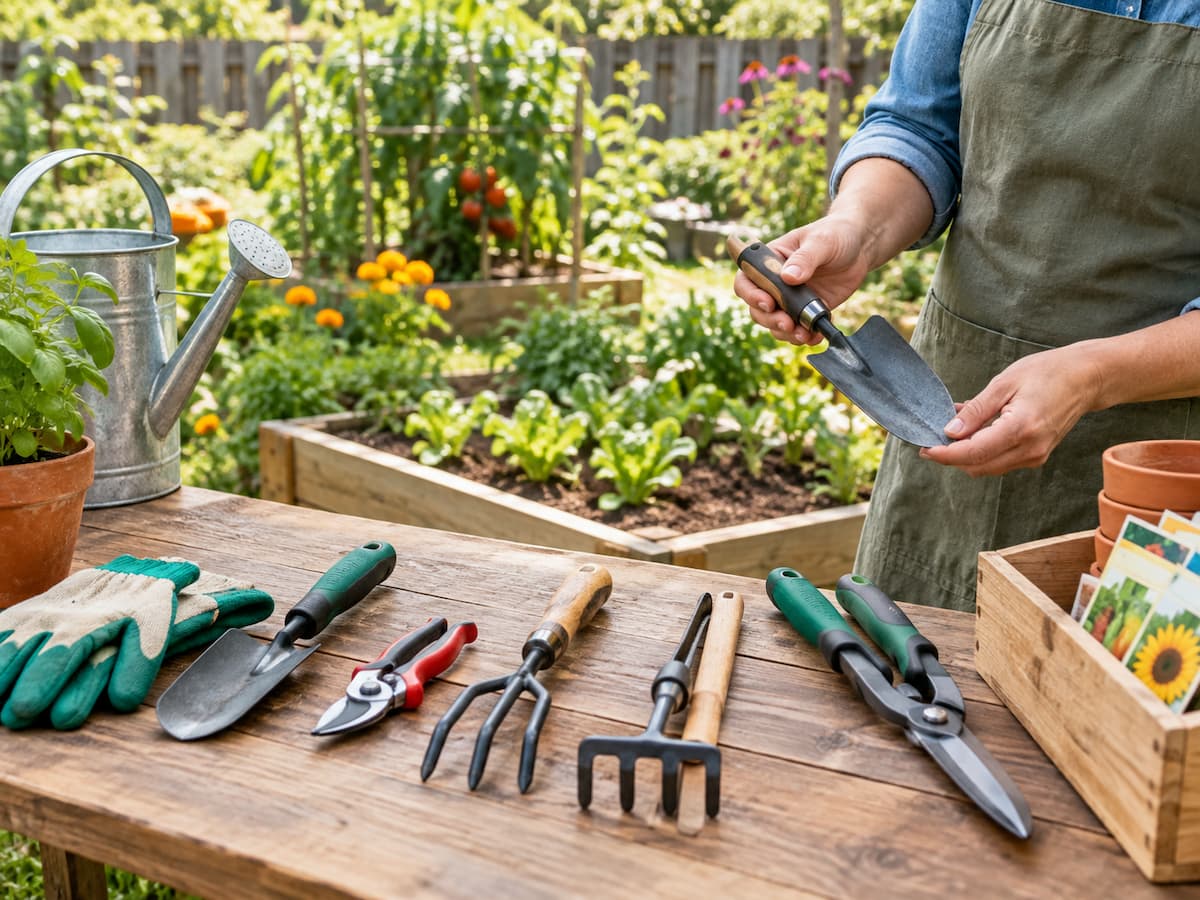
Container gardening is one of the clearest examples of why a universal shopping list does not work. Large tools can be awkward around pots, window boxes, and closely spaced containers. A compact toolkit might consist of a hand trowel, small cultivator, pruning shears, and watering can.
The tools should also be comfortable when working at awkward angles. Container gardeners often work close to the ground, on shelves, balconies, or around furniture. A tool that is excellent in an open vegetable plot may be unnecessarily large for this environment. If containers are your entire garden, resist the urge to buy full-size digging and soil-moving equipment unless you have a specific job that requires it.
Raised Beds Need a Middle Ground
A small raised bed usually sits between container gardening and in-ground gardening in terms of tool requirements. You may need a hand trowel for planting, a cultivator for working around plants, and a watering method suited to the bed’s size. If the bed is large enough that you regularly bend over for extended periods, a long-handled tool can make weeding or cultivating more comfortable.
The depth and construction of the bed also affect your choices. A shallow bed filled with loose growing material does not demand the same digging equipment as compacted ground. For many beginners, one or two carefully chosen longer-handled tools combined with a few hand tools provide enough coverage without creating a large equipment collection.
Vegetable and Ornamental Gardens Have Different Priorities
Vegetable gardens tend to create recurring jobs around planting, weeding, watering, harvesting, and moving growing material. Tools that allow precise planting and efficient work between rows can therefore be especially useful.
Ornamental gardens can place greater emphasis on pruning, deadheading, trimming, and maintaining the appearance of plants. A gardener with shrubs and flowering plants may get more use from quality pruning shears than someone growing leafy vegetables in a small bed. This distinction can prevent unnecessary purchases. Do not build a vegetable-garden toolkit if your main plants are ornamentals, or buy multiple pruning tools for a vegetable plot where they will rarely be used.
What to Check Before Buying a Tool
Price alone tells you little about whether a tool will be pleasant to use. Examine the tool physically when possible. Pay attention to how the handle feels in your hand. You should be able to grip it securely without excessive squeezing. Long-handled tools should feel balanced rather than awkwardly heavy at one end.
Look at the connection between the handle and working head. There should not be obvious looseness, gaps, cracks, or movement where the parts meet. For metal digging and cultivating tools, inspect the working edge and overall construction. A tool intended for hard soil should not feel flimsy when moderate pressure is applied. For pruning shears, check that the blades move smoothly and close properly. The cutting mechanism should feel controlled rather than gritty or excessively loose. Ergonomics matter more than many beginners expect. If a tool causes uncomfortable wrist angles, excessive bending, or difficult gripping, you are less likely to use it properly.
Essential Tools Versus “Maybe Later” Tools
A sensible first toolkit usually contains tools that perform frequent jobs or several related jobs.
Usually useful early:
- A hand trowel for planting and small soil-moving jobs
- A hand cultivator or comparable small soil-working tool
- A practical watering method
- Pruning shears if your plants require cutting
- One suitable digging or soil-moving tool when the garden is large enough to need it
Usually worth postponing:
- Specialized pruning equipment for plants you do not grow
- Large carts or wheelbarrows for tiny gardens
- Multiple types of hoes before you know which works for your space
- Specialized weeders for problems you have not encountered
- Heavy digging equipment for containers
- Tools designed for large-scale garden maintenance when your plot is small
A tool becomes a reasonable purchase when a recurring task is taking too much time or effort with what you already own. That gives you a practical reason to expand the collection rather than buying equipment based on hypothetical future problems.
Tools That Beginners Often Buy Too Early
Some gardening tools look useful because they are associated with serious gardening, but that does not mean they belong in a first-season toolkit. Large soil-working equipment is a common example. A beginner with a modest bed may not need equipment intended for much larger areas.
Specialized pruning saws, edging tools, bulb planters, soil scoops, and several varieties of hand weeders can also wait. Each may be useful under particular circumstances, but owning them before those circumstances arise ties up money and storage space. Even duplicate basic tools can be unnecessary. If one hand trowel comfortably handles your planting work, buying several similar versions provides little practical benefit.
Basic Care Keeps Simple Tools Useful
Tool maintenance does not have to become a separate gardening project. After using tools in soil, brush or rinse away dirt before it dries hard. If a tool becomes wet, dry it before storing it. This is particularly important for metal surfaces because prolonged moisture can contribute to rust.
Pruning blades benefit from being kept clean and reasonably sharp. Dirty or dull blades can make cutting more difficult and may crush plant material rather than making a clean cut. Store tools somewhere dry and organized. Keeping hand tools together makes them easier to find and reduces the chance that they will be left outdoors exposed to weather. Occasionally inspect handles, fasteners, blades, and connections. A loose handle or damaged cutting mechanism is easier to address before it becomes a safety or usability problem.
A Practical First-Season Toolkit
Instead of treating a starter kit as a fixed shopping list, build yours around the jobs your garden actually contains.
- For containers, start with a trowel, a small soil-working tool, an appropriate watering method, and pruning shears if needed.
- For a small raised bed, add one comfortable tool for working the soil and weeds over a larger area if the hand tools become inefficient.
- For an in-ground garden, prioritize a suitable digging tool and a way to move larger amounts of soil or compost. Add larger tools only when the size of the garden makes them worthwhile.
- For a larger garden, storage and efficiency become more important. Long-handled tools, larger watering equipment, and material-moving tools may earn their space because they reduce repetitive work.
The best initial toolkit is therefore not the largest one. It is the smallest collection that comfortably handles the jobs you expect to perform every week or every few weeks. Once the first growing season reveals which tasks actually consume your time, your next tool purchase becomes much easier to justify. Buy for a real job, choose a tool that can handle more than one related task when practical, and let the garden—not the tool aisle—determine what comes next.